“ The evil man, therefore, is only evil through error ”
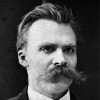
Friedrich Nietzsche, Beyond Good and Evil (1886). copy citation
| Author | Friedrich Nietzsche |
|---|---|
| Source | Beyond Good and Evil |
| Topic | evil error |
| Date | 1886 |
| Language | English |
| Reference | |
| Note | Translated by Helen Zimmern |
| Weblink | http://www.gutenberg.org/files/4363/4363-h/4363-h.htm |
Context
“namely, Socratism, for which he himself was too noble. "No one desires to injure himself, hence all evil is done unwittingly. The evil man inflicts injury on himself; he would not do so, however, if he knew that evil is evil. The evil man, therefore, is only evil through error; if one free him from error one will necessarily make him—good."—This mode of reasoning savours of the POPULACE, who perceive only the unpleasant consequences of evil-doing, and practically judge that "it is STUPID to do wrong";”
source