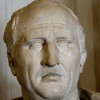
“ the poor man of whom we spoke cannot return a favour in kind, of course, but if he is a good man he can do it at least in thankfulness of heart. As someone has happily said, "A man has not repaid money, if he still has it; if he has repaid it, he has ceased to have it. But a man still has the sense of favour, if he has returned the favour; and if he has the sense of the favour, he has repaid it." ”
Marcus Tullius Cicero, On Duties (44 BC). copy citation
| Author | Marcus Tullius Cicero |
|---|---|
| Source | On Duties |
| Topic | money heart |
| Date | 44 BC |
| Language | English |
| Reference | |
| Note | Translated by Walter Miller |
| Weblink | http://www.constitution.org/rom/de_officiis.htm |
Context
“But who is there, pray, that does not in performing a service set the favour of a rich and influential man above the cause of a poor, though most worthy, person? For, as a rule, our will is more inclined to the one from whom we expect a prompter and speedier return. But we should observe more carefully how the matter really stands: the poor man of whom we spoke cannot return a favour in kind, of course, but if he is a good man he can do it at least in thankfulness of heart. As someone has happily said, "A man has not repaid money, if he still has it; if he has repaid it, he has ceased to have it. But a man still has the sense of favour, if he has returned the favour; and if he has the sense of the favour, he has repaid it." On ?? conferred a favour by accepting one, however great and they even suspect that a claim is thereby set up against them or that something is expected in return. Nay more, it is bitter as death to them to have {70} accepted a patron or to be called clients.”
source