AI-generated from sources
The arrow's toxic legacy: From paleolithic hunt to modern chemical prohibition
In Brief
- Poisoned weapons represent humanity's oldest 'force multiplier,' with archaeological and etymological evidence linking the arrow ('toxon') directly to poison ('toxicon').
- Early efficacy was often attributed to a mix of sophisticated practical knowledge of organic toxins (vegetable and putrefied animal matter) and supernatural beliefs (e.g., using human bone).
- The Industrial Age marked a moral turning point, where explosive and poisoned projectiles were condemned as 'barbarism,' initiating ethical scrutiny and attempts at international codification in warfare.
- Modern philosophies of total war, championing absolute state power over international law (Bernhardi, Treitschke), provided the rationale for the industrial deployment of chemical weapons, leading to the 20th-century ethical crisis.
Main authors
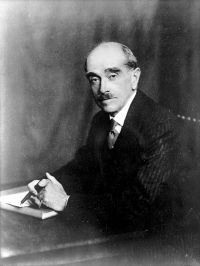
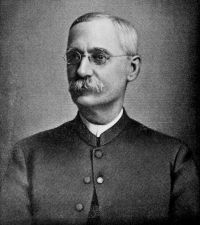

The practice of applying poison to weapons stands as one of humanity's oldest and most persistent technological force multipliers [1]. Archaeological evidence from the Paleolithic period reveals spear and arrowheads crafted from bone, featuring depressions specifically designed to hold toxic substances . This ancient innovation, deeply embedded in human history, is reflected in the etymological roots of the concept itself; the Greek word for a poisonous substance, "toxicon," derives directly from "toxon," the word for an arrow . This linguistic link underscores how fundamentally intertwined the projectile and the poison were in early martial and hunting technology.
This long-standing practice, however, stands in stark contrast to the complex ethical and legal debates that have surrounded analogous weapons in modern industrial warfare [2, 3, 4]. The introduction of poisoned and explosive projectiles in 19th-century conflicts, for example, prompted fierce condemnation and accusations of barbarism, marking a significant shift in the perception of such tactics . This evolution raises a central question: how did the application of poison transform from a seemingly natural and widespread method of early humans into a subject of profound moral controversy and attempts at international prohibition in the modern era? The answer lies in a complex interplay of evolving technology, cultural beliefs about the nature of toxins, and changing philosophies regarding the legitimate conduct of war.
The Prehistoric Arrow: Magic, Chemistry, and Intent
The use of poisoned weapons extends back into remote antiquity, a period of human development marked by extremely slow technological advancement [5]. Archaeological finds from the Stone Age include not only specialized bone points but also arrowheads and knives crafted from stone, all rudimentary tools that could be enhanced with poison [6, 7]. The very existence of these artifacts suggests that for thousands of years, early humans relied on chemical augmentation to increase the lethality of their primitive projectile technology, a testament to the method's enduring effectiveness in an era of otherwise static innovation .
The understanding of what made these weapons deadly was not, however, always rooted in a purely chemical or biological framework. In some cultures, the efficacy of a poisoned arrow was attributed primarily to supernatural forces rather than the toxin itself [8]. The use of human bone for an arrowhead, for instance, was believed to imbue the weapon with a ghost's power to harm the wounded individual, a magical property considered more potent than any physical substance applied to it [9]. This belief system highlights that the fear and potency of such weapons were often products of a cultural worldview where magic and material effect were inseparable, and the conviction in their lethality was paramount .
Parallel to these magical beliefs, a sophisticated practical knowledge of organic poisons was developed across various cultures. This knowledge was often a closely guarded secret, which made poisoned arrows highly valued and difficult for outsiders to obtain [10]. Artisans of these weapons drew from a diverse natural pharmacopeia, utilizing potent vegetable-based extracts from plants like those related to strychnine, as well as toxins derived from animal sources [11]. The deliberate use of substances from putrefying animal matter demonstrates an empirical understanding that decaying organisms could produce effects capable of causing serious illness or death when introduced into the bloodstream .
The methods for creating these animal-based poisons reveal a pragmatic, if gruesome, approach to early biological warfare. Some techniques involved inserting arrowheads directly into a decomposing human body, often near the kidneys, to absorb lethal agents [12]. Another method consisted of treating a pig carcass with a substance like arsenic to hasten putrefaction, then collecting the toxic liquids that drained from the decaying mass to create the final poison [13]. As scientific knowledge advanced over centuries, the ability to detect such poisons would eventually catch up, making the poisoner's work more difficult, but in these early periods, such natural toxins represented a potent and undetectable enhancement to weaponry .
The 'Inexcusable' Projectile: Codifying Warfare in the Industrial Age
The 19th century witnessed a dramatic shift in the discourse surrounding enhanced projectiles, moving from tacit acceptance to public condemnation. The American Civil War became a focal point for this change, with widespread accusations that the Confederate States had authorized the use of explosive and poisoned musket balls . Such weapons were described in the Northern press as "fiendish," and their alleged use was presented as evidence of the enemy's barbarity . This public outcry signifies a crucial moment where the means of warfare were becoming subject to moral scrutiny, and certain technologies were being framed as illegitimate for use by "civilized" nations.
The arguments against these weapons were articulated on both moral and strategic grounds. One prominent military writer of the time contended that the use of explosive or poisoned balls was an "inexcusable" practice suitable only for "ignorant savages," marking a clear ethical line between civilized and uncivilized warfare . From a purely strategic perspective, it was argued that such weapons were counterproductive. Wounding an enemy soldier, rather than killing him outright, placed a greater burden on the opposing army, as resources would be diverted to care for the injured, thereby impeding future military operations more effectively than a simple fatality .
Despite this growing consensus against such weapons, the tactical advantages they offered remained a temptation for military leaders. In 1862, a Union general made a requisition for explosive musket shells, indicating an official interest in their deployment [14]. This request was notably disapproved by the Chief of Ordnance, who viewed the potential use of such missiles as an "instance of barbarism" and advised against furnishing them to troops . This episode reveals the internal conflict within modern armies of the era, caught between the pursuit of battlefield superiority and the emergence of codified ethical norms intended to limit the brutality of war.
The Philosophy of Total War and the Modern Chemical Threat
The debates of the 19th century set the stage for the larger ideological clashes of the early 20th century, particularly the rise of a German philosophy of total war that provided intellectual justification for previously unthinkable methods. Thinkers like Treitschke and Bernhardi championed a doctrine in which the state's power and self-preservation were the supreme law, superseding any international agreements or moral considerations [15, 16]. In this worldview, war was not an evil to be avoided but a vital and purifying force—a "strong medicine" necessary to combat the perceived sickness of peaceful individualism and to express "political idealism" [17, 18].
This philosophy directly challenged the burgeoning concept of international law by asserting that the state's sovereignty could not be bound by any external obligation, including treaties . It proposed that in disputes between nations, "might is at once the supreme right," and the outcome of war provided a "biologically just decision" [19]. Such a doctrine legitimized a ruthless approach to conflict, where the cultural veneer of civilization could be stripped away in service of the state's survival and expansion . This provided a powerful rationale for deploying any weapon, no matter how brutal, if it served the national interest.
The catastrophic consequences of this ideology became manifest in the First World War, which introduced the "blighting terrors of chemical warfare" on an industrial scale [20]. This new form of conflict, along with other modern technologies like the submarine, presented challenges that existing rules of engagement were not equipped to handle [21]. The practical impossibility of employing submarines for commerce destruction without violating established norms of fairness and humanity mirrored the ethical crisis posed by poison gas, demonstrating how new technologies could render traditional restraints obsolete .
In this context, violations of international law were often framed as regrettable but necessary acts of military expediency. The German Chancellor’s justification for the invasion of neutral Belgium encapsulated this logic perfectly: he openly admitted the invasion was a "wrong" but one that would be rectified once the military objective was achieved [22]. This principle—that immediate strategic necessity can override established legal and moral prohibitions—represents the modern culmination of the age-old temptation to use any available tool, no matter how condemned, to secure victory in war.
The trajectory of poisoned weapons charts a vast historical arc, from a practical, and often magically-conceived, tool of Paleolithic hunters to a symbol of ultimate transgression in modern international law . Throughout this evolution, a core tension has persisted: the relentless drive for a tactical advantage through technology versus the concurrent human effort to establish ethical boundaries on violence . The simple poison-tipped arrow and the industrialized deployment of chemical agents are separated by millennia of technological change, yet both raise the same fundamental questions about the limits of acceptable conduct in conflict .
This history reflects an enduring philosophical battle. On one side stands the ideal of a "public law of Europe," a comity of nations where Right is upheld as a supreme interest, and shared rules are meant to protect all states from barbarism [23, 24]. Opposing this is a doctrine of absolute state power, which views war not as a failure of law but as a biological and political necessity—a heroic endeavor that justifies any means necessary for national preservation . The poisoned weapon, in its many forms, thus serves as more than a mere instrument of war; it is a powerful historical marker of this deep and unresolved struggle between humanity's most destructive innovations and its aspirations for a moral order.