AI-generated from sources
The Unreconciled science: The enduring tension between wealth accumulation and social welfare
In Brief
- Economic thought is defined by a split between the Orthodox Model (a value-neutral science based on the abstract, self-interested "economic man") and a rival tradition focused on social welfare.
- Critics argue that the abstraction used by orthodox economics fails because it deliberately ignores critical non-economic factors—politics, morality, and complex human affection—rendering its conclusions hypothetical.
- The demand for realism has led to a redefinition of wealth, shifting the focus from maximizing output to ensuring just distribution and overall social health, as articulated by thinkers like John Ruskin.
- The ultimate relevance of economics depends on its ability to integrate the "human soul" and social dimensions, rather than treating man as a simple money-making machine.
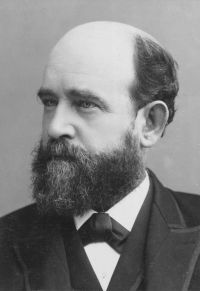
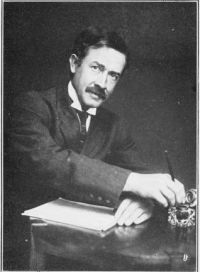
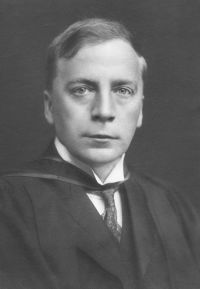
Main authors

The modern era is uniquely characterized by the dominance of economic interests in governing the life and policy of nations, often relegating religious and political forces to a subsidiary role [1]. This ascendancy has made economic science not just possible, but necessary, demanding that it explain the complexities of contemporary society and contribute to national progress [2]. Yet, from its inception, the discipline has been fraught with a fundamental tension concerning its scope and purpose. One school of thought posits economics as a value-neutral science dedicated to understanding the laws of wealth accumulation, treating man as a simple money-making machine to derive universal principles [3, 4]. Another perspective contends that such an approach is critically flawed, arguing that a true economic science must account for the moral and social dimensions of human nature, which are not merely accidental disturbances but central to economic activity [5, 6].
This schism forces a central question: what is the proper domain of the economist? Is it to be a detached observer of market forces, modeling behavior based on simplified, constant elements like avarice, or is it to be an engaged analyst of human welfare, grappling with the complexities of social affections, morality, and justice [7]? The claim of economics to be a recognized science hinges on its practical utility and its relevance to the actual lives of communities . Therefore, the debate over its core identity is not merely academic. It determines the very definition of wealth, the methods of inquiry, and the ultimate aims of the discipline—whether it is to be simply a science of getting rich or a more profound investigation into the conditions for a prosperous and just society [8, 9].
The Orthodox Model: A Value-Neutral Science of Getting Rich
The classical conception of political economy is built upon a deliberate narrowing of focus, defining its domain as the objective study of wealth, value, exchange, and capital [10]. From this perspective, the science is concerned with how wealth is acquired and distributed, and it need not declare itself subordinate to any higher moral teaching [11]. Proponents of this view argue that the economist's first duty is not to preach what should be, but to understand what is, accepting that immediate gratification often rules human action [12]. To achieve scientific rigor, this model abstracts a simplified version of humanity—the "economic man"—who is stripped of morality and social affections, leaving only constant, predictable desires for wealth and progress .
By eliminating the complexities of human nature, which are seen as merely disturbing elements, economists can treat the problem of wealth with greater simplicity and expedition [13]. This approach reduces economic conduct to a straightforward sequence of hedonistic cause and effect, where the central problem becomes the simple exchange of goods that are closest to human wants [14]. According to this framework, economics is simply the science of getting rich, a practical and effective discipline that does not concern itself with advantages of a general or social nature . Its laws, derived from observing man as a self-interested actor, are seen as sufficient to explain the accumulation of wealth without needing to account for an intangible soul . This methodology allows for the construction of a formal science, potentially even amenable to mathematical treatment similar to mechanics, focused on equilibria in the market [15].
The very possibility of an economic science, in this view, depends on the ability to isolate predominantly economic functions from the rest of social life, a differentiation that becomes clearer in modern, specialized societies [16]. The science, therefore, operates on the hypothetical premise that its conclusions are valid within its own defined limits, without passing judgment on whether its ultimate end is the ultimate end for humanity . Wealth is judged by its capacity to provide gratification, not by its contribution to abiding welfare, precisely because that is how a large portion of humanity operates .
The Limits of Abstraction and the Call for Realism
The model of a purely abstract economic science faces significant criticism for its detachment from the lived reality it purports to explain. Critics argue that definite economic problems can rarely be solved by merely quantitative methods, as non-economic factors invariably play a crucial role [17, 18]. To produce anything other than hypothetical results, the economist must not only acknowledge but also give due weight to political conditions, social sentiments, trade customs, and other forces that shape economic outcomes . An analysis of a nation's industry, for instance, would be unintelligible if it ignored the political context . True economic understanding, therefore, requires more than academic training; it demands wide knowledge, experience, and an intimate connection with the actual life of the community being studied [19].
This imperative for realism implies that economics cannot be a self-contained system. The economist must be prepared to consider the physical features of the world, the structure of commerce, and the character of administrations, as anything that affects human ideals or environment may necessitate a modification of economic assumptions [20]. While it is impractical for an economist to master all branches of human learning, a certain sensitivity to these broader factors is essential for progress . Historical research, for example, is limited because documents rarely capture all the variables at play, highlighting the need for direct observation and deep contextual knowledge [21]. The selection and interpretation of any evidence, whether historical or statistical, demands qualities distinct from the mere application of scientific methods .
Furthermore, some argue that the complexity of modern economic life makes a complete, heroic restatement of economic theory an impossible task for any single individual [22]. The sheer breadth of knowledge required, spanning multiple countries and departments of economic activity, suggests that the field must rely on a more grounded, inductive approach rather than purely deductive theories . Even the most orthodox economists are often driven back to the realities that only history can reveal, acknowledging that the abstract idea of wealth cannot absorb everything when judging and enlightening human beings [23]. Politics, in particular, is seen as a science too human to be captured in books, as it must account for the instinct to defy even the most beneficent theories [24].
Wealth Redefined: From Material Gain to Social Welfare
The critique of the narrow, wealth-focused model has led to a significant evolution in economic thought, expanding its purview to include broader questions of social well-being and justice [25]. This newer perspective challenges the idea that economics should confine itself to how a maximum of wealth is produced, inquiring instead into the general conditions of social health . It moves beyond seeing the desire for acquisition as the sole mainspring of human action and incorporates considerations that older economists might have dismissed as merely sentimental or philanthropic . The science begins to ask searching questions about justice between individuals and how to check the reign of universal cupidity .
A key figure in this reorientation, John Ruskin, explicitly distinguished between different concepts often conflated under the term "wealth" [26]. He defined "Wealth" as things intrinsically valuable, "Money" as a subject of commercial science dealing with exchange, and "Riches" as a province of moral science concerned with the just relations between people regarding material possessions [27]. This framework insists that the economist's essential work is to determine what is genuinely useful or life-giving . From this viewpoint, usefulness depends not just on an object's nature but on its being in the right hands, making the science of distribution a discriminate art dependent on more than arithmetic [28].
This shift also manifests in a greater concern for the distribution of wealth, with even orthodox economists expressing regret over vast inequalities [29]. The promise of political economy, in this expanded view, is not just what it can do for an individual, but what it enables one to do for others, harnessing the potent forces of sympathy and nobler passions that drive the study of the field in the first place . Economics can awaken human sympathies, combat selfish views, and reveal the best methods for aiding the less fortunate [30]. The ultimate goal becomes a rational exposition of the principles that produce dignity, security, and happiness for both nations and individuals, rather than simply maximizing output [31].
The Unreconciled Soul: Economics and the Human Element
The most profound challenge to a purely mechanistic economic science lies in its treatment of the human element. While some models simplify human nature for analytical convenience, many thinkers assert that man is fundamentally a social animal, a reality that cannot be ignored [32]. Even Adam Smith, author of The Wealth of Nations, also wrote The Moral Sentiments, indicating an awareness that human action is governed not only by selfishness but also by sympathy [33]. To build a science solely on the passion of selfishness is to ignore the full spectrum of motives that drive economic activity . Consequently, some argue that a science that ignores the moral phase of the question and the human soul is doomed to fail in achieving its social dreams .
This tension raises the question of whether economics, as a science, can or should attempt to account for the soul. Some argue that psychology, as the "science of the soul," holds the key to understanding human progress and happiness more than economic systems alone [34, 35]. The development of the Western soul, for instance, is a specific cultural phenomenon, not a universal constant applicable to "the human soul" at large, a nuance that abstract economic models often miss [36]. The science of economics, rooted in the social life of man, must therefore rest upon sociology, as social organization cannot be explained purely in economic terms [37]. Large popular conceptions, however silly in their external form, are often rooted in deep truths about our moral nature, which is profoundly shaped by our social and sexual relations [38].
Ultimately, the divide persists between economics as a science of wealth and a potential, if unrealized, science of human flourishing. One view holds that the pursuit of riches is a means to develop mind, soul, and body—to love others, help the world, and find truth [39]. The accumulation of wealth is thus the basis for all human advancement [40]. Conversely, others warn that wealth is a pitiless master that prevents one from thinking of the soul, and that gaining the world is of no profit if the soul is lost [41, 42]. This unresolved dilemma suggests that while the science of wealth provides essential tools, its ultimate relevance depends on its ability to integrate an understanding of the complex, social, and moral being it seeks to serve [43].
The study of economics is defined by an enduring tension between its aspiration to be a rigorous, predictive science and its obligation to address the complex, value-laden problems of human society. The orthodox model, with its focus on the rational, self-interested "economic man," provided a powerful framework for analyzing the production and distribution of wealth . However, its deliberate exclusion of social affections, moral considerations, and political realities has been a persistent point of criticism, with many arguing that such abstractions render the science hypothetical and detached from the very world it aims to explain . The slice of life with which economics deals is one that "vibrates and, so to say, bleeds with actuality," making a purely mechanistic approach fundamentally incomplete .
Therefore, the science cannot escape the human element at its core. Its claim to recognition is ultimately based on its practical ability to unravel social difficulties and contribute to the progress of nations . This requires an expanded vision that acknowledges man as a social animal, incorporates the force of sympathy, and grapples with the moral questions of distribution and welfare . Whether defined as a science of the state's prosperity or the individual's well-being, economics must engage with the numerous factors that make life profitable in the broadest sense [44]. The dilemma between a science of wealth and a science of the soul may never be fully resolved, but it is in the continuous, critical engagement with this tension that the field finds its dynamism and its ultimate purpose .