AI-generated from sources
Beyond Self-Interest, Adam Smith's Integrated Vision
In Brief
- Adam Smith's philosophy is commonly misrepresented as solely advocating for self-interest in economics, stemming from a partial interpretation of his work.
- Smith's The Theory of Moral Sentiments reveals that human actions are profoundly shaped by moral sentiments, sympathy, and justice, which are essential for social cohesion and market functionality.
- The famous “invisible hand” does not operate in a moral vacuum but within a necessary framework of ethical norms and institutional supports.
- A holistic understanding of Smith’s writings shows a unified vision where economic principles are intrinsically linked to a broader ethical and psychological comprehension of human nature.
Main authors

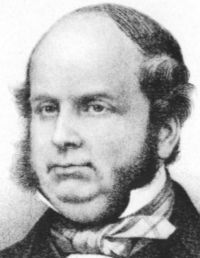
Adam Smith is widely memorialized as the foundational philosopher of modern capitalism, primarily celebrated for his articulation of self-interest as the engine of economic prosperity. This popular conception, drawn largely from his magnum opus The Wealth of Nations, champions the idea that individual actors, each pursuing their own gain, are guided by an “invisible hand” to inadvertently benefit the whole of society [3]. This perspective has been profoundly influential, shaping economic orthodoxies like rational choice theory, which explicitly identifies rationality with the intelligent pursuit of one’s own advantage [5]. In this common reading, Smith’s economic man is a creature of enlightened selfishness, and other human motivations such as benevolence or virtue are considered largely irrelevant to the mechanics of the market [2, 4].
This simplified portrayal, however, profoundly misrepresents the complexity of Smith's intellectual project by overlooking the crucial ethical framework he developed in his earlier work, The Theory of Moral Sentiments. This text reveals that for Smith, human action is not driven by egoism alone but is fundamentally shaped and constrained by moral sentiments, social interdependence, and an innate sense of justice [9, 10]. The persistent caricature of Smith as an apostle of pure self-interest thus creates a false dichotomy, obscuring the integrated and more nuanced understanding of human nature that underpins his entire body of work [13, 16]. This oversight has led to a constrained interpretation of his economic theories, failing to recognize that he saw moral norms as the essential context within which a market economy could function effectively and beneficially [25].
The Enduring Caricature of Economic Man
The popular and simplified understanding of Adam Smith's philosophy is built upon the axiom that human action, at its core, is driven by self-interest [1]. In this view, which isolates his economic analysis from his broader moral theory, the science of political economy is constructed by intentionally sidelining motivations like benevolence or virtue . Smith is thus cast as a thinker who deliberately narrowed his focus to self-gain in order to explain the phenomena of wealth, treating personal desire and the pursuit of happiness as the deterministic forces behind economic conduct . This interpretation posits that while other motives might exist, they are external to the fundamental principles governing economic life.
Central to this portrayal is the powerful metaphor of the “invisible hand,” a concept frequently cited to argue that individual ambition naturally harmonizes with the public good. According to this reading, when an individual focuses on maximizing personal gain, they are led to promote the interests of society more effectively than if they had consciously intended to do so . The mechanism is seen as a validation of laissez-faire principles, suggesting that the aggregate of individual, self-interested actions spontaneously generates a beneficial social order without the need for central planning or benevolent intention [6]. This idea has become a cornerstone of classical economic thought, celebrated as Smith's most crucial insight into the workings of a market-based society.
This narrow focus on self-interest provided a powerful intellectual foundation for subsequent economic and political theories that champion market-driven outcomes . Generations of economists, political scientists, and legal theorists have invoked Smith to legitimize models of “rational choice” that define rational behavior as the maximization of personal advantage . This tradition has often depicted economic life as an arena of competing interests, where employers, for instance, are presumed to act solely out of a desire for profit, with no genuine concern for the welfare of their workers or society at large . While influential, this legacy reduces Smith's multifaceted analysis to a rigid and simplistic formula, creating a caricature that has obscured the more complex reality of his thought for centuries .
Sympathy, Justice, and the Social Fabric
Contrary to the one-dimensional portrayal of economic man, Adam Smith’s philosophy, particularly as articulated in The Theory of Moral Sentiments, is deeply rooted in the concept of sympathy as a cornerstone of social life [11]. This capacity for empathy fosters what Smith calls the “man within,” an impartial spectator or conscience that internalizes social norms and restrains purely selfish impulses [7]. This internal moral compass is not merely an emotional luxury but a functional necessity for social cohesion. An individual's awareness of their connection to society and their aversion to its disorder provides a powerful motivation to act in ways that preserve the social fabric, recognizing that personal well-being is intrinsically linked to it [12].
Smith argued that human beings are motivated by a range of impulses that extend far beyond self-gain or even sophisticated prudence . He saw virtues like justice not as secondary considerations but as the fundamental pillars upon which society rests, without which it would crumble [20]. While a society might subsist on a utilitarian sense of mutual benefit—much like a transactional relationship between merchants—it cannot survive in the absence of justice, as social intercourse depends on individuals refraining from harming one another [19]. In Smith’s view, humans possess a natural affinity for society, desiring its preservation for its own sake, independent of any direct personal benefit .
This concern for the social good extends to Smith’s views on the role of the state, which he envisioned as doing more than simply protecting property and enforcing contracts. He expressed deep concern for the intellectual well-being of the working classes, arguing that a civilized state should ensure they are not left in a state of “gross ignorance and stupidity,” a duty it should undertake even if no immediate economic advantage were to be gained [8]. This perspective, as later commentators observed, is inconsistent with a doctrine of rigid individualism. It instead points to a social doctrine where responsibility, especially for the affluent, is a moral imperative; the rich are bound to contribute to the state's welfare precisely because they have the capacity to do so .
Furthermore, Smith understood that this moral framework was indispensable for the stability and functioning of the economic system itself. He identified trust, probity, and prudence as the bedrock of financial confidence, essential for a healthy system of credit and banking [18]. From his perspective, the devastating consequences of a collapse in mutual trust—a scenario highly relevant to modern financial crises—would be entirely predictable, as he knew that economic exchange depends on more than the mere opportunity to trade [17]. The attempt to frame Smith as a champion of a pure, profit-driven capitalism is therefore a fundamental misreading; he was profoundly concerned with the sufficiency of the market, arguing for the necessity of strong moral and institutional supports to ensure its proper function [14].
A Unified Vision of Moral Economy
The perceived tension between the sympathetic individual of The Theory of Moral Sentiments and the self-interested agent of The Wealth of Nations has given rise to what is known in German scholarship as “the Adam Smith problem” [24]. This interpretation often posits a fundamental shift in Smith’s thinking, suggesting he began his career as an idealist philosopher focused on sympathy and later evolved into a hard-headed economist preoccupied with self-love . Such a reading, however, mistakenly treats his two major works as disconnected and contradictory, failing to appreciate their shared intellectual foundation and conceptual continuity.
A more holistic approach reveals that the two texts are not in conflict but are deeply complementary. The Theory of Moral Sentiments provides the comprehensive ethical and psychological framework within which the economic principles of The Wealth of Nations are designed to operate . The moral sentiments—including justice, prudence, and benevolence—are not discarded in his economic analysis but function as the implicit, background constraints that channel and discipline self-interest, preventing it from devolving into socially destructive rapacity. To interpret his economic treatise without the context provided by his moral philosophy is to fundamentally misunderstand his project, leading to a diminished and distorted understanding of economics as a discipline .
Smith himself was deeply skeptical of abstract systems that impose a rigid, theoretical order on the messy reality of human society. He cautioned against the “man of system,” who presumes to arrange individuals like pieces on a chessboard, ignoring their unique motivations and the complex, organic nature of the social fabric [23]. This critique is ironically applicable to the simplistic economic models that have been built upon a partial reading of his own work. His integrated vision recognized that self-interest, while a powerful engine of human action, functions within a dense web of social bonds, moral duties, and institutional norms that are essential for both economic prosperity and human flourishing [21]. In this complete view, individual liberty and social cooperation are not antagonistic forces but are mutually reinforcing aspects of a well-ordered society [22].
The persistent caricature of Adam Smith as the uncritical champion of individual self-interest is a profound simplification that eclipses the true scope of his intellectual legacy. By isolating the economic mechanics of The Wealth of Nations from the rich moral psychology of The Theory of Moral Sentiments, this popular narrative ignores the essential ethical framework that underpins his entire system of thought . Smith’s vision was not a celebration of unrestrained egoism but a nuanced exploration of how personal drive, when embedded within a society governed by sympathy, justice, and mutual trust, could generate collective prosperity . For Smith, the famous invisible hand never operates in a moral vacuum; its work is guided and moderated by the conscience, the “man within,” which is itself a product of our inherently social nature .
Recovering Smith’s integrated vision offers far more than a historical corrective; it provides a vital perspective for contemporary economic and social challenges. In an era often defined by financial crises rooted in failures of trust and regulatory foresight, his insistence on the interplay between markets and morals seems remarkably prescient . Smith’s work serves as a powerful reminder that economic systems are not autonomous machines but are human institutions, deeply embedded in and dependent upon the virtues that sustain social life . Acknowledging the full complexity of his thought compels us to move beyond reductive models of “economic man” and toward a more sophisticated understanding of how self-interest and social responsibility must coexist to build a stable and humane society [15].