Henry Thomas Buckle

Biographical details

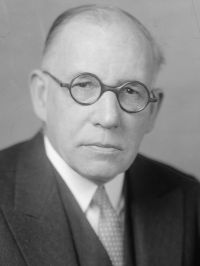
Portrait of Henry Thomas Buckle Henry Thomas Buckle History of Civilization in England…

If ever there existed a state of society likely, by its crying and accumulated evils, to madden men to desperation, France was in that state. The people, despised and enslaved, were sunk in abject poverty, and were curbed by laws of stringent cruelty, enforced with merciless barbarism. A supreme and irresponsible control was exercised over the whole country by the clergy, the nobles, and the crown. The intellect of France was placed under the ban of a ruthless proscription, its literature prohibited and burned, its authors plundered and imprisoned.
Source: Gutenberg

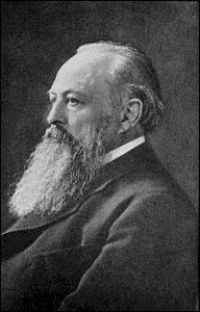
Portrait of Henry Thomas Buckle Henry Thomas Buckle History of Civilization in England…

All this they may do, and yet be as far removed from the spirit of Christianity as when they bowed the knee before their former idols. The rites and forms of a religion lie on the surface; they are at once seen, they are quickly learned, easily copied by those who are unable to penetrate to that which lies beneath. It is this deeper and inward change which alone is durable; and this the savage can never experience while he is sunk in an ignorance that levels him with the brutes by which he is surrounded. Remove the ignorance, and then the religion may enter.
Source: Gutenberg

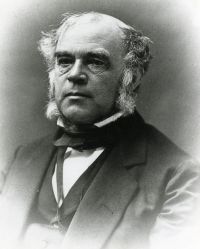
Portrait of Henry Thomas Buckle Henry Thomas Buckle History of Civilization in England…

By the poet, nature is contemplated on the side of the emotions; by the man of science, on the side of the understanding. But the emotions are as much a part of us as the understanding: they are as truthful; they are as likely to be right. Though their view is different, it is not capricious. They obey fixed laws; they follow an orderly and uniform course; they run in sequences; they have their logic and method of inference. Poetry, therefore, is a part of philosophy, simply because the emotions are a part of the mind. If the man of science despises their teaching, so much the worse for him.
Source: Gutenberg

Get perspective with Kwize: daily news enlightened by great literature