 Jean-Jacques Rousseau,
Emile
(1911)
Jean-Jacques Rousseau,
Emile
(1911)
“ ‘Take the opposite course to that prescribed by custom,’ he wrote, ‘and you will almost always do right.’ We may doubt whether this blind approach is sound. ”
The concept of method denotes the way in which an idea, problem, or reality is addressed, often reflecting underlying philosophical or practical priorities. Authors such as Jean-Jacques Rousseau questioned conventional paths, advocating for unconventional strategies, while Josiah Royce connected method to deliberate engagement with action and purpose.
Anonymous narratives depict methods shaped by perception, such as interpreting nature as a threat, whereas Charles C. Rich emphasized structured application of principles to duty. These varied perspectives—ranging from practical guidance to existential inquiry—reveal method as a dynamic interplay between intention, context, and the pursuit of meaning.
Jean-Jacques Rousseau,
Emile
(1911)
“ ‘Take the opposite course to that prescribed by custom,’ he wrote, ‘and you will almost always do right.’ We may doubt whether this blind approach is sound. ”
Anonymous, The Life of the Venerable Mother Mary of the Incarnation
“ Every sound was transformed by over-heated imagination into a signal of attack; every shadow into the form of some stealthy Iroquois; every breath of the night breeze into the echo of an enemy's approaching step. The vast, silent solitudes surrounding the town in every direction, the wild aspect of the unreclaimed land, the gloomy appearance of the thickly wooded forest seemingly formed expressly to conceal a foe, all combined to impress the mind with that painful suspicion of unseen danger, which to many is more torturing than actual peril. ”
 Josiah Royce,
The Sources of Religious Insight
Josiah Royce,
The Sources of Religious Insight
“ First, then, there are certain respects in which I fully agree with recent pragmatism. I agree that every opinion expresses an attitude of the will, a preparedness for action, a determination to guide a plan of action in accordance with an idea. Whoever asserts anything about the way out of the woods, or about the cause and possible cure of a toothache, defines a course of action in accordance with some purpose, and amongst other things predicts the {146} possible outcome of that course of action. ”
Anonymous, Des Grieux (1899)
“ Nature, now, had awakened in her that morbid tenderness, that eagerness for the caress of the other sex; so, as she approached the open casement and saw the youth so full of manly vigour, convulsed—as he was—by lust, and burning to quench the fire that was consuming him, she felt irresistibly drawn towards him; she was in fact like a withering plant, which—fading under the rays of a scorching sun—droops towards the earth as if to breathe the moist vapours that arise from the soil. ”
Francis Adams, Australian Essays
“ Culture, we are told, is reading, but reading with a purpose to guide it and with system. The purpose, it is presumed, is attainment, but what is the system? We are to have knowledge, and not only knowledge but right tact and justness of judgment, forming themselves by and with judgment. ”
Various, Blackwood's Edinburgh Magazine…
“ Taking, as our limits necessarily oblige us to take, a broad survey of the principle, and the results of the principle disclosed by experience, we cheerfully pronounce both to be positively and undeniably good. ”
Cora L. V. Richmond, My experiences while out of my body (1915)
“ There is no formal taking of one’s “place” or [64] “position,” no ceremonious “assigning” of “duty” or “work,” but in groups and larger companies, as well as in personal ministrations, a mutual understanding of purpose, according to adaptation. If a united or concerted action upon earth-minds for any given purpose is needed it is readily perceived and entered upon by all who are in accord, and is performed by such methods as enlightened spirits readily understand. ”
Josiah Royce,
The World and the Individual, First Series
(1899)
“ Now our very power to make the whole of Being our problem, already implies that the object of our inquiry, whatever it proves to contain, has as the fulfilment of one idea, the constitution of a single life of concrete fulfilment. ”
Charles C. Rich, Journal of Discourses — Volume 10…
“ We ought to think of this, in order that we may be ready day by day for the performance of any duty required of us; we ought to know the principles so perfectly that we can apply them to the performance of every duty and feel and know that we are right—understand them for ourselves that we may be capable of applying them both in this life and in that which is to come. ”
 Willard Huntington Wright,
What Nietzsche Taught
Willard Huntington Wright,
What Nietzsche Taught
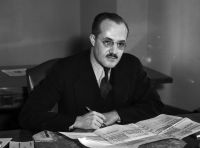
“ The Two Principles of the New Life.—First Principle: to arrange one's life on the most secure and tangible basis, not as hitherto upon the most distant, undetermined, and cloudy foundation. Second Principle: to establish the rank of the nearest and nearer things, and of the more and less secure, before one arranges one's life and directs it to a final end. ”
 Anatole France,
The White Stone
Anatole France,
The White Stone
“ But, after all, he thinks matters out, and reasons. The idea he conceives of the forces which govern the world is, in its principle, rational and scientific and, in this respect, it conforms to that which we have ourselves conceived of them. ”
J. Marshall, A Short History of Greek Philosophy
“ Now since every activity, whether of knowing or doing, aims at some good, it is for us to settle what the good is which the civic activity aims at,—what, in short, is the ultimate end of all 'goods' connected with conduct? ”
Charles Gore, The Sermon on the Mount: A Practical Exposition
“ But each of the maxims can be taken to the heart and conscience of the individual, to become a principle of each man’s own character and conduct, and then to reappear, retranslated into social action, according to the wisdom of the time or the wisdom of the man or the wisdom of the Church. ”
 Redmond Barry,
Inaugural address, delivered before the members of the Victorian Institute…
(1854 | noyear)
Redmond Barry,
Inaugural address, delivered before the members of the Victorian Institute…
(1854 | noyear)
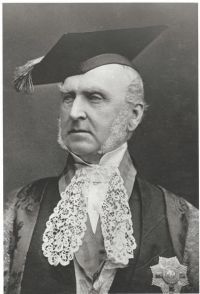
“ In the elaboration of each separate idea, a compensating mutual relation with some other cognate idea is found, which brings a fresh agency to bear upon, assimilate or clash with it; such attrition, different from that which wastes and diminishes physical bodies, serving to sharpen and refine the mind, correct, enlarge or perfect the idea. ”
 David Hume,
A Treatise of Human Nature
(1738)
David Hume,
A Treatise of Human Nature
(1738)
“ But though the decision of the one question decides the other; yet that we may the more easily discover the principles of human nature, from whence the decision arises, we shall carry along with us this distinction, and shall consider, whether it be the senses, reason, or the imagination, that produces the opinion of a continued or of a distinct existence. ”
Durant Drake, Problems of Conduct: An Introductory Survey of Ethics
“ But quite as important is the gradual development of an inward guide—those very various secondary impulses and inhibitions which we hump together because of their common function and call the moral sense or conscience. We shall now consider briefly the origin of this internal steering-apparatus. The latest and most mature guide of all, reflective insight, arises in marked degree only when abstraction and analysis. There is no problem connected with its origin except the general problems of the development of human reason. ”
William James, The Varieties of Religious Experience…
“ The value, the potency of ideals is the great practical truth on which the New Thought most strongly insists,—the development namely from within outward, from small to great.57Consequently one's thought should be centred on the ideal outcome, even though this trust be literally like a step in the dark.58 To attain the ability thus effectively to direct the mind, the New Thought advises the practice of concentration, or in other words, the attainment of self-control. ”
William James, Talks To Teachers On Psychology…
“ Our volitional habits depend, then, first, on what the stock of ideas is which we have; and, second, on the habitual coupling of the several ideas with action or inaction respectively. How is it when an alternative is presented to you for choice, and you are uncertain what you ought to do? ”
 Georg Wilhelm Friedrich Hegel,
Hegel's Philosophy of Mind
Georg Wilhelm Friedrich Hegel,
Hegel's Philosophy of Mind
“ The truth of these particularities and the concrete unity of their formalism is the content of the universal, essential and actual, will,—the law and underlying essence of every phase of volition, the essential and actual good. It is thus the absolute final aim of the world, and duty for the agent who ought [pg 116] to have insight into the good, make it his intention and bring it about by his activity. ”
 John Stuart Mill,
A System of Logic, Ratiocinative and Inductive
John Stuart Mill,
A System of Logic, Ratiocinative and Inductive
“ Without attempting in this place to justify my opinion, or even to define the kind of justification which it admits of, I merely declare my conviction, that the general principle to which all rules of practice ought to conform, and the test by which they should be tried, is that of conduciveness to the happiness of mankind, or rather, of all sentient beings ”
M. Allen, Essay on the Classification of the Insane
“ These means, and every principle which operates on human nature as checks on one part of the mind, and as encouragements to another, should be constantly and steadily kept in view, for the purpose of never losing an opportunity of instantly bringing them into useful, and of course successful, operation. ”
John Chilton Scammell, The Library of Entertainment: Handbook
“ At this time, too, interest is stirred to attempt an understanding of the 'reason for things'—the mind endeavors to arrive at some law or principle beneath the varied course of life and action in the world. ”
William James, The Principles of Psychology, Volume 1…
“ At bottom the process is one of conception, and is everywhere, even in the sphere of simple sensible qualities, the same as that by which we are usually understood to attain to the notions of abstract goodness, perfect felicity, absolute power, and the like: the direct perception of a difference between compounds, and the imaginary prolongation of the direction of the difference to an ideal terminus, the notion of which we fix and keep as one of our permanent subjects of discourse. ”
 Matthew Arnold,
Literature and Dogma
(1883)
Matthew Arnold,
Literature and Dogma
(1883)
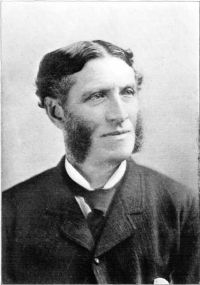
“ And yet, as man makes progress, we shall surely come to doing this. For, the clearer our conceptions in science and art become, the more will they assimilate themselves to the conceptions of duty in conduct, will become practically stringent like rules of conduct, and will invite the same sort of language in dealing with them. ”
 William De Witt Hyde,
The Five Great Philosophies of Life
William De Witt Hyde,
The Five Great Philosophies of Life
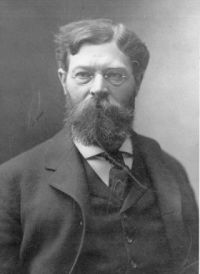
“ Good honest work, after an ideal plan, to the full measure of his powers, with wise selection of appropriate means, gives each individual his place and rank in the vast workshop wherein the eternal thoughts of God, revealed to men as their several ideals, are wrought out into the actuality of the social, economic, political, æsthetic and spiritual order of the world. ”
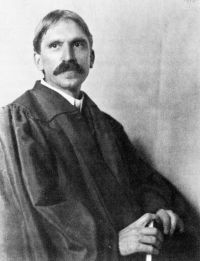 John Dewey,
Human Nature and Conduct: An introduction to social psychology
John Dewey,
Human Nature and Conduct: An introduction to social psychology
“ It is learning the meaning of what we are about and employing that meaning in action. The good, satisfaction, "end," of growth of present action in shades and scope of meaning is the only good within our control, and the only one, accordingly, for which [pg 281] responsibility exists. ”
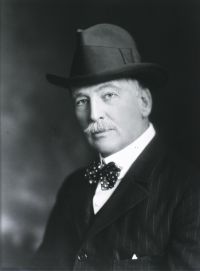 Morton Prince,
The unconscious
(1921)
Morton Prince,
The unconscious
(1921)
“ It is obvious that in everyday life when by arguments, persuasion, suggestion, punishment, exhortation, or prayer we change the viewpoint of a person, we do so by building up complexes which shall act as settings and give new meanings to his ideas. I 369may add, if we wish to sway him to carry this new viewpoint to fulfilment through action we introduce into the complex an emotion which by the driving force of its impulses shall carry the ideas to practical fruition. ”
 Herbert Spencer,
First Principles
Herbert Spencer,
First Principles
“ When, again, we speak of moral or intellectual progress, we refer to the state of the individual or people exhibiting it; while, when the progress of Knowledge, of Science, of Art, is commented upon, we have in view certain abstract results of human thought and action. ”
William James, Pragmatism: A New Name for Some Old Ways of Thinking
“ You want a system that will combine both things, the scientific loyalty to facts and willingness to take account of them, the spirit of adaptation and accommodation, in short, but also the old confidence in human values and the resultant spontaneity, whether of the religious or of the romantic type. ”
 George Edward Moore,
Principia Ethica — Chapter V
(1903)
George Edward Moore,
Principia Ethica — Chapter V
(1903)
“ Still, on the whole, the class of actions called duties exhibit both characteristics: they are not only actions, against the performance of which there are strong natural inclinations, but also actions of which the most obvious effects, commonly considered goods, are effects on other people. Expedient actions, on the other hand, are actions to which strong natural inclinations prompt us almost universally, and of which all the most obvious effects, commonly considered good, are effects upon the agent. ”
John Dewey,
Democracy and Education
(1916)
“ In just the degree in which connections are established between what happens to a person and what he does in response, and between what he does to his environment and what it does in response to him, his acts and the things about him acquire meaning. ”
 Benedetto Croce,
The Philosophy of the Practical…
Benedetto Croce,
The Philosophy of the Practical…
“ Is it not indubitable that we possess practical concepts, that is, concepts of classes of action or of supreme guides to action, concepts of things good, of ideals, of ends, and that we effect judgments of value by the application of those concepts to the image of given actions? ”
J. Macbride Sterrett, The Philosophical Review (1892)
“ Our First Principle interprets it as the reason of humanity organizing and instituting its needs and ideals in its onward stumbling to and fro between its own true character and its passing caricature. ”
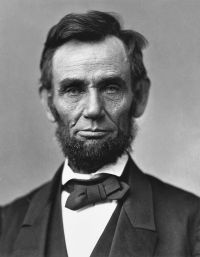 Abraham Lincoln,
Speeches & Letters of Abraham Lincoln…
Abraham Lincoln,
Speeches & Letters of Abraham Lincoln…
“ What is common-sense but the power of seeing the fundamentals of any practical question, and of disengaging them from the accidental and transient features that may overlie these fundamentals—the power, to use a familiar expression, of getting down to bed rock? ”
 Anicius Manlius Severinus Boethius,
The Consolation of Philosophy
(1897)
Anicius Manlius Severinus Boethius,
The Consolation of Philosophy
(1897)
“ However, to win ampler credence for my conclusion, I will pursue both paths, and draw confirmation for my statements first in one way and then in the other.'The carrying out of any human action depends upon two things—to wit, will and power; if either be wanting, nothing can be accomplished. ”
 William Wordsworth,
The Prose Works of William Wordsworth
William Wordsworth,
The Prose Works of William Wordsworth
“ Among the chief of these causes is to be reckoned a principle which must be well known to those who have made any of the Arts the object of accurate reflection; namely, the pleasure which the mind derives from the perception of similitude in dissimilitude. This principle is the great spring of the activity of our minds, and their chief feeder. ”
 George Q. Cannon,
Journal of Discourses — Volume 13…
George Q. Cannon,
Journal of Discourses — Volume 13…
“ We can realize then, the importance of adopting and carrying out the principles that will prepare us for that great work. It is not to be expected that we shall attain to perfection in the carrying out of such principles at once. ”
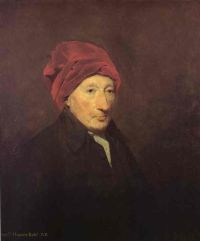 Thomas Reid,
An Inquiry into the Human Mind…
Thomas Reid,
An Inquiry into the Human Mind…
“ And the same reason ought to determine us to make a choice even among the senses, and to give the precedence, not to the noblest, or most useful, but to the simplest, and that whose objects are least in danger of being mistaken for other things. ”
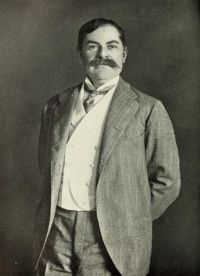 Thomas Nelson Page,
John Marvel, Assistant
Thomas Nelson Page,
John Marvel, Assistant
“ But human nature while it does not change basically may be regulated, developed, uplifted, and this teaching is based on this principle. It has not yet borne much apparent fruit, it is true; but it is sound, nevertheless. ”
Josiah Royce,
The Conception of God
(1897)
“ This generalised form of attention, which we attribute to the Absolute Experience, is now conceived by us as that aspect of this Absolute which, in the total movement of the world’s unity, determines the ideas to find this concrete realisation which they do find. ”
 William Whewell,
History of scientific ideas
(1858)
William Whewell,
History of scientific ideas
(1858)
“ This principle, which, as we have seen, is accepted as evident by the common understanding of mankind, is confirmed by all additional reflection and discipline of the mind, and is the foundation of all the theories which have been proposed concerning the processes by which the perception takes place, and concerning the modifications of the qualities thus perceived. ”
John Stuart Mill,
A System of Logic, Ratiocinative and Inductive
(1881)
“ And since it is by these laws, combined with the facts of each particular case, that the whole of the phenomena of human action and feeling are produced, it is on these that every rational attempt to construct the science of human nature in the concrete, and for practical purposes, must proceed. ”
 Johann Gottlieb Fichte,
Addresses to the German Nation…
(1922)
Johann Gottlieb Fichte,
Addresses to the German Nation…
(1922)
“ This remark implies that knowledge is regarded as a means to action, and the latter as the real end. One could put the question the other way round and ask: How can we possibly act well without knowing what the Good is? ”
George Edward Moore,
Principia Ethica — Chapter II
(1903)
“ But, if it is to give us any guidance as to how we ought to act in the future, it does involve a long and painful investigation of the exact points in which the superiority of the more evolved consists. ”
A World of Wonders, with Anecdotes and Opinions Concerning Popular Superstitions
“ Moreover, our features are constantly varying; and if our moral and intellectual faculties are to be inferred from these changes, how are we to establish or follow up any fixed principle, amid such a labyrinth of confusion? ”
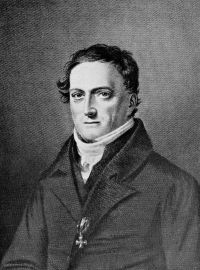 Johann Friedrich Herbart,
Outlines of Educational Doctrine
Johann Friedrich Herbart,
Outlines of Educational Doctrine
“ In consequence of frequent repetitions of similar acts of will, general concepts are gradually formed in the subjective side of character, concepts comprehending both the similar will actions already present under similar circumstances, and the requirements man sets up for himself with a view to determining his willing one way or another. ”
Johann Gottlieb Fichte,
Addresses to the German Nation…
(1922)
“ We must first of all set our own thoughts to work and think about the great events of our days, their relation to us, and what we have to expect from them; and we must provide ourselves with a firm and clear view of all these matters, and a definite and unchangeable Yes or No in answer to the questions that arise out of them. ”
