 John Ruskin,
The Crown of Wild Olive
John Ruskin,
The Crown of Wild Olive
“ Value is the life-giving power of anything; cost, the quantity of labour required to produce it; price, the quantity of labour which its possessor will take in exchange for it. ”
The concept of value encompasses diverse dimensions, ranging from ethical principles to economic indicators, yet remains central to legal discourse as a framework for evaluating worth. Authors such as John Ruskin framed value as intrinsic to an object’s utility, while Alfred North Whitehead emphasized its role as an event’s inherent importance.
Andrew Murray contrasted earthly and heavenly standards of worth, highlighting its moral relativity. These perspectives reveal value as both a quantifiable economic construct and a deeply contextual ethical assessment, reflecting its dual role in shaping legal, social, and philosophical frameworks.
John Ruskin,
The Crown of Wild Olive
“ Value is the life-giving power of anything; cost, the quantity of labour required to produce it; price, the quantity of labour which its possessor will take in exchange for it. ”
 Alfred North Whitehead,
Science and the modern world
(1925)
Alfred North Whitehead,
Science and the modern world
(1925)
“ Remembering the poetic rendering of our concrete experience, we see at once that the element of value, of being valuable, of having value, of being an end in itself, of being something which is for its own sake, must not be omitted in any account of an event as the most concrete actual something. ‘Value’ is the word I use for the intrinsic reality of an event. ”
Andrew Murray, Money: Thoughts for God's Stewards
“ And that not according to the earthly standard of value, where the question always is, How much? but according to the standard of heaven, where men's judgments of much and little, great and small, are all unknown. ”
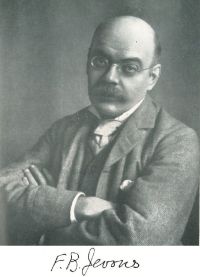 F. B. Jevons,
An Introduction to the Study of Comparative Religion
F. B. Jevons,
An Introduction to the Study of Comparative Religion
“ If, on looking back upon past history, we pronounce that an event had value, we do so because we see that it served, or might have served, some end of which we approve. Its value is relative in our eyes to some end or purpose which was relatively future to it. The objects which we aim at, the ends after which we strive, are in the future. Those things have value which may subserve our ends and help us to attain our purposes. ”
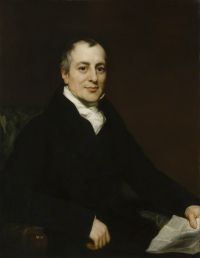 David Ricardo,
On The Principles of Political Economy…
David Ricardo,
On The Principles of Political Economy…
“ If we then ask him what he means by value, he tells us that things are valuable in proportion as they possess utility. If again we ask him to explain to us by what means we are to judge of the utility of objects, he answers, by their value. Thus then the measure of value is utility, and the measure of utility is value. ”
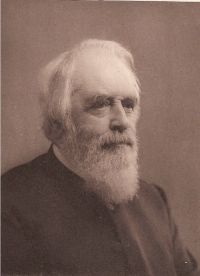 William Garden Blaikie,
The Expositor's Bible: The Book of Joshua
William Garden Blaikie,
The Expositor's Bible: The Book of Joshua
“ Valuations are made more accurately on the margin of eternity. The things that have been shaken and that have perished—of how little value are they seen to be, compared to the things that cannot be shaken! ”
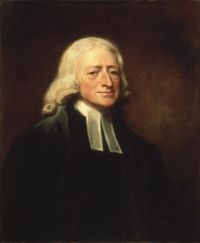 John Wesley,
The works of the Rev. John Wesley…
(1771)
John Wesley,
The works of the Rev. John Wesley…
(1771)
“ As much as to say, whatever thou gettest, or with the expence of all thou hast gotten, get wisdom, as being of infinitely more value than all. It is a pearl of so great price, that the merchant who finds it, will buy it with the price of all that he has. And a wise merchant he is who buys it even at this price, for it can never be bought too dear. Honour and greatness may; nay, and so may the whole world, if the price be a man’s soul. But wisdom cannot; therefore again, Get wisdom, and with all thy gettings, get understanding. If we get wisdom ’tis no matter what else we lose. ”
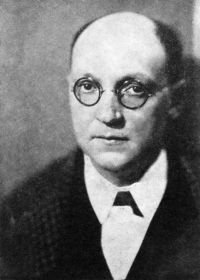 Georges Duhamel,
The Heart's Domain
(1919)
Georges Duhamel,
The Heart's Domain
(1919)
“ We wish to set our own value on everything, as if the things of the spirit meant the same thing as money, as if they did not depend upon quite another spirit than that of the accountants and geometricians. ”
George O'Brien, An Essay on Mediæval Economic Teaching
“ Value is not objective—intrinsic in the object—but subjective, varying with the desire and intentions of the possessors or would-be possessors; and, because it is thus subjective, there cannot be a definite ideal value which every article ought to possess, and still more a just price as the measure of that ideal value.' In these and similar observations to be found in the Growth of English History and Commerce, Dr. ”
Benjamin M. Anderson, The Value of Money
“ The theory of value, in its concrete fulness, is the special interest of the active business man, and especially of the business man who wishes, not merely to adapt himself to changes in values, but also in part, to control and manipulate those values. ”
 Thomas Hobbes,
Leviathan
(1651)
Thomas Hobbes,
Leviathan
(1651)
“ As if it were Injustice to sell dearer than we buy; or to give more to a man than he merits. The value of all things contracted for, is measured by the Appetite of the Contractors: and therefore the just value, is that which they be contented to give. ”
Arthur Isaac Fonda, Honest Money
“ John Stuart Mill says, in his "Principles of Political Economy":—"Value is a relative term. The value of a thing means the quantity of some other thing, or of things in general, which it exchanges7 for. The values of all things can never, therefore, rise or fall simultaneously. There is no such thing as a general rise or a general fall of values. Every rise of value supposes a fall, and every fall a rise." ”
 Thorstein Veblen,
The Place of Science in Modern Civilisation…
Thorstein Veblen,
The Place of Science in Modern Civilisation…
“ The question of value is a question of the extent to which the given item of wealth forwards the end of nature's unfolding process. It is valuable, intrinsically and really, in so far as it avails the great work which nature has in hand. ”
 Adam Smith,
The Wealth of Nations
(1902)
Adam Smith,
The Wealth of Nations
(1902)
“ The things which have the greatest value in use have frequently little or no value in exchange; and, on the contrary, those which have the greatest value in exchange have frequently little or no value in use. ”
Thomas Carlyle, Past and Present
“ And indeed, our common noun worth, in the sense of value, does not this mean simply, What a thing has grown to, What a man has grown to, How much he amounts to,—by the Threadneedle-street standard or another! ”
Andrew Murray, The Master's Indwelling
“ We prove the value we attach to things by the time we devote to them. ”
 William Bennett Munro,
Social Civics
(1922)
William Bennett Munro,
Social Civics
(1922)
“ The term value is employed in two different senses, value in use and value in exchange. By the former we mean the intrinsic utility of a thing. Air and sunlight, for example, have a high value in use; they are indispensable to life in fact ”
 George Edward Moore,
Principia Ethica — Chapter VI
(1903)
George Edward Moore,
Principia Ethica — Chapter VI
(1903)
“ It is, in fact, obvious that in order to decide correctly at what state of things we ought to aim, we must not only consider what results it is possible for us to obtain, but also which, among equally possible results, will have the greatest value. And upon this second enquiry the comparative valuation of known goods has a no less important bearing than upon the investigation of the Absolute Good. ”
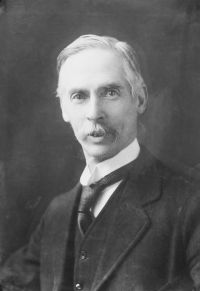 John Atkinson Hobson,
Confessions of an Economic Heretic
(1938)
John Atkinson Hobson,
Confessions of an Economic Heretic
(1938)
“ I expressed this important need in the following passage of my book. “The true ‘value’ of a thing is neither the price paid for it, nor the amount of present satisfaction it yields to the consumer, but the intrinsic service it is capable of yielding by its right use. ”
 John Stuart Mill,
Principles of Political Economy
John Stuart Mill,
Principles of Political Economy
“ When we consider, further, that value itself is relative, and that two things are necessary to constitute it, independently of the third thing which is to measure it, we may define a Measure of Value to be something, by comparing with which any two other things, we may infer their value in relation to one another. ”
George Henry Lane Fox Pitt-Rivers, Conscience & Fanaticism: An Essay on Moral Values
“ VI VALUER AND VALUATIONValue implies a valuer; however universal or established a value may be, the term is meaningless unless it bears relation to people who value. No definition of value is possible, or at any rate satisfactory, that does not imply the judgment, choice, or assertion of a valuer in the act of valuing. The universality of a value does not make it objective or independent of valuers, but merely widens the applicability of that value with regard to any imaginable valuer. ”
 Karl Marx,
Das Kapital
(1906)
Karl Marx,
Das Kapital
(1906)
“ Value, therefore, does not stalk about with a label describing what it is. ”
Matthew Henry, Matthew Henry's Commentary on the Whole Bible… (1700s)
“ Note, God does, and we should, value things according to their real worth: and the use of things is the best criterion of their real worth. Those are most valuable that best answer the highest purposes. ”
 Timothy Thomas Fortune,
Black and White: Land, Labor, and Politics in the South
(1884)
Timothy Thomas Fortune,
Black and White: Land, Labor, and Politics in the South
(1884)
“ To have value, it must become an object of barter, of circulation, in short, of exchange. As its value depends upon its utility, so when it can no longer be used it again becomes a useless mass of perishable wealth. ”
John Ruskin,
The Crown of Wild Olive
“ In the assertion that value is primarily intrinsic, it opposes the idea that anything which is an object of desire to numbers, and is limited in quantity, so as to have rated worth in exchange, may be called, or virtually become, wealth. And in the assertion that value is, secondarily, dependent upon power in the possessor, it opposes the idea that the worth of things depends on the demand for them, instead of on the use of them. ”
Portal:Anonymous texts, The Urantia Book (1955)
“ In the contemplation of values you must distinguish between that which is value and that which has value. You must recognize the relation between pleasurable activities and their meaningful integration and enhanced realization on ever progressively higher and higher levels of human experience. ”
 I. A. Richards,
Principles of literary criticism
(1928)
I. A. Richards,
Principles of literary criticism
(1928)
“ Among those who reject any metaphysical view of value it has become usual to define value as capacity for satisfying feeling and desire in various intricate ways.* For the purpose of tracing in detail the very subtle and varied modes in which people actually value things, a highly intricate treatment is indispensable, but here a simpler definition will suffice. ”
Benjamin M. Anderson, The Value of Money
“ My own theory of value, which finds the roots of economic value ramifying through the total social psychological situation, rather than in utility or labor-pain alone, involves possibilities like these. ”
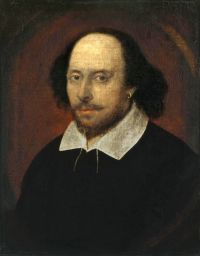 William Shakespeare,
The Complete Works of William Shakespeare
William Shakespeare,
The Complete Works of William Shakespeare
“ That what we have we prize not to the worth Whiles we enjoy it, but being lack’d and lost, Why, then we rack the value, then we find The virtue that possession would not show us Whiles it was ours. ”
Benjamin M. Anderson, The Value of Money
“ It is the belief of the present writer—not shared by all his critics!—that the definition of value which follows, and the conception of the function of value in economic theory involved in it, conform to the actual use of the term in the main body of economic literature. The theory of the causes of value here advanced is new, but the definition of value, and the conception of the relation of value to wealth, to price, to exchange, and to other economic ideas, seem to the present writer to conform to what is implied, and often expressed, in the general usage of economists. ”
 Ralph Waldo Emerson,
Letters and social aims
(1875)
Ralph Waldo Emerson,
Letters and social aims
(1875)
“ and there are many virtues in books,—but the essential value is the adding of knowledge to our stock, by the record of new facts, and, better, by the record of intuitions, which distribute facts, and are the formulas which supersede all histories. ”
 Antoine Augustin Cournot,
Researches into the Mathematical Principles of the Theory of Wealth
(1897)
Antoine Augustin Cournot,
Researches into the Mathematical Principles of the Theory of Wealth
(1897)
“ The abstract idea of wealth or of value in exchange, a definite idea, and consequently susceptible of rigorous treatment in combinations, must be carefully distinguished from the accessory ideas of utility, scarcity, and suitability to the needs and enjoyments of mankind, which the word wealth still suggests in common speech. ”
Geo. T. Fairchild, Rural Wealth and Welfare: Economic Principles Illustrated and Applied in Farm Life
“ Chapter IX. Value The Basis Of Exchange. The nature of value.—Perhaps no question in the discussion of wealth is of greater importance than the nature of value. Certainly the measurement of value in all our property is the basis of all exchanges, of all book accounts, and of all inventories. The worth of any piece of property in such estimates always involves some comparison, either of things possessed or of exertion required or of satisfaction yielded. In comparing an apple and a peach, both equally attainable, we may value the peach most highly because it gratifies desires in higher degree. ”
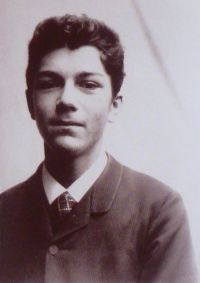 Daniel Halévy,
The life of Friedrich Nietzsche
Daniel Halévy,
The life of Friedrich Nietzsche
“ A thing, for instance, which has evident value with reference to the greatest durability of a race might possess quite another value, if it were a question of creating a higher type. The good of the greatest number and the good of the smallest number are antithetical points of view in valuation ”
Adam Smith,
The Wealth of Nations
(1776)
“ The value of money is in proportion to the quantity of the necessaries of life which it will purchase. ”
John Ruskin,
The Crown of Wild Olive
“ The view which has here been taken of the nature of wealth, namely, that it consists in an intrinsic value developed by a vital power, is directly opposed to two nearly universal conceptions of wealth. ”
Thomas Hobbes,
Leviathan
(1651)
“ The Value, or WORTH of a man, is as of all other things, his Price; that is to say, so much as would be given for the use of his Power: and therefore is not absolute; ”
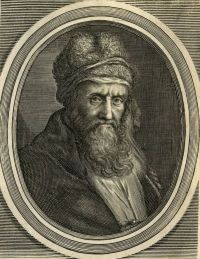 Diogenes Laërtius,
The Lives and Opinions of Eminent Philosophers
Diogenes Laërtius,
The Lives and Opinions of Eminent Philosophers
“ And by the term proper value, they mean that quality of things, which causes them to concur in producing a well-regulated life; and in this sense, every good has a proper value. Again, they say that a thing has value, when in some point of view, it has a sort of intermediate power of aiding us to live conformably to nature; and under this class, we may range riches or good health, if they give any assistance to natural life. ”
Diogenes Laërtius,
Lives of the Eminent Philosophers…
(1925)
“ Such as have value, they say, are "preferred," while such as have negative, instead of positive, value are "rejected." Value they define as, first, any contribution to harmonious living, such as attaches to every good; secondly, some faculty or use which indirectly [52] contributes to the life according to nature: which is as much as to say "any assistance brought by wealth or health towards living a natural life" ”
Benjamin M. Anderson, The Value of Money
“ But value is always a matter of psychological significance, and never a matter of mere material fact. And these psychological significances are not explained by such simple individual phenomena as labor-pain, or marginal utility, but always by reference to the total social-mental system, including its laws, its mores, its institutions, its centres of power and prestige, its modes and fashions, etc. ”
Arthur Isaac Fonda, Honest Money
“ Modern economists—chiefly those of the Austrian school—have analyzed the subject more thoroughly, especially the relation between the two conceptions, and have shown that utility or subjective value, as it is generally termed by them, is an expression both of human desire and of the quantity of the necessary commodity available to satisfy such desire. ”
 Arthur Latham Perry,
Principles of Political Economy
Arthur Latham Perry,
Principles of Political Economy
“ There is a useful and fascinating Science of Value, as we shall see indubitably by and by in the present chapter; but it is a science that deals primarily with persons and only secondarily with things, with mind and not with matter, with the general undulations of the sea and not with the crests of the waves. ”
John Stuart Mill,
Principles of Political Economy
(1871)
“ Wealth, then, may be defined, all useful or agreeable things which possess exchangeable value; or, in other words, all useful or agreeable things except those which can be obtained, in the quantity desired, without labour or sacrifice. ”
Paulist Fathers, Sermons by the Fathers of the Congregation of St…
“ The value of things may be got at in two ways. The first is by estimating them according to their real qualities; the second, according to what men are willing to give or sacrifice for their possession. ”
Arthur Latham Perry,
Principles of Political Economy
“ Having now a satisfactory definition of Value, and knowing accordingly just what Valuables are in clear distinction from all other things in the world, we must examine with some care two or three of the most general facts and laws and limits of Value, before we pass in the next following chapters to study in detail each of the three kinds of Valuables, namely, material Commodities, personal Services, commercial Credits. ”
Charles Nisbet, Popular Science Monthly (1877)
“ For indeed we prize life not by the sum of our possessions, but only by the rate and steadiness of our growth. "Not the possession," says Lessing, "or fancied possession of the truth, but the endeavor after it, determines a man's value. ”
 Thomas De Quincey,
Memorials and Other Papers — Complete
Thomas De Quincey,
Memorials and Other Papers — Complete
“ These will discover themselves as we advance. Meantime, I presume that in your use, and in everybody's use, of the word value, a high value ought to purchase a high value, and that it will be very absurd if it should not. But, as to purchasing a great quantity, that condition is surely not included in any man's idea of value.Phil. No, certainly; because A is of high value, it does not follow that it must purchase a great quantity ”
 John P. Jones,
Money: Speech of Hon. John P. Jones…
John P. Jones,
Money: Speech of Hon. John P. Jones…
“ Its "value" is the mental estimation of its qualities, as modified by the limitations of its quantity and the amount of sacrifice necessary to obtain it. In other words, value is subjective, not objective. In economic discussion, however, value is treated as though it resided in the object, rather than in the mind, and while, for convenience, I may occasionally use it in that sense, it is important to bear in mind the distinction. ”
 Oscar Wilde,
The Picture of Dorian Gray
Oscar Wilde,
The Picture of Dorian Gray
“ Nowadays people know the price of everything, and the value of nothing." ”
Karl MarxDavid RicardoI. A. RichardsArthur Latham PerryAntoine Augustin CournotHenry Earle RiggsBoyd Henry Bode George Howard Earle, Jr.George Edward Moore
 Frank A. Fetter
 G. E. Moore
 Friedrich NietzscheHector DenisP.-J. ProudhonJohn P. Jones
 Thomas Robert MalthusJohn RuskinAdam Smith
From ancient hoards to national mints, governments struggled to assert control over money. The clash between the inherent value of gold and silver and the state’s desire for monetary sovereignty shaped—and continues to shape—global economies, revealing the enduring power of the market.
The system relies on the core transaction of selling labor time for subsistence, extracting surplus value from unpaid hours, and forcing workers into a continuous wager for their health and family's happiness against the ruthless mobility of capital.
Luxury's value is fiercely debated: Is it a shallow performance of status driven by price, or an expression of profound intrinsic worth and human ingenuity? Its societal role oscillates between economic boon and moral corruption.
From actuarial tables to funeral parlors, death has been systematically monetized, revealing profound societal inequalities and transforming grief into a commodity. This economic scaffolding offers little solace for the immeasurable weight of loss.
Classical political economy established 'Land' as a passive factor yielding rent and 'Capital' as a produced asset yielding profit. Ecological pressures and systemic risk models now treat nature as 'natural capital,' requiring continuous maintenance and financial valuation, dissolving the foundational dichotomy of economic theory.
Our plates reflect shifting biases more than biological needs. From feared "poison" to staple, food's journey is a cyclical tale of cultural narrative, economic misconception, and nutritional rediscovery—revealing how modern diets are built on depletion.
The reduction of ethical missions and civic duties, including journalism and public service, to mere monetary price threatens the foundations of public trust. Historically, the expansion of the market, or 'universal venality,' risks transforming conviction, conscience, and reputation into saleable commodities.
From a symbol of universal wonder to contested real estate: The resurgence of lunar competition forces humanity to confront whether to export 18th-century concepts of property, dominion, and political conflict onto the silent, resource-rich surface of the Moon.
State coercion transforms asset valuation from a financial problem into a political one, exposing the fragility of corporate goodwill and rendering traditional market calculus obsolete.
