Summary

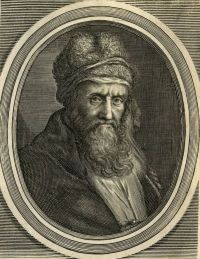
Portrait of Diogenes Laërtius Diogenes Laërtius The Lives and Opinions of Eminent Philosophers

Who gave to Greece her written books of wisdom.
And Athenæus, the Epigrammatic poet, speaks thus of all the Stoics in common:—
O, ye who’ve learnt the doctrines of the Porch,
And have committed to your books divine
The best of human learning; teaching men
That the mind’s virtue is the only good.
And she it is who keeps the lives of men,
And cities, safer than high gates or walls.
But those who place their happiness in pleasure,
Are led by the least worthy of the Muses.
Source: Gutenberg

Portrait of Diogenes Laërtius Diogenes Laërtius The Lives and Opinions of Eminent Philosophers

HERACLITUS, OF EPHESUS, TO KING DARIUS, THE SON OF HYSTASPES, GREETING.
“All the men that exist in the world, are far removed from truth and just dealings; but they are full of evil foolishness, which leads them to insatiable covetousness and vain-glorious ambition. I, however, forgetting all their worthlessness, and shunning satiety, and who wish to avoid all envy on the part of my countrymen, and all appearance of arrogance, will never come to Persia, since I am quite contented with a little, and live as best suits my own inclination.”
Source: Gutenberg

Portrait of Diogenes Laërtius Diogenes Laërtius The Lives and Opinions of Eminent Philosophers

And yet why need he provide himself with means? for if it is for the sake of living, living at all is a matter of indifference; if it is for the sake of pleasure, that is a matter of indifference too; if it is for the sake of virtue, that is of itself sufficient for happiness. But the methods of providing one’s self with means are ridiculous; for instance, some derive them from a king; and then it will be necessary to humour him. Some from friendship; and then friendship will become a thing to be bought with a price.
Source: Gutenberg

Get perspective with Kwize: daily news enlightened by great literature