 Johann Wolfgang von Goethe,
The Poems of Goethe, Translated in the Original Metres
Johann Wolfgang von Goethe,
The Poems of Goethe, Translated in the Original Metres
“ TELL me, eyes, what 'tis ye're seeking;For ye're saying something sweet,Fit the ravish'd ear to greet, Eloquently, softly speaking. ”
A saying is a concise, memorable phrase that captures wisdom, cultural norms, or observations, often going beyond its literal meaning. Authors have examined this theme from various perspectives: Goethe praised the eloquence of sayings, calling them "eloquently, softly speaking," while Matthew Henry focused on their interpretive depth, pointing out that proverbs need understanding to "crack the nut.
" Oliver Wendell Holmes emphasized the importance of repeating meaningful sayings, stating that "if he has anything worth saying, that is just what he ought to do." Richard Trench linked proverbs to poetic imagination, highlighting their lasting impact. These differing viewpoints show that sayings serve both as practical tools and artistic expressions, connecting reason with creativity.
Johann Wolfgang von Goethe,
The Poems of Goethe, Translated in the Original Metres
“ TELL me, eyes, what 'tis ye're seeking;For ye're saying something sweet,Fit the ravish'd ear to greet, Eloquently, softly speaking. ”
 Carl Schurz,
Speeches, correspondence and political papers of Carl Schurz
(1913)
Carl Schurz,
Speeches, correspondence and political papers of Carl Schurz
(1913)
“ Believe me, nothing is more distasteful to me than the duty of saying unpleasant things, and I perform it at a present sacrifice of feeling, in the hope of having all the more pleasant things to say hereafter, and publicly. ”
Matthew Henry, Commentary on the Whole Bible… (1700s)
“ They shall understand a proverb, even the interpretation, without which the proverb is a nut uncracked; when they hear a wise saying, though it be figurative, they shall take the sense of it, and know how to make use of it. ”
Oliver Wendell Holmes, Complete Project Gutenberg Oliver Wendell Holmes…
“ But what if one does say the same things,—of course in a little different form each time,—over her? If he has anything to say worth saying, that is just what he ought to do. ”
 Coventry Patmore,
The Angel in the House
Coventry Patmore,
The Angel in the House
“ Grant me the power of saying things Too simple and too sweet for words! ”
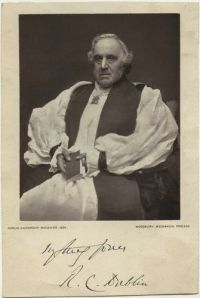 Richard Chenevix Trench,
Proverbs and Their Lessons
Richard Chenevix Trench,
Proverbs and Their Lessons
“ This being so, and proverbs being, as we have seen, the sayings that have found favour with the people, their peculiar inheritance, we may be quite sure that there will be poetry, imagination, passion, in them. ”
 Philip Schaff,
Nicene and Post-Nicene Fathers…
(1885)
Philip Schaff,
Nicene and Post-Nicene Fathers…
(1885)
“ Let us then begin our examination from the context of the passage in question, and see whether the reading of the neighbouring clauses gives any clear sense. The discourse describes Wisdom as uttering certain sayings in her own person. ”
 Alfred de Musset,
The Confession of a Child of the Century…
Alfred de Musset,
The Confession of a Child of the Century…
“ Invoke the aid of reason, of habit, of the senses, the head, the heart, and explain it if you can. You will find nothing but two bodies, one here, the other there, and between them, what? Air, space, immensity. O blind fools! who fondly imagine yourselves men, and who reason of love! ”
William Mathews, Words; Their Use and Abuse
“ In every relation of life, at every moment [3] of our active being, in every thing we think or do, it is on the meaning and inflection of a word that the direction of our thoughts, and the expression of our will, turn. The soundness of our reasonings, the clearness of our belief and of our judgment, the influence we exert upon others, and the manner in which we are impressed by our fellow-men,—all depend upon a knowledge of the value of words. ”
 Joseph Conrad,
A Personal Record — Preface
(1912)
Joseph Conrad,
A Personal Record — Preface
(1912)
“ The manner in laughter, in tears, in irony, in indignations and enthusiasms, in judgments--and even in love. The manner in which, as in the features and character of a human face, the inner truth is foreshadowed for those who know how to look at their kind. ”
Philip Schaff,
Nicene and Post-Nicene Fathers…
(1885)
“ Thou referrest to the usage of thy conversation, and sayest within thyself, What is a word? What mighty thing is a word? It sounds and passes away; after beating the air, it strikes the ear and is no more. ”
| editor, Sacred Books of the East/Volume 1 (1879)
“ And here they ask: 'What is the beginning of this day?' Let him say: 'Mind and speech.'2. All desires dwell in the one (mind) , the other yields all desires.3. All desires dwell in the mind, for with the mind he conceives all desires.4. All desires come to him who knows this.5. Speech yields all desires, for with speech he declares all his desires.6. Speech yields all desires to him who knows this.7. Here they say: 'Let him not begin this day with a Rik, a Yagus, or a Saman verse (divine speech) , for it is said, he should not start with a .Rik, a Yagus, or a Saman.'8. ”
Anonymous, The Book of the Craft of Dying (1917)
“ And when thine eyes be closed, thine hearing a-gone, thy speech withdrawn and may not speak, then shalt thou see what thy master the World will do for thee. Seek thy coffers he will, and every corner by the way of likelihood where any goods is in. ”
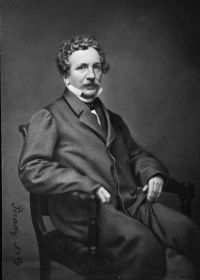 G. P. R. James,
The Forgery; or, Best Intentions
G. P. R. James,
The Forgery; or, Best Intentions
“ In the record of ten long years, I have much, very much, to tell to the only one in all the world to whom the thoughts, and feelings, and actions--ay, and fancies, and dreams--of all that period can be told. ”
 William Shakespeare,
Shakespeare's Sonnets (1883) — Sonnet 69
(1883)
William Shakespeare,
Shakespeare's Sonnets (1883) — Sonnet 69
(1883)
“ Those parts of thee that the world's eye doth view Want nothing that the thought of hearts can mend; All tongues— the voice of souls— give thee that due, Uttering bare truth, even so as foes commend. ”
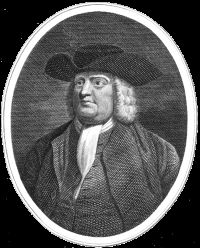 William Penn,
A Sermon Preached at the Quaker's Meeting House…
William Penn,
A Sermon Preached at the Quaker's Meeting House…
“ O ye simple ones understand wisdom, and ye fools be of an understanding heart; hear, for I will speak of excellent things, and the opening of my lips shall be right things: Blessed is the man that heareth me, watching daily at my gates, waiting at the posts of my doors: For whoso findeth me findeth life. ”
 William Wordsworth,
The Prelude
(1850)
William Wordsworth,
The Prelude
(1850)
“ Even when unconsciously, to things removed From a familiar sympathy.—In fine, I was a better judge of thoughts than words, Misled in estimating words, not only By common inexperience of youth, But by the trade in classic niceties, The dangerous craft of culling term and phrase From languages that want the living voice To carry meaning to the natural heart; To tell us what is passion, what is truth, What reason, what simplicity and sense. ”
 Israel Zangwill,
Jinny the Carrier
Israel Zangwill,
Jinny the Carrier
“ Look at ’em, I say, every man and woman knowing their place, and when to speak and when to hold their blooming tongue, every one knowing their parts too, which is more than you ever did, I’ll be bound. ”
 Margaret Fuller,
Life Without and Life Within; or…
Margaret Fuller,
Life Without and Life Within; or…
“ Let us show you our view, compare it with yours, and let us see which is the better. If, as we think, the truth lie with us, what joy will it be for us to cast the clear light on the object of your aspirations! ”
William Shakespeare,
Shakespeare's Sonnets — The Text …
(1923)
“ To witness duty, not to show my wit: 4 Duty so great, which wit so poor as mine May make seem bare, in wanting words to show it, But that I hope some good conceit of thine In thy soul's thought, all naked, will bestow it ”
Brett Page, Writing for Vaudeville
“ Does it lure to laughter? Does it touch to tears? Is it well constructed—that is, does it interest every minute of the time? Is every word, is every action, thoroughly motivated? Is the dialogue fine? ”
 Orison Swett Marden,
Pushing to the Front
Orison Swett Marden,
Pushing to the Front
“ CHAPTER XXVIII DECISION Resolve, and thou art free.—LONGFELLOW. The heaviest charged words in our language are those briefest ones, "yes" and "no." One stands for the surrender of the will, the other for denial; one stands for gratification, the other for character. ”
Anna Robertson Brown Lindsay, The Warriors
“ So each man goes to the dictionary. He takes a word here, a word there, common words that everybody knows. He puts them together: the result is a presentation of the life of man, and lays hold of his inmost spirit. ”
Anonymous, Notes of hospital life from November…
“ I tell you, I feel better the whole day for one look like that. It’s my belief that all the talk that’s right from the heart comes out of the eye, and when men want to make you believe things not just so, it’s their tongue they use. ”
 Adela Florence Cory Nicolson,
Stars of the Desert
(1903)
Adela Florence Cory Nicolson,
Stars of the Desert
(1903)
“ To tell thee what thou knewest and didst not heed. Why shouldst thou heed? What could I do for thee, To whom the whole world is willing to give its all Holding that all less than the sight of thee? ”
Laura Fry Kready, A Study of Fairy Tales (1916)
“ Tell it, if possible, with a sense of bestowing a blessing, and a delicate perception of the reception it meets in the group before you, and the pleasure and interest it arouses in them, so that in the telling there is that human setting which is a quickening of the spirit and a union of ideas, which is something quite new and different from the story, yet born of the story. ”
 Edward Payson Roe,
From Jest to Earnest
Edward Payson Roe,
From Jest to Earnest
“ You have a mind of unusual vigor, and a good faculty in expressing your thought. Won't you give me a keen, truthful analysis of the whole service? It is to the world I am to preach; and I wish to know just how what I say strikes the world. ”
Johann Wolfgang von Goethe,
The Works of J. W. von Goethe
(1901–1902)
“ Henceforward I may ne'er to thee confide How, far as thought, wish, fancy, will, can reach, My faithful heart with thine is surely blended. Thus stood I once enraptured by thy side, Gazed on thee, and said nought. What need of speech? ”
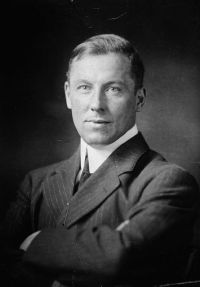 Robert W. Service,
Songs of a Sourdough
Robert W. Service,
Songs of a Sourdough
“ Have you suffered, starved, and triumphed grovelled, down, yet grasped at glory, Grown bigger in the bigness of the whole? [27] "Done things" just for the doing, letting babblers tell the story, Seeing through the nice veneer the naked soul? Have you seen God in His splendours, heard the text that nature renders? (You'll never hear it in the family pew.) The simple things, the true things, the silent men who do things— Then listen to the wild—it's calling you. ”
Henry Ware, Hints on extemporaneous preaching
“ To be compelled to shape the course of remark so as to suit a sentence which is by and by to come, or to introduce certain expressions which are waiting for their place, is a check to the natural current of thought. ”
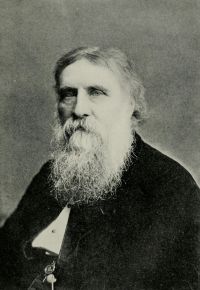 George MacDonald,
Gutta-Percha Willie
George MacDonald,
Gutta-Percha Willie
“ If you were to take a few strong words, a few persuasive words, and a few tender words, mightn't you mix them so—that is, so set them in order—as to make them a good medicine for a sore heart, for instance? ”
Oliver Wendell Holmes, The Autocrat of the Breakfast-Table
“ You see, my friends, what immense conclusions, touching our lives, our fortunes, and our sacred honor, may be reached by means of very insignificant premises. This is eminently true of manners and forms of speech; a movement or a phrase often tells you all you want to know about a person. ”
Earl of Philip Dormer Stanhope Chesterfield, Letters to His Son, Complete
“ Let us resume our reflections upon men, their characters, their manners, in a word, our reflections upon the world. They may help you to form yourself, and to know others; a knowledge very useful at all ages, very rare at yours. ”
Joseph Conrad,
Victory: An Island Tale
(1915)
“ Often in the course of years an expressed sentiment, the particular sense of a phrase heard casually, would recall him to my mind so that I have fastened on to him many words heard on other men's lips and belonging to other men's less perfect, less pathetic moods. ”
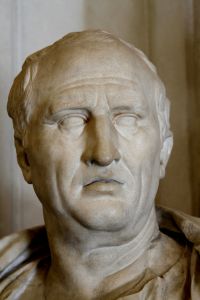 Marcus Tullius Cicero,
The Orations of Marcus Tullius Cicero…
Marcus Tullius Cicero,
The Orations of Marcus Tullius Cicero…
“ But the things which have been said about a clear speech, all have reference also to the brilliant one which we are now speaking of, for this is only a kind somewhat more brilliant than that which I have called clear. By one kind we are made to understand, but by the other one we actually appear to see. ”
 Alexander Pope,
An Essay on Man
(1751)
Alexander Pope,
An Essay on Man
(1751)
“ At best more watchful this, but that more strong. The action of the stronger to suspend, Reason still use, to reason still attend. Attention, habit and experience gains; Each strengthens reason, and self-love restrains. ”
 Gilbert Parker,
A Romany of the Snows, Complete
Gilbert Parker,
A Romany of the Snows, Complete
“ Tell me, who has ever said, ‘You have showed me how to live’? Even the women, though they cry sometimes when you sing-song the prayers, go on just the same when the little ‘bless-you’ is over. Why? Most of them know a better thing than you tell them. ”
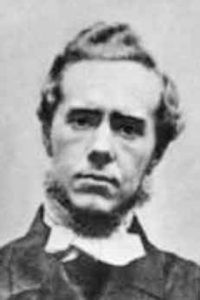 James Hudson Taylor,
Union and Communion; or, Thoughts on the Song of Solomon
James Hudson Taylor,
Union and Communion; or, Thoughts on the Song of Solomon
“ For how many have said in bewilderment at the richness of language and profusion of figure which both conceal and reveal its meaning, "How can I understand except some man should guide me?" It is safe to say that these pages cannot fail to help and bless all such. ”
Matthew Henry, Matthew Henry's Commentary on the Whole Bible… (1700s)
“ If thou canst, answer me. If thou hast so much strength and spirit left thee, and art not quite spent with the distemper and the dispute, set thy words in order, and they shall have their due consideration." Those that can speak reason will hear reason. ”
William Penn,
No cross, no crown
“ A word in the next chapter, further explains his sense, where he tells the believers, that they are a peculiar people; to wit, a distinct, a singular and separate people from the rest of the world: not any longer to fashion themselves according to their customs. ”
Recitations for the Social Circle…
“ Or, can anything impart such exquisite pleasure to the ear and to the intellect, as a speech in which the wisdom and dignity of the sentiments are heightened by the utmost force and beauty of expression? ”
Viscount James Bryce Bryce, William Ewart Gladstone
“ We may call it a power of ennobling ordinary things by showing their relation to great things, of pouring high emotions round them, of bringing the worthier motives of human conduct to bear upon them, of touching them with the light of poetry. ”
Matthew Henry, Commentary on the Whole Bible… (1700s)
“ A few close arguments are worth a great many big words; and those will strike sail to fair reasoning who will answer those that hector and insult according to their folly. How forcible are right words! What is spoken wisely should be spoken calmly, and then it will be heard in quiet and calmly considered. But passion will lessen the force even of reason, instead of adding any force to it. ”
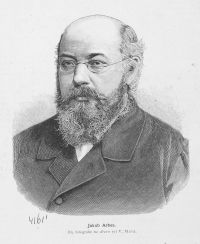 Jakub Arbes,
Poet Lore
(1910)
Jakub Arbes,
Poet Lore
(1910)
“ I beg your pardon, my esteemed friends. Every one judges after his own fashion; every one perceives, qualifies, and names various conceptions and objects in the way he has learned and acquired, and as he likes. ”
 Samuel Johnson,
Notes to Shakespeare, Volume III: The Tragedies
Samuel Johnson,
Notes to Shakespeare, Volume III: The Tragedies
“ The literal sense is, Do not make thy palm callous by shaking every man by the hand. The figurative meaning may be, Do not by promiscuous conversation make thy mind insensible to the difference of characters. ”
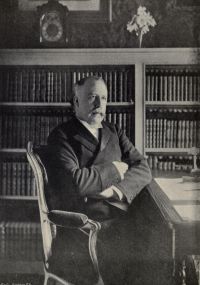 George William Erskine Russell,
Seeing and Hearing
George William Erskine Russell,
Seeing and Hearing
“ Passionately convinced (at twenty) that we had sworn ourselves for life to each cause which we espoused, we have pleaded and planned and denounced and persuaded; have struck the shrewdest blows which our strength could compass, and devised the most dangerous pitfalls which wit could suggest. ”
