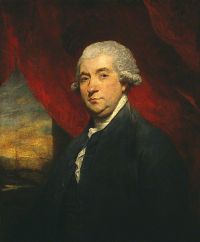
Samuel Johnson

Biographical details

Portrait of Samuel Johnson Samuel Johnson,  Dr. Johnson's Works: Life, Poems…

“ IRENE.
Can Mahomet's imperial hand descend
To clasp a slave? or can a soul, like mine,
Unus'd to pow'r, and form'd for humbler scenes,
Support the splendid miseries of greatness?
CALI.
No regal pageant, deck'd with casual honours,
Scorn'd by his subjects, trampled by his foes;
No feeble tyrant of a petty state,
Courts thee to shake on a dependant throne;
Born to command, as thou to charm mankind,
The sultan from himself derives his greatness.
Observe, bright maid, as his resistless voice
Drives on the tempest of destructive war,
How nation after nation falls before him.
”

Source: Gutenberg

Portrait of Samuel Johnson Samuel Johnson,  The Works of Samuel Johnson, in Sixteen Volumes…

“ Thy palace is gladdened by the song of praise, and thy path perfumed by the breath of benediction. Thy subjects gaze upon thy greatness, and think of danger or misery no more. Why, Seged, wilt not thou partake the blessings thou bestowest? Why shouldst thou only forbear to rejoice in this general felicity? Why should thy face be clouded with anxiety, when the meanest of those who call thee sovereign, gives the day to festivity, and the night to peace? At length, Seged, reflect and be wise. What is the gift of conquest but safety? Why are riches collected but to purchase happiness? ”
Source: Gutenberg

Portrait of Samuel Johnson Samuel Johnson,  The Lives of the Most Eminent English Poets (1794)

“ While you so smoothly turn and roll our sphere,
That rapid motion does but rest appear.
For as in nature's swiftness, with the throng
Of flying orbs while ours is borne along,
All seems at rest to the deluded eye,
Mov'd by the soul of the same harmony:
So carry'd on by your unwearied care,
We rest in peace, and yet in motion share.
To this succeed four lines, which perhaps afford Dryden's first attempt at those penetrating remarks on human nature, for which he seems to have been peculiarly formed:
Let envy then those crimes within you see,
From which the happy never must be free
”
Source: Wikisource

Get perspective with Kwize: daily news enlightened by great literature