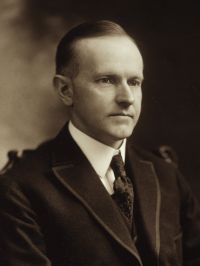
Calvin Coolidge,
Have faith in Massachusetts; 2d ed
“ Workmen's compensation, hours and conditions of labor are cold, consolations, if there be no employment. ”
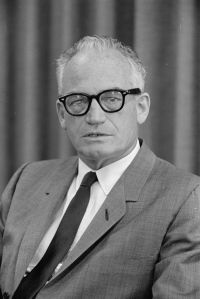
Employment, understood as the act of engaging someone in work, has long been central to discussions on labor, economy, and social organization. Authors such as Lydia Maria Child emphasized its ethical aspects, contending that just working conditions promote employee drive and autonomy, while Barry Goldwater focused on the disparities of power between those who hire and those who are hired. Sir Arthur Helps, in The Claims of Labour, portrayed work as an area where employers could demonstrate imagination and moral duty.
Meanwhile, Helen Marot stressed practical factors such as pay and job security when making career decisions. These viewpoints together show work as a fundamental element of economic life, linking personal survival with wider social patterns. The topic therefore connects individual goals with systemic fairness, highlighting its lasting importance in shaping both personal futures and communal well-being.
Calvin Coolidge,
Have faith in Massachusetts; 2d ed
“ Workmen's compensation, hours and conditions of labor are cold, consolations, if there be no employment. ”
Isaac McBride, "Barbarous Soviet Russia"
“ Each wage earner, on entering the employment of an enterprise, establishment or institution employing paid labor, shall present his labor booklet to the management thereof, or on entering the employment of a private individual—to the latter. ”
Lydia Maria Child,
An Appeal in Favor of that Class of Americans Called Africans
(1833)
“ That labor is best, in which the laborer knows that he will derive the profits of his industry, that his employment depends upon his diligence, and his reward upon this assiduity. He then has every motive to excite him to exertion, and to animate him in perseverance. He knows that if he is treated badly he can exchange his employer, for one who will better estimate his service ”
Barry Goldwater,
The conscience of a Conservative
(1960)
“ The economic power of the large enterprises, as compared with that of the individual employee, was such that wages and conditions of employment were pretty much what the employer decided they would be. ”
Sir Arthur Helps,
The Claims of Labour: An essay on the duties of the employers to the employed
“ But in directing the employment of labour, they would find room for the exercise of all the powers of their minds, of their best affections, and of whatever was worthy in their ambition. p. 35Their occupation, so far from being a limited sphere of action, is one which may give scope to minds of the most various capacity. ”
Charles Gide,
Consumers Cooperative Societies
(1920)
“ To commence the manufacture of such articles as the Society may determine upon, for the employment of such members as may be without employment, or who may be suffering in consequence of repeated reductions in their wages. ”
Helen Marot,
Creative Impulse in Industry: A Proposition for Educators
“ The primary considerations in the intelligent selection of a vocation relate to wages, steadiness of employment, health risks, opportunity for advancement, apprenticeship conditions, union regulations and the number of chances there are for getting into it. These things are fundamental, and any one of them may well take precedence over the matter of whether the tastes of the future wage earner run to wood, brick, stone or steel. ”
Charles McCarthy, The Wisconsin Idea — Labor, Health… (1912)
“ The term 'employment' shall mean and include any trade, occupation or process of manufacture, or any method of carrying on such trade, occupation, or process of manufacture in which any person may be engaged, except in such private domestic service or agricultural pursuits as do not involve the use of mechanical power... ”
William English Walling,
Socialism as it is
“ We are just beginning to learn that the employer who gives steady employment, pays fair wages, and pays close attention to the physical health and comfort of his employees gets the best results from their labor. ”
John B. Tuke, John Macpherson, Lewis C. Bruce, Alexander W. Renton and Frederick Peterson, 1911 Encyclopædia Britannica (1911)
“ An air of busy occupation is observed in sewing-rooms, schools, shops, in the fields and gardens, employment contributing not only to economy in administration, but to improvement in mental and physical conditions. ”
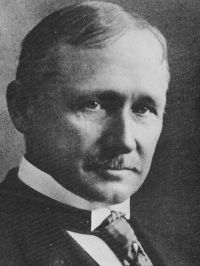
Frederick Winslow Taylor,
Shop Management
“ In the great majority of cases the work is so miscellaneous in its nature as to call for the employment of workmen varying greatly in their natural ability and attainments, all the way, for instance, from the ordinary laborer, through the trained laborer, helper, rough machinist, fitter, machine hand, to the highly skilled special or all-round mechanic. ”
John Ruskin,
The Queen of the Air: Being a Study of the Greek Myths of Cloud and Storm
“ The third great principle of employment is, that whenever there is pressure of poverty to be met, all enforced occupation should be directed to the production of useful articles only; that is to say, of food, of simple clothing, of lodging, or of the means of conveying, distributing, and preserving these. ”
John Stuart Mill,
Principles of Political Economy
(1871)
“ We have surveyed the field of economical facts, and have examined how they stand related to one another as causes and effects; what circumstances determine the amount of production, of employment for labour, of capital and population; what laws regulate rent, profits, and wages; under what conditions and in what proportions commodities are interchanged between individuals and between countries. We have thus obtained a collective view of the economical phenomena of society, considered as existing simultaneously. ”
Lorenzo Snow,
Journal of Discourses — Volume 19…
“ Some twelve or fifteen work in this establishment, and the people sustain them in their operations. Those engaged in the various branches of labor feel confident that the people will patronize them, and carry out what they have agreed in this particular, and they do not trouble themselves about any other employment, or business. ”
Theodore Parker,
The Collected Works of Theodore Parker
(1864)
“ This class owns the machinery of society, in great measure,—the ships, factories, shops, water-privileges, houses, and the like. This brings into their employment large masses of working men, with no capital but muscles or skill. The law leaves the employed at the employer's mercy. ”
John Stuart Mill,
Principles of Political Economy
(1871)
“ There is a very great amount of labour employed, not in bringing the product into existence, but in rendering it, when in existence, accessible to those for whose use it is intended. Many important classes of labourers find their sole employment in some function of this kind. ”
active 1803-1825 William Bennet Stevenson, Historical and descriptive narrative of twenty years' residence in South America…
“ Here the working mechanic is sure of employment; he can calculate with certainty on his earnings, and by being indispensably necessary he acquires a personal independence, totally unknown where labour is scarce, or population excessive. ”
Harlan F. Stone,
National Labor Relations Board v…
“ The employment of men, the fixing of their wages, hours of labor, and working conditions, the bargaining in respect of these things-whether carried on separately or collectively-each and all constitute intercourse for the purposes of production, not of trade. ”
Thorstein Veblen,
The Theory of Business Enterprise
(1904)
“ Leaving aside the archaic vocations of war, politics, fashion, and religion, the employments in which men are engaged may be distinguished as pecuniary or business employments on the one hand, and industrial or mechanical employments on the other hand. ”
Joseph Addison,
The Spectator, Volumes 1, 2 and 3
“ A well-regulated Commerce is not, like Law, Physick or Divinity, to be overstocked with Hands; but, on the contrary, flourishes by Multitudes, and gives Employment to all its Professors. ”
Karl Marx,
Das Kapital
(1906)
“ But, suppose, besides, that the making of the new machinery affords employment to a greater number of mechanics, can that be called compensation to the carpet makers, thrown on the streets? ”
Jane Austen,
Mansfield Park
(1814)
“ There is nothing like employment, active indispensable employment, for relieving sorrow. Employment, even melancholy, may dispel melancholy, and her occupations were hopeful. ”
Adam Smith,
The Wealth of Nations
(1776)
“ The real and effectual discipline which is exercised over a workman, is not that of his corporation, but that of his customers. It is the fear of losing their employment which restrains his frauds and corrects his negligence. ”
Samuel Johnson,
The Works of Samuel Johnson, LL.D. in Eleven Volumes…
“ They may learn, from the example of Drake, that diligence in employments of less consequence, is the most successful introduction to greater enterprises. ”
Louis F. Post,
The basic facts of economics
(1927)
“ No more truly in the Labor category are the services of “wage-workers” than are those of farmers, of manufacturers, of merchants, of brokers, of bankers, of architects, of lawyers, of physicians, of engineers, of authors, publishers, teachers, or the services of any other useful workers who participate in the intricate processes of Economic production. All are within the Labor category. ”
Arthur Stanwood Pier,
The Ancient Grudge
(1905)
“ For a time I felt that having brought about in my own mills a relation between capital and labor which I may go so far as to term ideal, and having published my book, my philosophy of an employer's life, I had contributed my utmost to the cause of industrial civilization. ”
Frank W. Blackmar,
History of Human Society
“ The Economics of Labor.—In complex society there are many divisions or groups of laborers—laborers of body and laborers of mind. Every one who is performing a legitimate service, which is sought for and remunerative to the laborer and serviceable to the public, is a laborer. At the base of all industry and social activity are the industrial wage-earners, who by their toil work the mines, the factories, the great steel and iron industries, the railroads, the electric-power plants and other industries. ”
Timothy Thomas Fortune,
Black and White: Land, Labor, and Politics in the South
“ In the most common tasks one has to watch the average workingman in order to prevent his bungling a job. Hands are worth little without some brains; as in the work done, so in the pay won. Our labor is quite as largely uninterested—having no more heart than brains back of the hands. Work is done mechanically by most workingmen, with little pride in doing it well, and little ambition to be continually doing it better.2. There is too commonly as little sense of identity with the employer's interests, or of concern that any equivalent in work should be rendered for the pay received. ”
Austin Lewis, Proletarian and Petit-Bourgeois (1912)
“ By all the kinds of labor we do not mean merely all the crafts, but in addition factors which have been overlooked in the organization of crafts—factors which appear at each end of the productive apparatus—at the one end, clerks, salesmen, stenographers, telephone operators, telegraphers, and all the non-handworking staff which is essential to the practical handling of a great business, and at the other end the unskilled laborers who are equally essential but so far unorganized and unrecognized. ”
“ In the meantime, however, we seem to have been developing—partly by competition and partly by combination and by experience—employers who are not mechanical-minded, who have spirit themselves, and who believe in it and can use it in others; who find ways of adjusting the hours, the wages, and the conditions of work for the men, so that what is most valuable in them, their spirit, their imaginations, their hourly good-will, can all be turned into the business, can all daily be used as the most important part of the working equipment of the factory. ”
Albert Gallatin Mackey,
Manual of the Lodge
(1868)
“ As labor is the divinely appointed lot of man, in this degree the rewards of industry are set forth in emblematic forms, and the recipient is taught the exercise of diligence and industry, that by the faithful performance of his task he may, in due time, be entitled to the wages for which he has wrought. ”
Alexander L. Peterman, Elements of Civil Government
“ All business transactions; the search for homes, comforts, and wealth; agriculture, manufacturing, mining, and commerce; the conduct of all professions, occupations, and industries; the interests of farm laborers, operatives in factories, miners, clerks, and all persons engaged in mental or physical labor, are based upon industrial rights and duties. ”
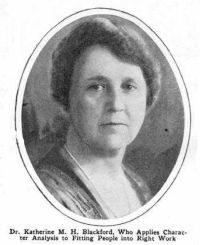
Katherine M. H. Blackford,
Analyzing Character
“ The ideal for every employee, therefore, is that he should be employed in that position which he is best fitted to fill, doing work which by natural aptitudes, training, and experience he is best qualified to do, and working under conditions of material environment—tools, rates of pay, hours of labor, and periods of rest, superintendence and management, future prospects, and education—which will develop and make useful to himself and his employer his best and finest latent abilities and capacities. ”
Geo. T. Fairchild, Rural Wealth and Welfare: Economic Principles Illustrated and Applied in Farm Life
“ The three kinds of labor are combined in some proportion in every life, but the best and most productive life his most room for hard thinking and self-control. Operative, executive, speculative labor.—In the advancing complexity of society a still more important classification of labor is apparent. If a man's effort of any kind is simply to follow directions in an established routine, it is called operative labor, and the laborer becomes an operative. He works usually by the day, hour or piece, under a foreman or overseer. ”
Robert Barr,
The Face and the Mask
“ My dear Scriver, you can’t really mean what you say. You know that I hold that all classes of labor should have exactly the same compensation. The miner, the blacksmith, the preacher, the postal clerk, the author, the publisher, the printer—yes, the man who sweeps out the office, or who polishes boots, should each share alike, if this world were what it should be—yes, and what it will be. ”
Sir Arthur Helps,
The Claims of Labour: An essay on the duties of the employers to the employed
“ You, who have but few dependents, or, perhaps, but one drudge dependent upon you, whether as servant, apprentice, or hired labourer, do not think that you have not an ample opportunity for exercising the duties of an employer of labour. Do not suppose that these duties belong to the great manufacturer with the population of a small town in his own factory, or to the landlord with vast territorial possessions, and that you have nothing to do with them. ”
Timothy Thomas Fortune,
Black and White: Land, Labor, and Politics in the South
(1884)
“ How, in the name of all that is reasonable, can the average man take much interest in his employer or identity himself with that employer under such a state of things as the economy sanctioned by the employer has taught him? ”
Washington Gladden,
The Church and Modern Life
“ Here is an employer of many hundreds of men, at the head of a very large business, which is rapidly increasing. This is not an imaginary case. This employer is a man of flesh and blood, and he is in the very thick of the competitive mêlée; he is using the machinery of the wage system, but he is governing all his business by the principles of Christianity, and the business is thriving in a marvelous way. ”
Alice Henry,
The Trade Union Woman
“ There, without any deceiving veils falling between, we come close up to the real point at issue between the employer and the employed, between the employé and the community, the standard of living that is possible, as measured by the employé's share of the product of labor. ”
Austin Lewis, Proletarian and Petit-Bourgeois (1912)
“ First, against the employer, and seeks to regulate the wages and hours in the special craft, to make special arrangements with respect to the conduct of business, sanitary conditions, lighting, method of collecting wages and a host of other matters which necessarily arise in the course of the production of commodities. ”
Katherine M. H. Blackford,
Analyzing Character
“ For the last fifty years we have made great progress in the invention of machinery, the development of new industries, the organization of great financial and industrial institutions, and the volume of production in nearly all lines. But, in the meantime, in order to make this advance, Civilization has been required to carry back, some hundred of years, the relationship between employer and employed. ”
Sir Arthur Helps,
The Claims of Labour: An essay on the duties of the employers to the employed
“ He may prove in many ways, as a mere purchaser, his concern for the interests of the producer. And there are, doubtless, occasions on which you, the great employers of labour, may call upon him to make large sacrifices of his money, his time, and his thoughts, for the welfare of the labouring classes. His example and his encouragement may cheer you on; and as a citizen, as an instructor, as a neighbour, in all the capacities of life, he may act and speak in a way that may indirectly, if not directly, support your more manifest endeavours in the same good cause. ”
G. K. Chesterton,
A Miscellany of Men
“ If you go to a factory you will see some very wonderful wheels going round; you will be told that the employer often comes there early in the morning; that he has great organising power; that if he works over the colossal accumulation of wealth he also works over its wise distribution. All this may be true of many employers, and it is practically said of all. ”
William Booth,
In Darkest England, and the Way Out
“ The first business on hand is for us to get information of those out of work and employers requiring workers, so that we can place them upon our registers, and make known the wants both of employers and employes. ”
Cicely Hamilton, Marriage as a Trade (1909)
“ Work in the factory or in the office, work which brings us into contact with the outside world, calls for the exercise of qualities and attainments which we had no need of before, for the abandonment of habits and ideas which can only hamper our progress in our changed surroundings. ”
R. R. Lutz, Wage Earning and Education
“ The business of any community requires certain kinds of work to be performed and the relative amount of work required and consequently the relative number of workers vary but slightly over a long period of time. ”
etc. statutes Germany. Laws, The Theory and Policy of Labour Protection
“ Before the issue of working rules, or of supplements to the same, opportunity shall be given to the workers of full age, employed in the factory or in the departments of the business, to which the rules in question apply, to express their opinion on the contents of the same. ”
From the 19th-century factory floor to today’s remote office, young workers have always faced a profound disconnect between their aspirations and the realities of employment. A historical look reveals this isn't a new "anxious generation," but a persistent failure to align industry with human flourishing.
An in-depth analysis of Title VII and the Pregnancy Discrimination Act reveals that employer policies restricting women based on potential reproductive risks are facially discriminatory. The law dictates that a woman's employment must be judged solely on her ability to perform the job, not on broader concerns regarding fetal safety.