Betting & Gambling: A National Evil
“ The factory employee, the shop assistant, the office clerk, the most typical members of modern industrial society, find an oppressive burden of uninteresting order, of mechanism, in their working day. ”
An employee is an individual hired by an employer to offer labor in exchange for payment, regulated by agreements that specify earnings, perks, and duties. This connection, vital to contemporary economies, has been examined from multiple perspectives: Katherine M. H. Blackford pointed out the decline of personal bonds between employer and worker due to industrialization, while Frederick Winslow Taylor focused on enhancing productivity through scientific methods.
Woodrow Wilson observed the impersonal nature of modern employment, contrasting it with earlier, more direct relationships. The topic highlights changing interactions between labor and capital, influenced by legal structures, technological advancements, and the pursuit of fair workplace treatment.
Betting & Gambling: A National Evil
“ The factory employee, the shop assistant, the office clerk, the most typical members of modern industrial society, find an oppressive burden of uninteresting order, of mechanism, in their working day. ”
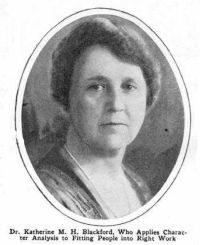 Katherine M. H. Blackford,
Analyzing Character
Katherine M. H. Blackford,
Analyzing Character
“ Oftentimes the employee lived under the same roof with his employer, enjoyed the same recreations, and ate at the same table. The skilful, competent, shrewd employer gathered around him the best men in the trade. He profited greatly and his men shared in his prosperity. The invention of machinery and the great enlargement of industrial units makes such relationship between employer and employee impossible. ”
“ That being true, does it not follow that all customers, superior officers and employees prefer an executive whose good manners imply consideration of his customer's, his company's and his employee's interest as well as merely his own? ”
 Émile Faguet,
The Cult of Incompetence
Émile Faguet,
The Cult of Incompetence
“ Every employee does the work he knows and does best, the skilled workman, the accountant, the manager and the secretary, each in his place. No one would dream of making the accountant change places with a commercial traveller or a mechanic. ”
A Selection of Cases on the Law of Torts (1893)
“ The employer is bound merely to the exercise of reasonable care in providing his employee with a safe place in which to work, with proper and adequate tools, appliances and machinery, and with fellow-employees competent for the tasks to which they are assigned. ”
Katherine M. H. Blackford,
Analyzing Character
“ The ideal for every employee, therefore, is that he should be employed in that position which he is best fitted to fill, doing work which by natural aptitudes, training, and experience he is best qualified to do, and working under conditions of material environment—tools, rates of pay, hours of labor, and periods of rest, superintendence and management, future prospects, and education—which will develop and make useful to himself and his employer his best and finest latent abilities and capacities. ”
U.S.D.C., E.D.Mich., M & A Associates v. VCX
“ An “employee,” for purposes of the work made for hire doctrine, is any person who acts under an employer’s direction and supervision. See, e.g., Evans Newton, Inc. v. Chicago Systems Software, 793 F.2d 889, 894 (7th Cir.) ”
 Woodrow Wilson,
The New Freedom: A Call for the Emancipation of the Generous Energies of a People
(1913)
Woodrow Wilson,
The New Freedom: A Call for the Emancipation of the Generous Energies of a People
(1913)
“ The employer is now generally a corporation or a huge company of some kind; the employee is one of hundreds or of thousands brought together, not by individual masters whom they know and with whom they have personal relations, but by agents of one sort or another. Workingmen are marshaled in great numbers for the performance of a multitude of particular tasks under a common discipline. They generally use dangerous and powerful machinery, over whose repair and renewal they have no control. ”
Jr. John D. Rockefeller, The Personal Relation in Industry
“ The employee in any corporation must form his opinion of the owners and directors of the corporation from the petty officer or foreman with whom he has personal contact. Too often these men, not infrequently promoted from the ranks, become overbearing and arrogant in their treatment of those under them. ”
 Walter Dill Scott,
Increasing Human Efficiency in Business
Walter Dill Scott,
Increasing Human Efficiency in Business
“ Personal relationships should be cultivated.In some large organizations the chief executive may secure this personal touch with individuals through an agent or through a department known as the department of ``promotion and discharge,'' ``employment,'' or ``labor.'' In others, occasional meetings on a level of equality may be brought about through house picnics, entertainments, vacation camps, and so on, where employer and employee meet each other outside their usual business environment.
”
Henry K. Rowe, Society: Its Origin and Development
“ Business Employees.—The business ethics that are most open to criticism are those that govern the relations of the merchant and his employees. Here the system of employment is much the same as in the factory. The merchant deals with his employees through superintendents of departments. The employment manager hires the persons who seem best qualified for the position, and they are assigned to a department. ”
 Jason Chaffetz,
Jason Chaffetz letter to FBI over Comey Memo…
(2017 | noyear)
Jason Chaffetz,
Jason Chaffetz letter to FBI over Comey Memo…
(2017 | noyear)
“ The term "employee" means agent, borrowed employee, casual employee, consultant, contractor, de facto employee, independent contractor, joint adventurer, loaned employee, part-time employee, permanent employee, provisional employee, subcontractor, or any other type of service provider. ”
 Lucy Maynard Salmon,
Domestic service
(1897)
Lucy Maynard Salmon,
Domestic service
(1897)
“ B, an employer of limited means, with a natural gift for cooking considered as a fine art, takes an inexperienced girl from Castle Garden and teaches her after long training something of her own skill. She pays fair wages, which are considered entirely satisfactory by the employee in view of the instruction she has received. ”
“ The employer who is a master at supplying motives to people, who manages to cut down through to the quick in his employees, to the daily motives, to the hourly ideals, the hourly expectations with which they work, is the employer who already takes the lead, who is already setting the pace in the twentieth-century business world. ”
Anonymous, Business Correspondence, Vol. 1…
“ The employee who meets the responsibilities and niceties of good business dress shows to his sharp-eyed employer that he is a man who is liable to meet the niceties and responsibilities of a better position. ”
Charles Evans Hughes, National Labor Relations Board v…
“ And a 'labor organization' means any organization of any kind or any agency or employee representation committee or plan which exists for the purpose in whole or in part of dealing with employers concerning grievances, labor disputes, wages, rates of pay, hours of employment or conditions of work. ”
A.L.O.C., The Story of a Dark Plot; Or, Tyranny on the Frontier
“ You have at considerable length set forth that what the Company objects to is, that an employee of the Company should actively take sides on a question on which the community is divided, even 'although he do so only during the hours of the day when he is not supposed to be in the active service of his employer,' and you add that 'no official of our Company, one of whose duties is to solicit and secure traffic for the Company, could take sides on any of these questions at public meetings and lectures without impairing his usefulness to the Company.' This is precisely the position taken by Mr. ”
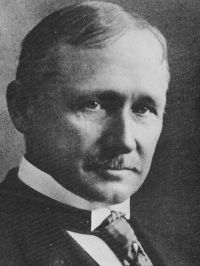 Frederick Winslow Taylor,
The Principles of Scientific Management
Frederick Winslow Taylor,
The Principles of Scientific Management
“ CHAPTER I FUNDAMENTALS OF SCIENTIFIC MANAGEMENT The principal object of management should be to secure the maximum prosperity for the employer, coupled with the maximum prosperity for each employee. ”
 George Bernard Shaw,
The Doctor's Dilemma
(1906)
George Bernard Shaw,
The Doctor's Dilemma
(1906)
“ And let no one suppose that the words doctor and patient can disguise from the parties the fact that they are employer and employee. ”
Morris Phillips, Abroad and at Home; Practical Hints for Tourists
“ There are three thousand six hundred employees, and all the unmarried employees of the establishment board on the premises. For the proper conduct of such a business the system of course must be perfect, near as may be. ”
 William Bennett Munro,
Social Civics
(1922)
William Bennett Munro,
Social Civics
(1922)
“ All applicants are dealt with through a special official known as the employment manager, whose function it is to make reasonably sure that the applicant is fitted for the position. Foremen and bosses are not allowed to discharge employees at will. ”
Jr. John D. Rockefeller, The Personal Relation in Industry
“ It is the first time I have ever had the good fortune to meet the representatives of the employees of this great company, its officers and mine superintendents, together, and I can assure you that I am proud to be here, and that I shall remember this gathering as long as I live. ”
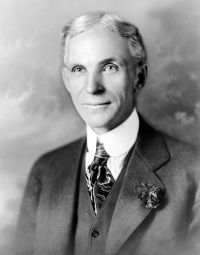 Henry Ford,
My Life and Work
(1922)
Henry Ford,
My Life and Work
(1922)
“ It is not usual to speak of an employee as a partner, and yet what else is he? ”
Woodrow Wilson,
The New Freedom
(1913)
“ In most parts of our country men work, not for themselves, not as partners in the old way in which they used to work, but generally as employees,—in a higher or lower grade,—of great corporations. ”
James R. Mears, The Iron Boys in the Steel Mills…
“ No, sir; the shoe doesn't pinch at all. I am paid by this company for my services, paid the same as my fellow-workers are paid. If, in the course of my employment, I am able to make any improvements or to suggest improvements that will better the service, I consider that such suggestions or improvements are wholly the property of my employer. ”
Roy Lester James, Letters From an Old Time Salesman to His Son
“ Now just let this thought ooze into that corrugated cast-iron brain of yours—your company isn’t running a peanut stand any more—they might have been small enough one day when the Boss himself could put up the window-shades and sweep out the office every night, but that time has passed, Boy, that day is gone.Admitting that, doesn’t it occur to you that the Boss has to have a little help in running the business? No one ever made a success of any business if he didn’t attend to it ”
Roy Lester James, Letters From an Old Time Salesman to His Son
“ Did you ever think of the responsibility you are carrying as a manager of your company? Do you know that every move, every letter you write, every position you take means that you are portraying your company to someone?In business a new king arises in the land every day. There’s a new retail grocer—a new jobber—or jobber’s buyer on a thousand corners. They know not Joseph—regardless of how good your product is, or how long you’ve been on the territory, IT TAKES ADVERTISING TO PUT YOU ACROSS IN A BIG WAY.I’m going to bed, Red, hoping I haven’t bored you. ”
R. M. Mac Iver, Annals of the American Academy of Political and Social Science… (1922)
“ So with the engineer, the surveyor, the accountant, or the technician generally, who has to maintain standards of service and of efficiency against the bias of profit-making. So with the manager, the secretary, or the officer of a corporation — for here business as- sumes most nearly the aspect of a profession — who has to reconcile the trust imposed on him by his employers with the duty he owes to himself and to those whose service he in turn controls. ”
Weird Tales/Volume 36/Issue 1 (1941)
“ But just as an ordinary industrial worker can, through LaSalle Home Study, become a foreman, so a foreman, a cost clerk, a cost accountant, a mechanical engineer, a department manager, an inspector, an assistant superintendent, and all the other minor executives of any industrial organization—can fit themselves for that desirable job ahead—with its tremendously desirable rewards! ”
 Sir Arthur Helps,
The Claims of Labour: An essay on the duties of the employers to the employed
Sir Arthur Helps,
The Claims of Labour: An essay on the duties of the employers to the employed
“ I should have been unobservant indeed, if, with such masters as I have served under, I had not learnt something, in regard to the duties of a great employer of labour, from witnessing their ever-flowing courtesy; their care for those who came within their sphere; their anxiety, as the heads of departments, to recognize every exertion on the part of their subordinates; and their ready sympathy with the poor and the friendless, a sympathy which the vexations and harassments of office, and all those things that tend to turn a man’s thoughts in upon himself, could never subdue. ”
Horace Gray, Singer Manufacturing Company v…
“ And the relation of master and servant exists whenever the employer retains the right to direct the manner in which the business shall be done, as well as the result to be accomplished, or, in other words, 'not only what shall be done, but how it shall be done.' Railroad Co. ”
Sinclair Lewis, The Job : Man and Woman — Chapter 21 (1917)
“ Truax doesn’t, but you do know—that the whole office system makes pale, timid, nervous people out of all the clerks—”“But, good heavens! child, the employers have just as hard a time. Talk about being nervous! Take it in our game. The salesman does the missionary work, but the employer is the one who has to worry. Take some big deal that seems just about to get across—and then falls through just when you reach for the contract and draw a breath of relief. ”
Frederick Winslow Taylor,
Shop Management — Shop Management
(1913)
“ The first of the four leading principles in management calls for a clearly defined and circumscribed task. Evidently the foreman's duties are in no way clearly circumscribed. It is left each day entirely to his judgment what small part of the mass of duties before him it is most important for him to attend to, and he staggers along under this fraction of the work for which he is responsible, leaving the balance to be done in many cases as the gang bosses and workmen see fit. The second principle calls for such conditions that the daily task can always be accomplished. ”
More toasts: Jokes, stories and quotations
“ EMPLOYER (to clerk) —"If that bore, Smithers, comes in, tell him I'm out—and don't be working or he'll know you're lying." The Ten Commandments (By A Wise Employer) First—Don't lie. It wastes my time and yours. I am sure to catch you in the end, and that will be the wrong end.Second—Watch your work, not the clock. A long day's work makes a long day short, and a short day's work makes my face long. ”
Frederick Winslow Taylor,
Shop Management — Shop Management
(1913)
“ In the same way the orders in industrial establishments go from the manager through superintendents, foremen of shops, assistant foremen and gang bosses to the men. In an establishment of this kind the duties of the foremen, gang bosses, etc., are so varied, and call for an amount of special information coupled with such a variety of natural ability, that only men of unusual qualities to start with, and who have had years of special training, can perform them in a satisfactory manner. ”
Frederick Winslow Taylor,
Shop Management
“ If, however, the management begins by analyzing in detail just how each section of the work should be done and then writes out complete instructions specifying the tools to be used in succession, the cone step on which the driving belt is to run, the depth of cut and the feed to be used, the exact manner in which the work is to be set in the machine, etc., and if before starting to make any change they have trained in as functional foremen several men who are particularly expert and well informed in their specialties, as, for instance, a speed boss, gang boss, and inspector ”
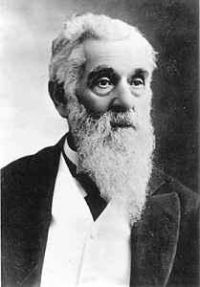 Lorenzo Snow,
Journal of Discourses — Volume 19…
Lorenzo Snow,
Journal of Discourses — Volume 19…
“ Some twelve or fifteen work in this establishment, and the people sustain them in their operations. Those engaged in the various branches of labor feel confident that the people will patronize them, and carry out what they have agreed in this particular, and they do not trouble themselves about any other employment, or business. ”
 Eugene V. Debs,
Debs: His Life, Writings and Speeches…
Eugene V. Debs,
Debs: His Life, Writings and Speeches…
“ So that, after you join the Industrial Workers, when you go to your work in the morning, you will not be tied to your task blindly; you will have a thought about your relation to your fellow-workingmen in all other departments. You will understand your part in the enterprise, and your connection with and relation to the whole. You will help to fit your fellows for the new function, so that when the hour strikes you will be perfectly trained and ready to take control of industry and operate the productive enterprises in the interests of the people. ”
W. B. Phillips, How Department Stores Are Carried On
“ Associated with the head of the business, usually selected from active workers who live with the business every day, are a few who are taken into intimate relations with the business policy, and who very materially assist in its development, and in the working out and building up of the system by which the business is carried on. ”
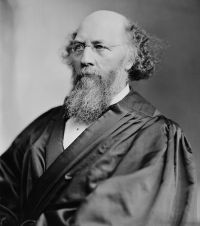 Stephen Johnson Field,
Northern Pacific Company v. Herbert…
Stephen Johnson Field,
Northern Pacific Company v. Herbert…
“ It is equally well settled, however, that it is the duty of the employer to select and retain servants who are fitted and competent for the service, and to furnish sufficient and safe materials, machinery, or other means by which it is to be performed, and to keep them in repair and order. ”
Frederick Winslow Taylor,
Shop Management
“ It is not an uncommon sight, though a sad one, to see the manager of a large business fairly swamped at his desk with an ocean of letters and reports, on each of which he thinks that he should put his initial or stamp. ”
 Marcus Dods,
The Expositor's Bible: The Book of Genesis
Marcus Dods,
The Expositor's Bible: The Book of Genesis
“ Some thoroughly good servant, who has made sacrifices to forward his employer’s interest, is at last, through no offence of his own, found to be in his employer’s way, and at once all old services are forgotten, all old ties broken, and the authority of the employer, legal but inhuman, is exercised. ”
Frederick Winslow Taylor,
Shop Management
“ Four of these bosses are in the planning room and of these three send their orders to and receive their returns from the men, usually in writing. Four others are in the shop and personally help the men in their work, each boss helping in his own particular `line or function only. Some of these bosses come in contact with each man only once or twice a day and then for a few minutes perhaps, while others are with the men all the time, and help each man frequently. ”

