Summary

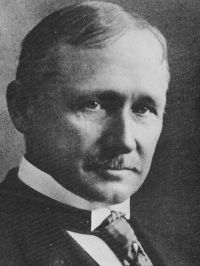
Portrait of Frederick Winslow Taylor Frederick Winslow Taylor The Principles of Scientific Management

It will demand the largest efficiency from both employers and employees. It will no longer tolerate the type of employer who has his eye on dividends alone, who refuses to do his full share of the work and who merely cracks his whip over the heads of his workmen and attempts to drive them into harder work for low pay. No more will it tolerate tyranny on the part of labor which demands one increase after another in pay and shorter hours while at the same time it becomes less instead of more efficient.
Source: Gutenberg

Portrait of Frederick Winslow Taylor Frederick Winslow Taylor The Principles of Scientific Management

"The greater part of the systematic soldiering, however, is done by the men with the deliberate object of keeping their employers ignorant of how fast work can be done."
"So universal is soldiering for this purpose that hardly a competent workman can be found in a large establishment, whether he works by the day or on piece work, contract work, or under any of the ordinary systems, who does not devote a considerable part of his time to studying just how slow he can work and still convince his employer that he is going at a good pace."
Source: Gutenberg

Portrait of Frederick Winslow Taylor Frederick Winslow Taylor The Principles of Scientific Management (1913)

Under the management of "initiative and incentive" the attitude of the management is that of "putting the work up to the workmen." What likelihood would there be, then, under the old type of management, of these men properly selecting themselves for pig-iron handling? Would they be likely to get rid of seven men out of eight from their own gang and retain only the eighth man?
Source: Wikisource

Get perspective with Kwize: daily news enlightened by great literature