“ What will the American workman do to express his American temperament through his labour union to his employer? The American workmen will go to their employers and say: "Instead of doing six hours' work in nine hours, we will do nine hours' work in nine hours." ”
Workman
Definition and stakes
The concept of a workman refers to an individual involved in industrial or manual labor for wages, representing both the challenges and contributions of those who support economic systems. Authors such as Gerald Stanley Lee emphasized labor unions as means for safeguarding workers’ rights, while Henry Ford viewed shared ambition between employers and workmen as essential for advancement.
Beatrice Webb explored the shift from laborer to employer, and Alfred Williams focused on the ethical balance between fair treatment and worker commitment. Thorstein Veblen and Frederick Winslow Taylor examined labor's influence on industrial productivity, while Henry David Thoreau considered the workman's inherent link to creation. These viewpoints together highlight the workman's dual identity as both a creator and a participant in societal change.
Quotes about “workman”
William F. Russell, The Short Constitution
“ The truth of the matter is that they have everything in common. Every employer—almost without exception—was once a workman. He was a successful workman, therefore he became more than a workman—he became an employer. ”
 Etsu Inagaki Sugimoto,
A Daughter of the Samurai
(1925)
Etsu Inagaki Sugimoto,
A Daughter of the Samurai
(1925)
“ I once knew a workman—one who was paid by the job, not the hour—to voluntarily undo half a day’s work, at the cost of much heavy lifting, just to alter, by a few inches, the position of a stepping-stone in a garden. ”
Alfred Williams, Life in a Railway Factory
“ If he is treated honestly and fairly the firm will gain greatly thereby, in many ways unknown to them. The workman, in return, will be conscientious and will use his tools and machinery with scrupulous care. ”
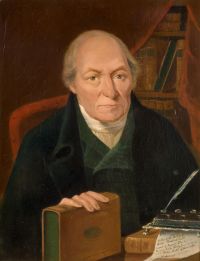 William Hutton,
An History of Birmingham (1783…
William Hutton,
An History of Birmingham (1783…
“ While the master reaps the harvest of plenty, the workman submits to the scanty gleanings of penury, a thin habit, an early old age, and a figure bending towards the earth. Plenty comes not near his dwelling, except of rags, and of children. ”
Beatrice Webb, The History of Trade Unionism
“ The energetic workman, who at about thirty years of age leaves the factory, the forge, or the mine, to spend his days pitting his brains against those of shrewd employers and sharp-witted solicitors, has necessarily to concentrate all his energies upon the limited range of his new work. ”
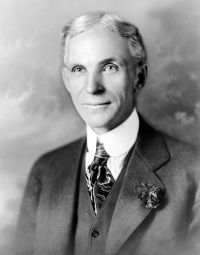 Henry Ford,
My Life and Work
(1922)
Henry Ford,
My Life and Work
(1922)
“ It ought to be the employer's ambition, as leader, to pay better wages than any similar line of business, and it ought to be the workman's ambition to make this possible. ”
 Richard T. Ely,
French and German Socialism in Modern Times
Richard T. Ely,
French and German Socialism in Modern Times
“ A little book which a workman is compelled to keep and exhibit to each employer, in order that the latter may know who have employed him before, the new employer in turn signing his name in the book when the laborer enters his service and when he leaves it, and expressing his opinion of the laborer’s conduct. ”
 Henry David Thoreau,
Walden
(1854)
Henry David Thoreau,
Walden
(1854)
“ Next to us is not the workman whom we have hired, with whom we love so well to talk, but the workman whose work we are. ”
Baldwyn Leighton, Agricultural labour (1872)
“ And note here the great value of the presence of one or two intelligent employers, who understand some of the conditions of labour apart from actual farm operations, and know the relative value of a good and an indifferent workman. ”
 Adam Smith,
The Wealth of Nations
(1902)
Adam Smith,
The Wealth of Nations
(1902)
“ yet the produce of the whole labor of the society is so great, that all are often abundantly supplied, and a workman, even of the lowest and poorest order, if he is frugal and industrious, may enjoy a greater share of the necessaries and conveniences of life than it is possible for any savage to acquire. ”
 Thorstein Veblen,
The instinct of workmanship, and the state of industrial arts
(1914)
Thorstein Veblen,
The instinct of workmanship, and the state of industrial arts
(1914)
“ With such special gifts or with special training based on this common stock an individual may stand out among his fellows as a workman of exceptional merit and value, and without the common run of workmanlike aptitudes he may come to nothing worth while as a workman even with the largest opportunities and most sedulous training. ”
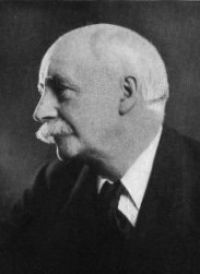 Frederick James Gould,
The Children's Plutarch: Tales of the Greeks
(1910)
Frederick James Gould,
The Children's Plutarch: Tales of the Greeks
(1910)
“ So he never was able to "take his ease, eat, drink, and be merry." And if he had spent as much labor in useful work (say building, or ploughing, or sandal-making) , what a good workman he might have become! ”
Adam Smith,
The Wealth of Nations
(1776)
“ The real and effectual discipline which is exercised over a workman, is not that of his corporation, but that of his customers. It is the fear of losing their employment which restrains his frauds and corrects his negligence. ”
Adam Smith,
The Wealth of Nations
(1902)
“ To take an example, therefore, from a very trifling manufacture; but one in which the division of labour has been very often taken notice of, the trade of the pin-maker; a workman not educated to this business (which the division of labour has rendered a distinct trade) , nor acquainted with the use of the machinery employed in it (to the invention of which the same division of labour has probably given occasion) , could scarce, perhaps, with his utmost industry, make one pin in a day, and certainly could not make twenty. ”
 Geoffrey Chaucer,
The Canterbury Tales, and Other Poems
Geoffrey Chaucer,
The Canterbury Tales, and Other Poems
“ “There is no workman, whatsoe’er he be, That may both worke well and hastily: This will be done at leisure perfectly. ”
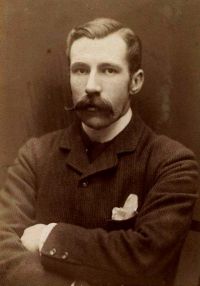 Clive Phillipps-Wolley,
Snap: A legend of the Lone Mountain
(1892)
Clive Phillipps-Wolley,
Snap: A legend of the Lone Mountain
(1892)
“ A 'workman all over.' It's hunting slang, I know, but it is the keynote of the English character still, thank goodness. If you can work and will work, and that work is honest and true, men will respect you, women admire you, and even the most exacting of relations forgive you what one may call vice, another mischief, an indulgent old sailor 'go,' or a Nor'-West cowboy, like Dick, 'sand.' ”
More toasts: Jokes, stories and quotations
“ BILL—"Hush, man. I'm foolin' the boss. I've carried this same hodful up an' down all day, and he thinks I've been workin'."Said a teacher of much erudition,"I deplore the poor workman's condition."When he learned what they earned,His profession he spurned,And became a high-paid mechanician."And how is your husband keeping?""'E ain't keeping; 'e's on strike, and I'm doing the keeping."BOSS—"No; we have all the men we need."LABORER—"Seems like you could take one more, the little bit of work I'd do."—Judge.FARMER—"I'll give you $5 a month and your board!"APPLICANT—"Aw, shucks! ”
 Karl Marx,
Das Kapital
(1906)
Karl Marx,
Das Kapital
(1906)
“ As the chosen people bore in their features the sign manual of Jehovah, so division of labour brands the manufacturing workman as the property of capital. ”
Thorstein Veblen,
The instinct of workmanship, and the state of industrial arts
(1914)
“ In the naïve rating of savage peoples workmanship appears to cover, perhaps uncertainly, notions of generation, nurture, tendance, and the like, without any sharp line being drawn between these various lines of effective endeavour on the one side and manual efficiency on the other. ”
Thorstein Veblen,
The instinct of workmanship, and the state of industrial arts
(1914)
“ Habituation to bargaining and to the competitive principles of business necessarily brings it about that pecuniary standards of efficiency invade (contaminate) 349 the sense of workmanship; so that work, workmen, equipment and products come to be rated on a scale of money values, which has only a circuitous and often only a putative relation to their workmanlike efficiency or their serviceability. ”
A-No. 1, The Trail of the Tramp
“ The laborer whom he saw in the early morning swinging his dinner pail while with light steps he marched to the daily task in mill and factory, and whom he watched in the evening's dusk after the factory sirens had blown the working man's curfew, hurrying home anxious to reach his humble fireside, and for whom heretofore he had only known feelings of deepest contempt, suddenly had become a man who benefitted preciously far more of his life than any yegg he could recall. ”
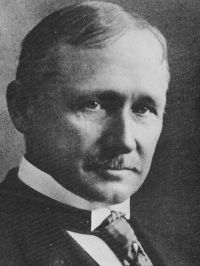 Frederick Winslow Taylor,
Shop Management
Frederick Winslow Taylor,
Shop Management
“ In the great majority of cases the work is so miscellaneous in its nature as to call for the employment of workmen varying greatly in their natural ability and attainments, all the way, for instance, from the ordinary laborer, through the trained laborer, helper, rough machinist, fitter, machine hand, to the highly skilled special or all-round mechanic. ”
Cicely Hamilton, Marriage as a Trade (1909)
“ Work in the factory or in the office, work which brings us into contact with the outside world, calls for the exercise of qualities and attainments which we had no need of before, for the abandonment of habits and ideas which can only hamper our progress in our changed surroundings. ”
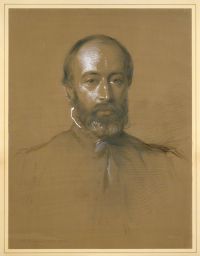 Sir Arthur Helps,
The Claims of Labour: An essay on the duties of the employers to the employed
Sir Arthur Helps,
The Claims of Labour: An essay on the duties of the employers to the employed
“ The wiser man, the labourer, begins at his corner of the wood, and makes out a task for himself for each day. Let not our imaginations be employed on one side only. Think, that large as may appear the work to be done—so too the result of any endeavour, however small in itself, may be of infinite extent in the future. ”
Edmondo De Amicis, Cuore (Heart): An Italian Schoolboy's Journal
“ Labor does not engender dirt. Never say of a laborer coming from his work, “He is filthy.” You should say, “He has on his garments the signs, the traces, of his toil.” Remember this. And you must love the little mason, first, because he is your comrade; and next, because he is the son of a workingman. Thy Father. [60] ”
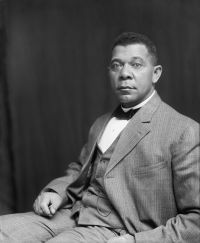 Booker T. Washington,
Character Building
Booker T. Washington,
Character Building
“ I am speaking, of course, of that class of people of our race who depend mainly upon a day's work—working by the day, as we call it—for their living. These men with whom I talked gave several illustrations of this tendency. In the first place, I think they mentioned, without exception, this fact—that if the coloured people are employed in a factory, they work well and steadily for a few days, say until Saturday night comes, and they are paid their week's wages. ”
Page Fox, One Thousand Ways to Make Money
“ The Secret of Work.—Men will employ you if you mean business. When you find men working, work with them. Lend a hand. Every employer{16} would rather employ a busy man than an idle man. When he sees you working, he will watch you. If he likes you, he will make you an offer. A glazier, being refused work at a place where a church was being erected, put down his kit of tools, picked up the broken pieces of glass which the workmen had thrown away, and, laboring just as if he had been hired to work, fashioned the finest church window in the world, and became rich and famous. ”
The Voice of Science in Nineteenth-Century Literature
“ Ask the laborer in the field, at the forge, or in the mine; ask the patient, delicate-fingered artisan, or the strong-armed, fiery-hearted worker in bronze, and in marble, and with the colors of light; and none of these, who are true workmen, will ever tell you that they have found the law of heaven an unkind one—that in the sweat of their face they should eat bread, till they return to the ground ”
Flora L. Carpenter, Stories Pictures Tell. Book 5
“ With so many other laborers in the field, and considering their task, we scarcely dare think of the miserably small pay they must receive for their labor. We wonder how they can live. And yet they have a certain wholesome, thrifty appearance—their clothes, although coarse, are not ragged; they look well and strong, and they work with an energy which would imply a certain satisfaction in their task well done. ”
W. H. Davenport Adams, Celebrated Women Travellers of the Nineteenth Century
“ The labourer is worthy of his hire. But three or four times a year, and always unexpectedly, swoop down upon them like the Last Judgment; examine every corner and recess; make a noise like thunder, and strike right and left at the fitting moment—this clears the house for many weeks! ”
 Jane Addams,
Democracy and Social Ethics — Educational Methods
(1902)
Jane Addams,
Democracy and Social Ethics — Educational Methods
(1902)
“ As sad a sight as an old hand-loom worker in a factory attempting to make his clumsy machine compete with the flying shuttles about him, is a workingman equipped with knowledge so meagre that he can get no meaning into his life nor sequence between his acts and the far-off results. ”
“ The history of industry is uniform in the character of its illustrations. Industry enables the poorest man to achieve honour, if not distinction. The greatest names in the history of art, literature, and science, are those of labouring men. A working instrument-maker gave us the steam-engine; a barber, the spinning-machine; a weaver, the mule; a pitman perfected the locomotive;—and working men of all grades have, one after another, added to the triumphs of mechanical skill. ”
 George Stuart Fullerton,
A Handbook of Ethical Theory
George Stuart Fullerton,
A Handbook of Ethical Theory
“ The factory-worker, with a mind stupefied by the mechanical repetition of some few simple physical movements of no possible interest to him except as resulting in the wage that keeps him alive, has no share in such light as may be scattered about him. ”
 Rudyard Kipling,
Abaft the Funnel
Rudyard Kipling,
Abaft the Funnel
“ It's the small employer of labour that skins his servant, exactly as the forty-pound householder works her one white servant to the bone and goes to drop pennies into the plate to convert the heathen in the East.Just at present, as you have read, the person who calls himself the pore workin'man—the man I saw kicking fallen men in the mud by the docks last winter—has discovered a real, fine, new original notion; and he is working it for all he is worth. ”
Henry David Thoreau,
Early Spring in Massachusetts
(1881)
“ The really efficient laborer will be found not to crowd his day with work, but will saunter to his task surrounded by a wide halo of ease and leisure. There will be a wide margin for relaxation to his day. ”
William Harbutt Dawson, The Vagrancy Problem
“ Whenever possible a man is set to the trade or occupation which he has been accustomed to follow. For farm labourers and gardeners, for example, there is always a place. Where inmates have had no particular training, the occupation in which they are likeliest to be most productive is allotted to them. Thus I noticed at work: smiths, wheelwrights, cabinet-makers, straw-plaiters, tailors, shoe makers, sempstresses, chair makers, wicker workers, bakers, paper bag makers, etc. ”
Agnes C. Laut, Canada: the Empire of the North
“ With our worker, just as sure as the sun rises and sets, if he continues to work and is no fool, he will rise to earn a competency, to improve himself, to own his own labor, to own his own home, to hire the labor of other men who are beginners as he once was himself. ”
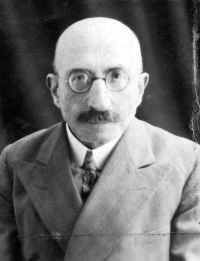 Max Beer,
The life and teaching of Karl Marx
Max Beer,
The life and teaching of Karl Marx
“ The wage worker, who entered into the manufacturing premises of the employer full of the pride of his calling and often with his own tools, became then a small cog in a gigantic, relentless piece of working machinery. ”
 Daniel Defoe,
A Journal of the Plague Year
(1722)
Daniel Defoe,
A Journal of the Plague Year
(1722)
“ All Master Work-men in Manufactures, especially such as belong’d to Ornament, and the less necessary Parts of the People dress Cloths and Furniture for Houses; such as Riband Weavers, and other Weavers, Gold and Silverlace-makers, and Gold and Silverwyer-drawers, Seemstresses, Milleners, Shoe-makers, Hat-makers and Glove-makers: Also Upholdsterers, Joyners, Cabinet-makers, Looking-glass-makers; and innumerable Trades which depend upon such as these, I say the Master Workmen in such, slopt ther Work, dismist their Journeymen, and Workmen, and all their Dependants. ”
Austin Lewis, Proletarian and Petit-Bourgeois (1912)
“ By all the kinds of labor we do not mean merely all the crafts, but in addition factors which have been overlooked in the organization of crafts—factors which appear at each end of the productive apparatus—at the one end, clerks, salesmen, stenographers, telephone operators, telegraphers, and all the non-handworking staff which is essential to the practical handling of a great business, and at the other end the unskilled laborers who are equally essential but so far unorganized and unrecognized. ”
Willard W. Glazier, Peculiarities of American Cities
“ Each man has his own special line of work, the labor being divided among pen-men, knockers-down, stickers, scalders, bristle-snatchers, scrapers, shavers, hangers or "gamble-men," gutters, hose-boys, slide-boys, splitters, cutters with their attendants, weighers, cleavers, knife-men, ham-trimmers, shoulder-trimmers, packers, salters, weighers and branders, lard-men, bookkeepers, porters and laborers, of whom fifty will unitedly dispose of a hog once in every twenty seconds. ”
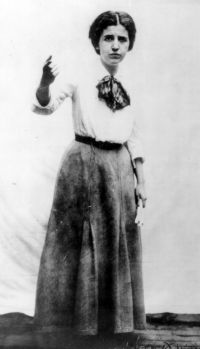 Elizabeth Gurley Flynn,
Sabotage: The Conscious Withdrawal of The Workers' Industrial Efficiency
(1917)
Elizabeth Gurley Flynn,
Sabotage: The Conscious Withdrawal of The Workers' Industrial Efficiency
(1917)
“ But can anyone believe that a shoe factory worker, one of a hundred men, each doing a small part of the complete whole, standing before a machine for instance and listening to this ticktack all day long—that such a man has any joy in his work or any pride in the ultimate product? The silk worker for instance may make beautiful things, fine shimmering silk. ”
Madeline Leslie, Up the ladder; (1863)
“ You will see now, my dear son, why I have been so earnest to have you establish in early life a habit of industry, and to cultivate a taste for daily, honest labor. No matter what employment you have, if it is honorable employment. ”
Alfred Charles Michaud, Our coming world (1951)
“ If we find that an occupation is a little too strenuous for one person, we divide it between two or more. Our machinery and inventions are used solely for the convenience of our workers—to make it easier, safer, and more comfortable for them. ”
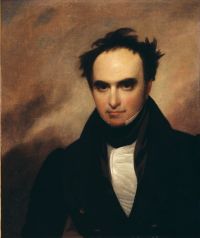 Daniel Webster,
Select Speeches of Daniel Webster…
Daniel Webster,
Select Speeches of Daniel Webster…
“ And while the unexampled and almost incredible use of machinery would seem to supply the place of labor, labor still finds its occupation and its reward; so wisely has Providence adjusted men's wants and desires to their condition and their capacity. ”
Frederick Winslow Taylor,
The Principles of Scientific Management
“ The laborer who before was unable to do anything beyond, perhaps, shoveling and wheeling dirt from place to place, or carrying the work from one part of the shop to another, is in many cases taught to do the more elementary machinist's work, accompanied by the agreeable surroundings and the interesting variety and higher wages which go with the machinist's trade. ”
