Karl Marx

Biographical details

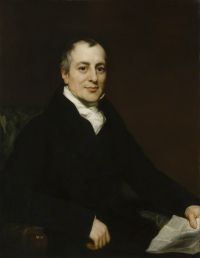
Portrait of Karl Marx Karl Marx,  Das Kapital (1906)

“ The capitalist buys labour-power in order to use it; and labour-power in use is labour itself. The purchaser of labour-power consumes it by setting the seller of it to work. By working, the latter becomes actually, what before he only was potentially, labour-power in action, a labourer. In order that his labour may reappear in a commodity, he must, before all things, expend it on something useful, on something capable of satisfying a want of some sort. Hence, what the capitalist sets the labourer to produce, is a particular use-value, a specified article. ”
Source: Wikisource

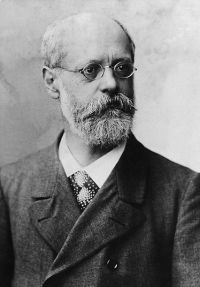
Portrait of Karl Marx Karl Marx,  Wage-Labor and Capital (1902)

“ Capital can multiply itself only by exchanging itself for labor-power, by calling wage-labor into life. The labor-power of the wage-laborer can exchange itself for capital only by increasing capital, by strengthening that very power whose slave it is. Increase of capital, there- fore, is increase of the proletariat, i.e., of the working class.
And so, the bourgeoisie and its economists maintain that the interest of the capitalist and of the laborer is the same. And in fact, so they are! The worker perishes if capital does not keep him busy.
”
Source: Wikisource

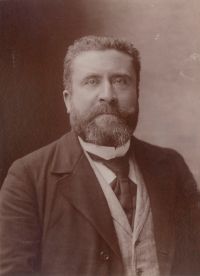
Portrait of Karl Marx Karl Marx,  Wages, Price and Profit

“ But before doing so, we might ask, how does this strange phenomenon arise, that we find on the market a set of buyers, possessed of land, machinery, raw material, and the means of subsistence, all of them, save land in its crude state, the products of labour, and on the other hand, a set of sellers who have nothing to sell except their labouring power, their working arms and brains? That the one set buys continually in order to make a profit and enrich themselves, while the other set continually sells in order to earn their livelihood? ”
Source: Wikisource

Get perspective with Kwize: daily news enlightened by great literature