AI-generated from sources
The moral collision: Papal critique, socialist theory, and the legacy of unchecked competition
In Brief
- The Papacy, notably Pope Leo XIII, established an enduring moral counter-narrative to laissez-faire capitalism, condemning 'unchecked competition' and advocating for protection against systemic exploitation.
- Critics across theological, socialist, and philosophical lines rejected economic determinism, arguing that the principle of competition inherently leads to inequality, monopoly, and social degradation.
- The capitalist system generates profound contradictions, such as increasing production while suppressing working-class consumption, creating destructive cycles and instability.
- Literary works provided a necessary human witness, translating the abstract cruelty of economic laws into the tangible reality of physical and psychological suffering, emphasizing the cost to human dignity.
Main authors

A fundamental tension has long existed between moral and religious frameworks for society and the principles of modern political economy, which often elevates competition to the status of a natural law [1, 2]. This divergence became particularly acute with the rise of industrial capitalism, a system that many observers felt substituted an amoral struggle for survival for older notions of community and obligation [3]. The core of this conflict lies in whether the pursuit of economic efficiency, driven by individual self-interest, can be reconciled with ethical demands for justice, charity, and human dignity [4]. Critics from various schools of thought have consistently questioned the foundations of a science that seems to accept social distress as a necessary byproduct of its own axioms [5, 6].
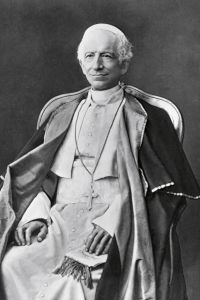
Within this broad intellectual resistance, the formal interventions of the Papacy represent a significant and enduring moral counter-narrative. The encyclicals of Pope Leo XIII, for instance, articulated a direct theological and social critique of the economic conditions of the late 19th century. He identified the dissolution of traditional social structures, such as the guilds, as having surrendered an isolated and helpless working class to the 'hard-heartedness of employers and the greed of unchecked competition' [7]. This papal analysis diagnosed a systemic ailment stemming not just from individual greed but from flawed institutional arrangements and legal frameworks that had abandoned religious and moral precepts . The Church thus positioned itself as a guardian of a moral order that the new economy threatened to dismantle [8].
This papal stance, however, was not an isolated phenomenon. It resonated with a much wider intellectual and artistic current that chronicled and condemned an economic system perceived as indifferent to human suffering and corrosive to social justice [9]. Thinkers from socialist and anarchist traditions deployed rigorous logic to dismantle the claims of orthodox economics, while literary works gave voice to the profound personal degradation wrought by poverty [10, 11]. The convergence of these critiques—the theological, the philosophical, and the literary—forms a powerful and persistent challenge to the principles of unregulated capitalism. Examining the foundations of this multifaceted opposition reveals deep-seated disagreements about the nature of progress, the purpose of society, and the moral responsibilities that accompany economic power.
The Doctrine of Unchecked Competition
The intellectual bedrock of the industrial age was a particular interpretation of political economy that championed unrestricted competition as the primary engine of progress . This school of thought, often termed laissez-faire, viewed competition as 'the life of trade' and the essential catalyst for societal advancement [12]. Its proponents acknowledged that the process could be harsh, involving the defeat of weaker parties, but argued this was a natural and ultimately beneficial phenomenon [13, 14]. This framework suggested that liberty itself was expressed through the free play of untrammelled social and economic forces, and that any attempt to correct its outcomes with moral interventions like charity was a deviation from sound economic principles . The system was predicated on the belief that the natural rights of individuals to liberty included freedom from restrictions on production and commerce [15].
However, critics swiftly identified profound paradoxes within this doctrine. The very competition that was supposed to ensure liberty and low prices was observed to lead dialectically to its opposite: monopoly [16]. The relentless pressure of competition ends in the ruin of smaller capitalists, with their assets being absorbed by their more powerful conquerors [17]. Furthermore, a fundamental contradiction was seen to exist between the system's capacity for production and its patterns of consumption. Competition forces an ever-increasing output of goods while simultaneously depressing the wages of the working class, thereby shrinking their ability to purchase the very surplus they create [18]. This dynamic was described as a destructive cycle where nations produce for the sake of not consuming, a logic seen as absurd and unsustainable .
The human cost of this system was a central theme for its detractors. Competition was described not as a benign force for efficiency but as a principle with a 'homicidal instinct' [19]. It was accused of turning man against man, replacing cooperation with a struggle for survival, and corrupting the public conscience by substituting chance for right [20]. The logic of the system forces employers, even against their better judgment, to continually reduce wages and extend working hours, replacing adult male workers with women and children to remain solvent [21]. This creates a state of perpetual instability and periodic crisis, rooted in a system of production geared for profit rather than human need [22]. For the individual caught in this dynamic, the result is not abstract economic theory but the tangible reality of hunger and the physical degradation that accompanies it .
Even when not leading to immediate ruin, the system was charged with fostering a state of pervasive anxiety and injustice. Critics argued it overturns all notions of equity, needlessly multiplies the capital invested in production, and maintains an atmosphere of terror and distrust throughout society . The capitalist, too, is trapped in this logic, forced to constantly innovate and subdivide labor, not necessarily for progress, but to cheat a competition that perpetually turns his own weapons against him [23]. The ultimate outcome is a society characterized by unfathomable wealth on one side and a proletarianized mass on the other, unable to acquire the superabundance of products they helped create .
A Moral Rebuke to an Impersonal Economy
The papal critique of the late nineteenth century emerged as a direct moral and theological response to these social dislocations. Pope Leo XIII’s analysis in encyclicals like Rerum Novarum provided a historical framework, arguing that the social problem was exacerbated by the destruction of the 'ancient workingmen's guilds' in the preceding century . In their place, nothing had emerged to protect the laborer, leaving workers 'surrendered, all isolated and helpless, to the hard-heartedness of employers' . This historical perspective was crucial, as it framed the crisis not as an eternal condition but as the result of specific political and legal choices, such as the setting aside of 'the ancient religion' in public institutions .
This intervention represented a fundamental clash of worldviews. While orthodox political economy insisted that its principles operated independently of sentiment, the Church positioned itself as the 'true and sole teacher of virtue and guardian of morals' . From this standpoint, the economic sphere could not be separated from ethical obligations. The papal condemnation of 'rapacious usury,' practiced with impunity 'by covetous and grasping men,' was a clear rejection of the idea that financial practices should be governed solely by market logic . The Church asserted a moral framework that required curbing movements of the mind opposed to reason and virtue, even if they were not yet carried out in action .
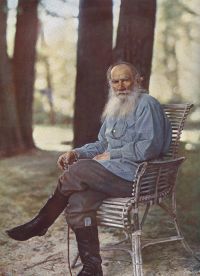
Furthermore, the papal position challenged the minimalist view of social obligation prevalent in economic liberalism. A papal encyclical on socialism was interpreted by contemporary critics, such as Leo Tolstoy, as plainly stating that no one was obliged to help neighbors by diminishing what was required for their own family or 'decency' [24]. This interpretation, whether perfectly accurate or not, highlighted the perceived gap between Christian charity and the justifications for wealth accumulation. Even as the Papacy condemned socialism, its leanings toward some form of state interference to protect workers from monopoly and exploitation were noted by observers [25]. This placed the Church in a complex position, critiquing the excesses of capitalism from a moral high ground while simultaneously rejecting the primary alternative then on offer.
The Collision of Morality and Economic Determinism
At its core, the debate was a collision between two irreconcilable conceptions of justice. Critics like P.-J. Proudhon characterized political economy as knowing only a form of justice that was 'inflexible and unyielding as the miser's purse,' a logic that laughed at religion and equity . This economic determinism preached a gospel of resignation to the working class, framing their suffering as the outcome of immutable natural laws [26]. Proponents of this view argued against introducing moral laws like charity into economic transactions, accepting the cruelty of competition as an unalterable fact . This worldview presented a stark choice: obey the prescriptions of economic destiny or suffer the consequences .
In response, a growing chorus of reformers argued that these so-called natural laws were nothing more than ideological constructs or 'pseudo gods' designed to uphold an unjust order [27]. They insisted that concepts like the 'iron law of wages' could be shattered by conscious, collective action through legislation and educated public opinion [28]. From this perspective, economists who preached obedience to competition were not neutral scientists but apologists for a system that benefited the powerful [29]. Some even argued that Christian principles, correctly understood, would lead the working masses to freedom and equal rights, whereas atheistic materialism simply consecrated their slavery to these pretended laws of nature [30]. This movement sought to put welfare before wealth and use cooperation to silence the 'savage demands of unrestricted competition' .
This led to the most radical conclusion: that political economy, as constituted, was not a science for elucidating truth but an ideological weapon in the hands of private interest . Karl Marx asserted that the discipline could not arrive at the true relation of things 'so long as it sticks in its bourgeois skin' [31]. Proudhon went further, declaring that the chronic pauperism of society could only end with the 'absolute negation of political economy' itself, as the antagonism between labor and capital was inherent to its very framework [32]. The failure of orthodox economics to bring peace and security to society prompted a renewed search for alternative economic teachings . These critiques converged on the idea that a system requiring the poor to perish for the enrichment of the proprietor was fundamentally illegitimate and morally bankrupt [33].
The Literary Witness to Economic Dehumanization
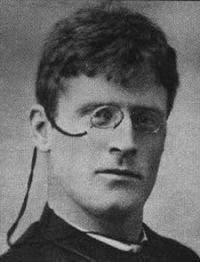
Beyond the structured arguments of theologians and political theorists, literature provided a powerful witness to the visceral human experience of economic destitution. In works like Knut Hamsun's Hunger, the abstract principles of supply and demand are translated into the concrete reality of physical decay and psychological torment . The protagonist’s fury at his own deteriorating appearance—a 'living deformity for sheer hunger's sake'—captures the profound sense of injustice and loss of dignity inflicted by poverty . This literary testimony serves as a crucial counterpoint to economic theories that might view such individual failure as a mere market correction or a consequence of being on the weaker side of competition .
The experience of hunger is depicted not just as a physical state but as a moral and psychological crucible. The protagonist's interactions reveal a desperate struggle to maintain a sense of self-worth and ethical integrity in a world that seems indifferent to his plight. His compulsion to give away a found sum of money to a poor woman, even while starving himself, reflects a deep-seated rejection of a purely self-interested existence [34]. This act is incomprehensible to others, who question his honesty, highlighting the chasm between a morality of solidarity and an economy of individual accumulation .
This narrative of suffering provides a grounding for the more abstract critiques of the economic system. The 'homicidal instinct' of competition, as described by Proudhon, finds its human face in the starving artist of Christiania . The idea that the system forces an opposition between human well-being and economic rationality is no longer just a theoretical claim but a lived reality. The literary portrayal of suffering thus amplifies the core argument of the papal and socialist critiques: that an economic system must be judged not only by its efficiency but by its impact on the human person, and that any system which systematically degrades human dignity is inherently flawed [35].
The papal condemnation of unchecked competition and its social consequences, therefore, is not a modern theological innovation but a cornerstone of a long and varied tradition of critique against economic liberalism. This tradition, encompassing socialist theory, philosophical inquiry, and literary representation, consistently challenges the moral legitimacy of a system that treats social outcomes as the product of impersonal, unchangeable laws . The convergence of these distinct voices—from Leo XIII's analysis of the isolated worker to Proudhon's dissection of competition's 'homicidal instinct' and Hamsun's portrayal of individual suffering—reveals a shared rejection of the reduction of human society to a marketplace . They collectively argue that economic activity cannot be divorced from its ethical context and its profound impact on human dignity.
This enduring debate raises a fundamental question about the ultimate purpose of an economy. Is its function solely the maximization of production and the efficient allocation of resources, as a narrow reading of political economy might suggest, or must it also serve the goals of social cohesion, justice, and the moral perfection of the individual? [36]. While defenders of laissez-faire economics pointed to its power to generate wealth and foster progress, its critics have consistently highlighted the immense human cost and moral corrosion it can entail . The persistence of this critique, from the Vatican to the socialist meeting hall, demonstrates a profound and lasting refusal to accept an economic order in which, as one critic starkly put it, it is considered necessary 'that the poor should perish to secure the proprietor his fortune' . This foundational tension continues to animate contemporary debates over inequality, regulation, and the moral responsibilities of a globalized economy.