AI-generated from sources
The eternal conflict: When the sovereignty of God clashes with the authority of the nation-state
In Brief
- Traditional authority asserts that civil government is derived from divine will, meaning the state's legitimacy depends on its alignment with a higher, sacred moral code.
- The modern nation-state has challenged this hierarchy by positioning itself as a self-contained moral center, demanding absolute allegiance (the 'worship of the nation') through comprehensive control over citizens' lives.
- A direct collision is inevitable when the state attempts to legislate in matters of conscience or enact laws that manifestly contradict divine law.
- The enduring conflict is ultimately fought within the individual conscience, forcing citizens to navigate competing, often incompatible, loyalties to both God and country.
Main authors
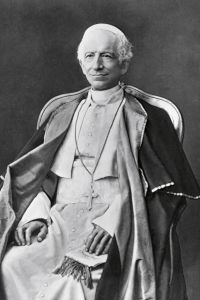


A fundamental and enduring tension exists between two primary sources of authority that command human allegiance: the divine and the civil [1]. This dynamic forces individuals and societies to confront a critical question of ultimate loyalty, particularly when the mandates of God appear to conflict with the laws of the state [2]. Resolving this dilemma is not merely a theoretical exercise but a practical challenge that shapes the very fabric of law, morality, and political order.
Historically, many traditions posit that religious authority is the ultimate wellspring of social and moral order [3]. In this framework, foundational truths about existence—such as the world's creation by a divine will and the immortality of the soul—serve as the necessary principles for both public and private morality [4]. Consequently, civil authority is often understood as being derived from or consecrated by this divine order, making government an ordinance of God tasked with upholding justice and virtue [5, 6]. The state's legitimacy, therefore, is linked to its alignment with a higher, sacred law [7].
The ascendancy of the modern nation-state has profoundly challenged this traditional hierarchy. The state has evolved into a new, powerful center of identity and loyalty, often demanding a level of submission that rivals religious devotion [8, 9]. This has given rise to a conflict between the universal, centripetal claims of faith institutions and the particularist, centrifugal forces of nationality [10]. The state, no longer content to be a temporal power, often asserts itself as the ultimate arbiter of its citizens' lives, setting the stage for a deep confrontation with the transcendent claims of divine authority.
The celestial foundation: Divine authority as the source of order and morality
The classical and theological conception of governance rests on the principle that all legitimate authority flows from a divine source [11]. This perspective holds that civil rulers are, in essence, vice-regents of God on Earth, charged with imitating the divine nature of justice and mercy [12, 13]. Human laws and social structures are therefore ideally reflections of a universal, divinely authored moral code. Within this paradigm, obedience to a just state is not merely a civic requirement but a religious duty, and rebellion against legitimate authority is interpreted as a transgression against the will of God itself, leading to self-destruction [14]. The state, by publicly professing religion and aligning its actions with divine law, reinforces its own legitimacy and secures the foundations of a moral society [15].
This divine mandate is understood to yield tangible benefits that extend far beyond the spiritual realm. Religious institutions are seen as a primary force for civilization, capable of transforming societies, tempering moral character, and introducing virtues essential for earthly prosperity [16]. Religion provides an “impregnable stronghold” for the welfare of all people, with the fear of God acting as a crucial force that impels individuals toward good and away from evil, thereby ensuring fairness, justice, and peace . The stability of core social institutions, such as the family and marriage, is also seen as dependent on the strength and fortitude imparted by religious virtue, which allows individuals to navigate life's trials [17, 18].
This theological framework establishes a clear hierarchy of power. The authority of the church or religious body is considered superior because its mandate is derived directly and supernaturally from God, whereas the state's authority is viewed as mediate, arising from the natural order [19, 20]. This implies that in any direct conflict between the two, the civil power must ultimately yield to the spiritual . Any attempt to separate human legislation from divine law is thus condemned as a dangerous absurdity. Such a separation is believed to inevitably harm citizens by denying that their fundamental rights are inextricably linked to their duties toward God [21]. When the state enacts laws that contradict religious duties, resistance becomes a moral obligation [22].
The earthly idol: The nation-state as a new moral center
In contrast to the transcendent source of religious authority, the modern state has emerged as a self-contained moral organism [23]. It positions itself as the primary caretaker of its citizens, providing everything from education and housing to social insurance and national security [24, 25]. This paternalistic role fosters a deep-seated psychological dependence and a powerful bond of loyalty, where citizens come to expect the state to solve all problems and hold it responsible for all evils [26, 27]. The state’s authority is further solidified by grounding it not in divine right, but in the “consent of the people,” creating a foundation that elevates the collective national will to a position of ultimate supremacy [28, 29].
This elevation of the nation fosters a fervent, if sometimes artificial, patriotism that demands a level of submission from its citizens far exceeding that owed to past monarchs . The state's power to compel action through mechanisms like military and civil conscription, compulsory state-ordered education, and the regulation of professions has profoundly reshaped individual life, often at the expense of personal autonomy [30]. This intensive control is justified as necessary for the common good, with the state intervening to hinder any perceived obstacle to the best life for its citizens, from illiteracy to unemployment [31]. The result is an entity that commands immense loyalty, for which citizens are willing to die, viewing it as an essential, if imperfect, vehicle for human progress [32, 33].
Proponents of this model see the state as an indispensable organism for human development. It is described as a being that disciplines the individual for a greater purpose, a necessary vessel through which humanity’s collective destiny can manifest [34]. The national soul is seen to evolve, taking on different characteristics in different eras—from a god in a theocracy to a hero in an aristocracy—but always representing a life and purpose greater than that of the individual citizen [35]. The state, through its authority, becomes the ultimate enforcer of collective will, capable of producing intentional actions on a mass scale [36].
The inevitable collision: Sovereignty, law, and the individual conscience
The collision between divine and civil authority becomes inevitable when the state asserts its absolute sovereignty and begins to legislate in matters of conscience and religion—domains that spiritual authorities consider exclusively their own [37, 38]. When state laws are perceived to be manifestly at variance with divine law, a critical juncture is reached. At this point, obedience to the state is framed not as a civic duty but as a crime against God, and resistance becomes a positive moral imperative . This sets up a direct confrontation where the state's claim to ultimate power is fundamentally challenged by a higher loyalty.
This conflict is not merely abstract but has profound practical implications. It can lead to social instability when religious sectarians, believing their own laws to be divinely inspired, attempt to subvert or usurp state authority, viewing civil laws as merely human and therefore subordinate [39]. Conversely, a state that ignores its religious duties or actively promotes atheism is seen as failing its core purpose and undermining the very foundation of its authority [40]. Some philosophical perspectives argue that the core institutions of the modern state, such as its courts, armies, and oaths of allegiance, are inherently incompatible with a truly Christian conscience, which operates on principles that transcend civil order .
The formal separation of Church and State is often presented as a modern solution, one that allows the state to develop its own “free and ethical character” independent of dogmatic authority or religious fanaticism [41]. However, from a theological viewpoint, this separation is a grave error. It is seen as a rejection of God’s rightful place in society, which by consequence severs the link between human rights and the divine duties from which they are believed to spring . This raises a potent philosophical challenge: if an individual is not bound in conscience to obey the law of God, what is the ultimate basis for their obligation to obey the law of the state? [42].
The enduring tension between the universal claims of divine authority and the particular sovereignty of the nation-state represents a defining conflict of the modern era . On one hand, religious tradition offers a vision of a transcendent moral order that provides the ultimate grounding for law, justice, and human dignity . It asserts a hierarchy in which the temporal is subordinate to the eternal. On the other hand, the modern state has emerged as an all-encompassing social and political organism, demanding unconditional allegiance and shaping every facet of its citizens' lives through a vast apparatus of laws and institutions .
This struggle is not simply an external contest for power between institutions but an internal one waged within the conscience of the modern citizen, who must navigate competing duties to both God and country [43]. Finding a stable equilibrium requires a delicate balancing act, one that respects the state's legitimate authority in temporal affairs while preserving the freedom of the moral conscience guided by religious conviction [44, 45]. The ultimate challenge for contemporary societies is to harness the ordering power of the state without allowing it to become an object of absolute worship, thereby preserving the space for a transcendent loyalty that prevents any earthly power from claiming the final word on truth and justice [46].