Summary

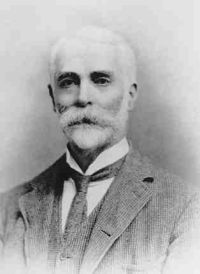
Portrait of Bernard Bosanquet Bernard Bosanquet The Philosophical Theory of the State

Has the body politic an organ for pronouncing its acts of will? Who will give it the necessary foresight to form such acts and to publish them before they are needed? Or how is it to pronounce them at the moment when they are required? How is a blind multitude, which often does not know what it wills, because it rarely knows what is good for it, to execute for itself so great and difficult an enterprise as a system of legislation? Of itself, the people always wills the good, but it does not always see it.
Source: Gutenberg

Portrait of Bernard Bosanquet Bernard Bosanquet The Philosophical Theory of the State

But the community which has a youth, a maturity, and a decadence, as distinct as those of a single human being, and very nearly as self-conscious; which has a tone and spirit as recognisable in the words and bearing of its members as those of a character in a play; and which expresses its mind in the various regions of human action and endurance much as an artist expresses his individuality in the creations of his genius—such a community had existed, before the beginnings of the modern world, in the Greek city-state, and in the Greek city-state alone.
Source: Gutenberg

Portrait of Bernard Bosanquet Bernard Bosanquet The Philosophical Theory of the State

The sting of this suggestion is taken out when we thoroughly grasp the idea that recognition is a matter of logic, working on and through experience, and not of choice or fancy. If my mind has no attitude to yours, there is no interdependence and I cannot be a party to securing you rights. You are not, for me, a sharer in a capacity for a common good, which each of us inevitably respects. A dog or a tree may be an instrument to the good life, and it may therefore be right to treat it in a certain way, but it cannot be a subject of rights.
Source: Gutenberg

Get perspective with Kwize: daily news enlightened by great literature