“ What is an institution? We say government is an institution. What is a government? Is it a body of men? No. What is it, then? Something formed by the people for their supposed good, a growth, a development--a development of what? ”
Institution
Definition and stakes
Institutions are structured entities established by societies to fulfill collective purposes, embodying shared values and systems of governance. Authors like Theodore Parker emphasized their role as carriers of fundamental ideas, while John Stuart Mill underscored their function in shaping public ambitions and preparedness for self-rule.
From Daniel Webster’s civic frameworks to Charles Horton Cooley’s theories on social cohesion, diverse viewpoints highlight institutions as both reflections of societal norms and drivers of advancement. These analyses collectively reveal institutions as dynamic constructs that shape and are shaped by the evolving needs of human civilization.
Quotes about “institution”
 Theodore Parker,
The Collected Works of Theodore Parker
(1875)
Theodore Parker,
The Collected Works of Theodore Parker
(1875)
“ In an institution the chief thing to look at is the idea it represents—the primordial thought; for that is the human mould in which the human substance of the institution is cast, and as the sheep are filled "according to their pasture," so the institution is like the idea which controls its shape. ”
Albert H. Buck, The growth of medicine from the earliest times to about 1800 (1917)
“ I have founded this institution for people of my own class and for those who occupy an humbler station in life—for the king and for the servant, for the common soldier and for the Emir, for the rich man and for the poor, for the freeman and for the slave, for men and also for women. ”
 James Frederick Ferrier,
Public Lecture
(1852)
James Frederick Ferrier,
Public Lecture
(1852)
“ To meet that natural demand, to satisfy those intellectual affections and aspirations of the people, this institution has arisen; and it has endeavored to fulfill its location in a spirit commensurate with those wants on the part of the public, to which it owes its existence and its prosperity. ”
 John Stuart Mill,
Considerations on Representative Government
(1861)
John Stuart Mill,
Considerations on Representative Government
(1861)
“ A people may be unprepared for good institutions; but to kindle a desire for them is a necessary part of the preparation. To recommend and advocate a particular institution or form of government, and set its advantages in the strongest light, is one of the modes, often the only mode within reach, of educating the mind of the nation not only for accepting or claiming, but also for working, the institution. ”
Theodore Parker,
The Collected Works of Theodore Parker
(1863)
“ Besides the organized institutions—visible as tools of industry or politics, or invisible in literature, science, settled and admitted principles of private morality or of public law,—which represent the history and achievements of mankind, they brought also ideas not organized in either form of institution, and sentiments not then translated into conscious thought. ”
G. E. Partridge, The Psychology of Nations
“ We shall probably see the idea of free organization carried far, and in every organization and every institution, private and public, there must, we believe, be some place for the services and the interest of all. ”
James Baldwin Brown, Misread Passages of Scriptures
“ The king or institution which may best assure this end is the open question in the settlement of which God demands the concert and co-operation of mankind. Every king, every magistrate, every political institution, has a certain Divine sanction, inasmuch as it is the keystone of the arch which He has built, and under whose sheltering dome we live and work. ”
 Percy Bysshe Shelley,
The Prose Works of Percy Bysshe Shelley…
Percy Bysshe Shelley,
The Prose Works of Percy Bysshe Shelley…
“ The organization of a society, whose institution shall serve as a bond to its members, for the purposes of virtue, happiness, liberty, and wisdom, by the means of intellectual opposition to grievances, would probably be useful. ”
 Georg Wilhelm Friedrich Hegel,
Hegel's Philosophy of Mind
Georg Wilhelm Friedrich Hegel,
Hegel's Philosophy of Mind
“ To keep in view this general end, to ascertain the way in which the powers composing that social necessity act, and their variable ingredients, and to maintain that end in them and against them, is the work of an institution which assumes on one hand, to the concrete of civil society, the position of an external universality. ”
 Thomas Jefferson,
The Writings of Thomas Jefferson…
Thomas Jefferson,
The Writings of Thomas Jefferson…
“ The only orthodox object of the institution of government is to secure the greatest degree of happiness possible to the general mass of those associated under it. ”
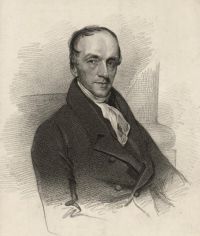 Richard Watson,
A Biblical and Theological Dictionary
Richard Watson,
A Biblical and Theological Dictionary
“ The essential principles of the institution, namely, that their order is to be maintained at the expense of the society at large, and that the end sanctifies the means, are utterly incompatible with the welfare of any community of men. ”
William Klapp Williams, The Communes of Lombardy from the VI. to the X. Century
“ We have been dealing exclusively with institutions, and the manner in which their growth has been accomplished. For it is in the institutional life of a people, and in the change and development it undergoes, that are to be found those elements which form the basis for all future changes, whether simply in the form of its government or in the structure of its social system. ”
Theodore Parker,
The Collected Works of Theodore Parker
(1864)
“ Righteousness in the Establishments of the People. Under this name I include three things—namely, institutions, constitutions, and statutes. Institutions are certain modes of operation, certain social, ecclesiastical, or political contrivances for doing certain things. Thus, an agricultural club is a social institution to help farming; a private school is a social institution for educating its pupils; a church is an ecclesiastical institution for the promotion of religion; an aristocracy is a political institution for governing all the people by means of a few, and for the sake of a few ”
John Stuart Mill,
Considerations on Representative Government
(1861)
“ The institution is the most aristocratic in principle which now remains in England; far more so than the House of Lords, for it grants public money and disposes of important public interests, not in conjunction with a popular assembly, but alone. ”
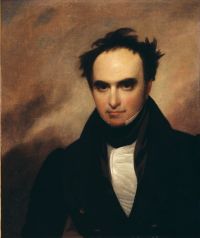 Daniel Webster,
The Great Speeches and Orations of Daniel Webster
Daniel Webster,
The Great Speeches and Orations of Daniel Webster
“ Sir, the theory of our institutions is plain; it is, that government is an agency created for the good of the people, and that every person in office is the agent and servant of the people. Offices are created, not for the benefit of those who are to fill them, but for the public convenience ”
 John R. Commons,
The American Journal of Sociology
(1901)
John R. Commons,
The American Journal of Sociology
(1901)
“ The state becomes a larger institution, by deepening its hold on a subordinate institution which had grown up as private property under the law of survival and centralization, until it reached the point where organization tended to suppress the free movement of the persuasive principle animating its members. ”
John Stuart Mill,
A System of Logic, Ratiocinative and Inductive
(1881)
“ In like manner, if we would attempt to judge of the effect which any political institution would have, supposing that it could be introduced into any given country, we must be able to show that the existing state of the practical government of that country, and of whatever else depends thereon, together with the particular character and tendencies of the people, and their state in respect to the various elements of social well-being, are such as the institutions they have lived under, in conjunction with the other circumstances of their nature or of their position, were calculated to produce. ”
John Stuart Mill,
Considerations on Representative Government
(1861)
“ When, therefore, the instructed in general can be brought to recognize one social arrangement, or political or other institution, as good, and another as bad—one as desirable, another as condemnable, very much has been done towards giving to the one, or withdrawing from the other, that preponderance of social force which enables it to subsist. ”
Daniel Webster,
The Bunker Hill Monument
(1825)
“ Regarding government as an institution for the public good, they demand a knowledge of its operations, and a participation in its exercise. A call for the representative system, wherever it is not enjoyed, and where there is already intelligence enough to estimate its value, is perseveringly made. ”
 William Graham Sumner,
Earth-Hunger and Other Essays
(1913)
William Graham Sumner,
Earth-Hunger and Other Essays
(1913)
“ A proposition might also be formulated, on behalf of which a great deal could be said, to the following effect: the state ought to see to it that every social institution which possesses power should be loaded with a corresponding responsibility. ”
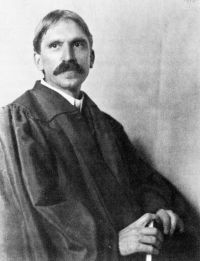 John Dewey,
Democracy and Education
(1916)
John Dewey,
Democracy and Education
(1916)
“ The institutional idealistic philosophies of the nineteenth century supplied this lack by making the national state the agency, but in so doing narrowed the conception of the social aim to those who were members of the same political unit, and reintroduced the idea of the subordination of the individual to the institution. ”
 Charles Horton Cooley,
Social organization
(1909)
Charles Horton Cooley,
Social organization
(1909)
“ The great institutions are the outcome of that organization which human thought naturally takes on when it is directed for age after age upon a particular subject, and so gradually crystallizes in definite forms—enduring sentiments, beliefs, customs and symbols. And this is the case when there is some deep and abiding interest to hold the attention of men. Language, government, the church, laws and customs of property and of the family, systems [Pg 314] of industry and education, are institutions because they are the working out of permanent needs of human nature. ”
 Thomas Hill Green,
Lectures on the Principles of Political Obligation
Thomas Hill Green,
Lectures on the Principles of Political Obligation
“ There is some cogency in language of this kind. It is true that when we speak of a state as a living agency, we mean, not an institution or complex of institutions, but a nation organised in a certain way ”
Richard Baxter, A Christian Directory, Part 3: Christian Ecclesiastics
“ For the body political is informed and denominated from the pars imperans, the governing part or head: therefore as a head of divine institution, authorized for the spiritual or pastoral work, denominateth the society accordingly; so a civil head can make but a civil society, and a head of man's making, but a human society. ”
Samuel Finley Breese Morse, Samuel F. B. Morse, His Letters and Journals
“ A plan of an institution which shall be truly liberal, which shall be mutually beneficial, which shall really encourage our respective arts, cannot be devised in a moment; it ought to be the work of great caution and deliberation and as simple as possible in its machinery. Time will be required for the purpose. ”
A Selection of Cases on the Law of Torts (1893)
“ For what is applicable to our wants, habits, and necessities as a community or state, must necessarily to some extent be determined from the nature and genius of our government and institutions. Or, in other words, 412to determine whether a particular principle harmonizes with the spirit of our institutions, we must look to the habits and condition of the society which has created and lived under these institutions. ”
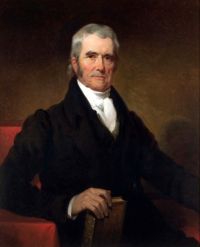 John Marshall,
The Life of George Washington, Vol…
John Marshall,
The Life of George Washington, Vol…
“ Promote, then, as an object of primary importance, institutions for the general diffusion of knowledge. In proportion as the structure of a government gives force to public opinion, it should be enlightened. ”
George Ticknor Curtis, Creation or Evolution? A Philosophical Inquiry
“ Then, with regard to the phenomena of what are called constitutions of government, or the political systems of exercising public authority, I find numerous cases in which the force of an individual will and intelligence has been not only a great factor, but by far the largest factor in the production of particular institutions. ”
Theodore Parker,
Speeches, Addresses, and Occasional Sermons…
“ Let me single out two excellent institutions, not [Pg 322] wholly American,—The contrivance for making laws, and that for executing them. To make laws, the people choose the best men they can find and confide in, and set them to this work. They aim to take all the good of past times, of the present times, and add to it their private contribution of justice. ”
James Frederick Ferrier,
Public Lecture
(1852)
“ The Philosophical Institution entered on its labours animated by the determination to adapt its instructions to the wants of the whole community, and not limit them to the necessities of any particular section ”
Various, The Book Review Digest, v. 16, 1920 (1905)
“ Part two, on Social institutions, does not take up the evolution of social institutions, but is a study of the organization and control of society through its institutions, taking up the state, property, the family, the church, the school, occupation and under minor institutions, charity, amusement, art, science, business, and war. ”
John Stuart Mill,
Considerations on Representative Government
(1861)
“ We have now, therefore, obtained a foundation for a twofold division of the merit which any set of political institutions can possess. It consists partly of the degree in which they promote the general mental advancement of the community, including under that phrase advancement in intellect, in virtue, and in practical activity and efficiency, and partly of the degree of perfection with which they organize the moral, intellectual, and active worth already existing, so as to operate with the greatest effect on public affairs. ”
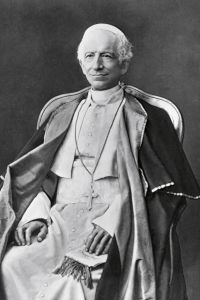 Leo XIII,
The Great Encyclical Letters of Pope Leo XIII
(1903)
Leo XIII,
The Great Encyclical Letters of Pope Leo XIII
(1903)
“ The foremost duty, therefore, of the rulers of the State should be to make sure that the laws and institutions, the general character and administration of the commonwealth, shall be such as of themselves to realize public well-being and private prosperity. ”
 Thorstein Veblen,
The Place of Science in Modern Civilisation…
Thorstein Veblen,
The Place of Science in Modern Civilisation…
“ The important and interesting institutions in such a case, those institutions which fill a large angle in men's vision and carry a great force of authenticity, are the institutions of coercive control, differential authority and subjection, personal dignity and consequence; and the speculative generalisations, the institutions of the realm of knowledge, are created in the image of these social institutions of status and personal force, and fall into a scheme drawn after the plan of the code of honor. ”
| portal, Apollo 11 Goodwill Messages (1969)
“ In working out this destiny, we have developed institutions based on the recognition of the equality of all men, forms of government in which all can participate and a system of justice which protects the weak. ”
Thorstein Veblen,
The Place of Science in Modern Civilisation…
“ The growth and mutations of the institutional fabric are an outcome of the conduct of the individual members of the group, since it is out of the experience of the individuals, through the habituation of individuals, that institutions arise; and it is in this same experience that these institutions act to direct and define the aims and end of conduct. It is, of course, on individuals that the system of institutions imposes those conventional standards, ideals, and canons of conduct that make up the community's scheme of life. ”
William Graham Sumner,
Folkways
“ The French Revolution began with the highest strata of the masses, and the control of it passed on down from one to another of the lower strata, until it reached the lowest,—the mob gathered in the slums of a great city.61. The mores and institutions. Institutions and laws are produced out of mores. An institution consists of a concept (idea, notion, doctrine, interest) and a structure. The structure is a framework, or apparatus, or perhaps only a number of functionaries set to coöperate in prescribed ways at a certain conjuncture. ”
Thomas Jefferson,
The Writings of Thomas Jefferson…
“ This institution will be based on the illimitable freedom of the human mind. For here we are not afraid to follow truth wherever it may lead, nor to tolerate any error so long as reason is left free to combat it. ”
William F. Russell, The Short Constitution
“ Let men in office substitute the midnight oil for the lime-light.”—Calvin Coolidge.7.“Government is the aggregate of authorities which rule a society.” “Government is that institution or aggregate of institutions by which society makes and carries out those rules of action which are necessary to enable men to live in a social state, or which are imposed upon the people forming that society by those who possess the power or authority of prescribing them.”—Bouvier's Law Dictionary, Vol. ”
Emory Adams Allen, The Golden Gems of Life; Or, Gathered Jewels for the Home Circle
“ The various departments of business and trust, the pulpit and the bar, our courts of justice and halls of legislation, our civil, religious, and literary institutions, all, in short, that constitute society and go to make life useful and happy, are to be in their hands and under their control. ”
Thomas Hill Green,
Lectures on the Principles of Political Obligation
“ They are the expressions in which it becomes real. As conflicting with the momentary inclinations of the individual, these institutions are a power which he obeys unwillingly; which he has to, or is made to, obey. ”
 Gustave Le Bon,
The Crowd: A Study of the Popular Mind
Gustave Le Bon,
The Crowd: A Study of the Popular Mind
“ POLITICAL AND SOCIAL INSTITUTIONS The idea that institutions can remedy the defects of societies, that national progress is the consequence of the improvement of institutions and governments, and that social changes can be effected by decrees— this idea, I say, is still generally accepted. ”
John Dewey,
The Philosophical Review
(1892)
“ That is, these institutions have their meaning as pointing to or indicating the organizing unity; they are the attempts to express it. Succeeding in their attempt at expression, they are superseded. They have realized their purpose, their function. The principle in which they have summed themselves up, in which they have executed themselves, has the floor ”
 Sarah Stickney Ellis,
The Mothers of England
(1844)
Sarah Stickney Ellis,
The Mothers of England
(1844)
“ We know that the further a nation advances in civilization, in science, and in general knowledge, the more intelligence, wisdom, and forethought, are required of those who hold the reins of government, and direct the management of institutions for the public good ”
Benjamin M. Anderson, The Value of Money
“ There are great Institutions, Church and State and Courts and Professions and giant Corporations and Political Parties, and multitudinous other less formal or [Pg 20] smaller institutions, which go on in continuous life, though the men who act within them pass and change. Their Life seems an independent life, and the individual who tries to change their course finds that his efforts mean little indeed, as a rule. ”
Related terms
Authors who wrote about “institution”
Theodore ParkerWilliam Graham SumnerDaniel WebsterJohn Stuart MillJames Frederick FerrierThomas JeffersonAlbert H. BuckPercy Bysshe ShelleyB. K. BensonGeorg Wilhelm Friedrich HegelRichard WatsonJohn R. CommonsG. E. PartridgeJames Baldwin BrownJohn DeweyThomas Hill GreenRichard BaxterSamuel Finley Breese MorseWilliam F. Russell Jonathan Swift
Related articles
The Museum’s Perpetual Pivot, From Curiosity to Conscience
The museum has been in constant flux, shifting from private treasure troves to public trusts, forever balancing collecting with educating, research with experience, and historical preservation with contemporary relevance. Its future depends on embracing uncomfortable truths and engaging new generations.
Sir E. Ray Lankester, Margaret Talbot Jackson, Okakura Kakuzō
The clash of the priceless and the profitable: when the auction block meets the sacred
The auction room embodies a powerful, expansive logic that attempts to define all value. When this mechanism encroaches on human dignity or sacred heritage, it forces a profound moral confrontation over whether anything can truly remain priceless in the face of competitive commerce.
John Theophilus Kramer, William Lloyd Garrison, Adam Smith
