 Theodore Parker,
The Collected Works of Theodore Parker
(1864)
Theodore Parker,
The Collected Works of Theodore Parker
(1864)
“ The government of all, by all, and for all, is a Democracy. ”
Democracy, a system of governance in which authority lies with the people—either directly or through chosen representatives—has developed from ancient Athens to contemporary liberal democracies. Theodore Parker described it as "government of all, by all, and for all," while Gerald Stanley Lee stressed confidence in the collective wisdom of the populace.
John Stuart Mill warned that direct democracy may lead to excesses without proper limitations. These viewpoints underscore democracy’s dual emphasis on the people’s authority and the need for structural protections, illustrating its ongoing balance between majority decision-making and the rights of minorities.
Theodore Parker,
The Collected Works of Theodore Parker
(1864)
“ The government of all, by all, and for all, is a Democracy. ”
 Dorothy Canfield Fisher,
The Bent Twig
Dorothy Canfield Fisher,
The Bent Twig
“ The great impression stamped upon the wax of their minds, which became iron in after years, was democracy—a crude, distorted, wavering image of democracy, like every image an ideal in this imperfect world, but in its essence a reflection of the ideal of their country. ”
William Henry Harrison, William Harrison's Inaugural Address (1841)
“ The broad foundation upon which our Constitution rests being the people—a breath of theirs having made, as a breath can unmake, change, or modify it—it can be assigned to none of the great divisions of government but to that of democracy. ”
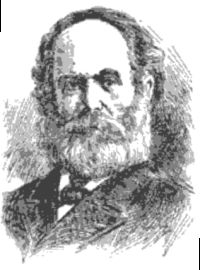 William Cleaver Wilkinson,
French Classics
William Cleaver Wilkinson,
French Classics
“ To men for whom the word “democracy” is the synonym of overthrow, spoliation, anarchy, and murder, I have endeavored to prove that it was possible for democracy to govern society, and yet to respect property, to recognize rights, to spare liberty, to honor religion; that if democratic government is less fitted than other forms to develop some of the finest faculties of the human soul, it has yet its noble and its lovely features ”
Gerald Stanley Lee, The Ghost in the White House
“ This is what Democracy is to me—Democracy is a belief in the faithfulness, ability and shrewd good-heartedness of crowds and their power to select great and true leaders. The essential fundamental principle of the democratic form of government is supposed to be that more than any other form of government on the face of the earth it trusts people. ”
 John Stuart Mill,
Considerations on Representative Government
(1861)
John Stuart Mill,
Considerations on Representative Government
(1861)
“ In unbalanced governments—pure monarchy, pure aristocracy, pure democracy—such maxims are the only barrier which restrains the government from the utmost excesses in the direction of its characteristic tendency. ”
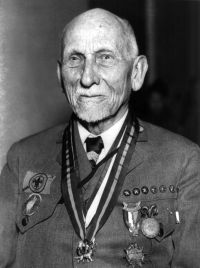 Daniel Carter Beard,
The Book of Camp-Lore and Woodcraft
Daniel Carter Beard,
The Book of Camp-Lore and Woodcraft
“ I believe in our Government of the People, by the People and for the People, a government whose just powers are derived from the consent of the governed, a Sovereign Nation of many Sovereign States, a Democracy in a Republic, a perfect Union, one and inseparable. ”
Richard Roberts, The Unfinished Programme of Democracy
“ Finally, in its broadest and deepest, most comprehensive and most interesting sense, democracy is the name for a certain general condition of society, having historic origins, springing from circumstances and the nature of things, not only involving the political doctrine of popular sovereignty but representing a cognate group of corresponding tendencies over the whole field of moral, social and even spiritual life within the democratic community.”—Lord Morley. ”
 Barack Obama,
Remarks by the President at the 2015 Gridiron Dinner
(2015)
Barack Obama,
Remarks by the President at the 2015 Gridiron Dinner
(2015)
“ That’s how our democracy works. ”
John James Geer, Beyond the Lines; Or, A Yankee Prisoner Loose in Dixie
“ Pure democracy, like all living, blossoming, fruit-bearing growths, flourishes best in the country. A principle that strikes root in an hour in the hotbed of the city, is apt to wilt and die in the sunshine of the open world. ”
Marcius Willson, Mosaics of Grecian History
“ We enjoy a form of government not framed on an imitation of the institutions of neighboring states, but, are ourselves rather a model to, than imitative of, others; and which, from the government being administered not for the few but for the many, is denominated a democracy. ”
Various, Punch, or the London Charivari…
“ Since we last met, I have changed my views. I am going to create a new democracy, and awaken it to its true task of making all the people of this country noblemen, by freeing their wills, and purifying their minds! ”
“ Now, there are four kinds of government, democracy, oligarchy, aristocracy, monarchy, so that the supreme and deciding authority is always a part or the whole of these. Democracy is a form of government in which the offices are distributed by the people among themselves by lot; in an oligarchy, by those who possess a certain property-qualification; in an aristocracy, by those who possess an educational qualification, meaning an education that is laid down by the law. ”
Sophie Lee Foster, Revolutionary Reader: Reminiscences and Indian Legends
“ But that glorious struggle in which your destinies were pledged in common with the illustrious characters of that day, has eventually proved that a system of government, now in the history of the world, a confederative representative democracy, is the best guarantee for the liberties of a great people, is now confirmed by the experience of thirty-six years. ”
Herbert David Croly, The Promise of American Life
“ Democracy as most frequently understood is essentially and exhaustively defined as a matter of popular government; and such a definition raises at once a multitude of time-honored, but by no means superannuated, controversies. ”
Herbert Croly, The Promise of American Life — Chapter IX (1909)
“ THE PEOPLE AND THE NATION At the beginning of this discussion popular Sovereignty was declared to be the essential condition of democracy; and a general account of the nature of a constructive democratic ideal can best be brought to a close by a definition of the meaning of the phrase, popular Sovereignty, consistent with a nationalist interpretation of democracy. ”
Charles F. G. Masterman, The condition of England (1909)
“ From a blend of these two he has constructed in imagination the image of Democracy—a loud-voiced, independent, arrogant figure, with a thirst for drink, and imperfect standards of decency, and a determination to be supported at some one else’s expense. ”
M. P. Follett, The new state (1918)
“ Party or “interests” govern us with some fiction of the “consent of the governed” which we say means democracy. We have not even a conception of what democracy means. That conception is yet to be forged out of the crude ore of life. ”
 John Greenleaf Whittier,
The Works of John Greenleaf Whittier…
John Greenleaf Whittier,
The Works of John Greenleaf Whittier…
“ A democracy which professes to hold, as by divine right, the doctrine of human equality in its special keeping, and which at the same time gives its direct countenance and support to the vilest system of oppression on which the sun of heaven looks, has no better title to the name it disgraces than the apostate Son of the Morning has to his old place in heaven. ”
 Madison Grant,
The passing of the great race; or…
(1916)
Madison Grant,
The passing of the great race; or…
(1916)
“ A true republic, the function of which is administration in the interests of the whole community—in contrast to a pure democracy, which in last analysis is the rule of the demos or a majority in its own interests—should be, and often is, the medium of selection for the technical task of government of those best qualified by antecedents, character and education, in short, of experts. ”
Theodore Parker,
The Collected Works of Theodore Parker
(1864)
“ Democracy is direct self-government over all the people, for all the people, by all the people. ”
 Woodrow Wilson,
President Wilson's Addresses
Woodrow Wilson,
President Wilson's Addresses
“ The commands of democracy are as imperative as its privileges and opportunities are wide and generous. Its compulsion is upon us. ”
Richard Roberts, The Unfinished Programme of Democracy
“ THE CRISIS OF DEMOCRACY “What is democracy? Sometimes, it is the name for a form of government by which the ultimate control of the machinery of government is committed to a numerical majority of the community. Sometimes, and incorrectly, it is used to denote the numerical majority itself, the poor or the multitude existing in a state. ”
Thomas Carlyle, Latter-Day Pamphlets
“ Democracy, once modelled into suffrages, furnished with ballot-boxes and such like, will itself accomplish the salutary universal change from Delusive to Real, and make a new blessed world of us by and by?—To the great mass of men, I am aware, the matter presents itself quite on this hopeful side. ”
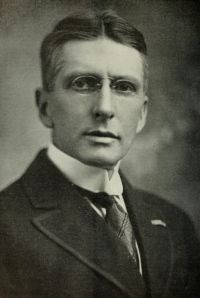 Brand Whitlock,
Forty Years of It
(1913)
Brand Whitlock,
Forty Years of It
(1913)
“ So, too, in our common speech, even above the catchpenny vocabulary of the demagogue or politician, the word democracy has taken on the limited, partial and ignoble connotation of more or less incidental and provisional forms of democracy’s practical outcome ”
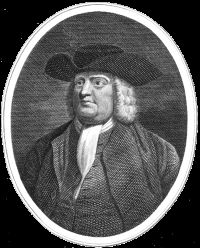 William Penn,
Frame of Government of Pennsylvania
(1682)
William Penn,
Frame of Government of Pennsylvania
(1682)
“ I know what is said by the several admirers of monarchy, aristocracy and democracy, which are the rule of one, a few, and many, and are the three common ideas of government, when men discourse on the subject. But I chuse to solve the controversy with this small distinction, and it belongs to all three: Any government is free to the people under it (whatever be the frame) where the laws rule, and the people are a party to those laws, and more than this is tyranny, oligarchy, or confusion. ”
“ No government by a democracy or a numerous aristocracy, either in its political acts or in the opinions, qualities, and tone of mind which it fosters, ever did or could rise above mediocrity, except in so far as the sovereign Many have let themselves be guided (which in their best times they always have done) by the counsels and influence of a more highly gifted and instructed One or Few. ”
John Stuart Mill,
Considerations on Representative Government
(1861)
“ We have next to consider how far it is possible so to organize the democracy as, without interfering materially with the characteristic benefits of democratic government, to do away with these two great evils, or at least to abate them in the utmost degree attainable by human contrivance. ”
 Leslie Stephen,
The English Utilitarians, Volume 2…
Leslie Stephen,
The English Utilitarians, Volume 2…
“ The power of protection, says Mill, following the old theory, may be intrusted to the whole community, to a few, or to one; that is, we may have a democracy, an aristocracy, or a monarchy. A democracy, or direct government of all by all, is for the ordinary reasons pronounced impracticable. ”
 Alexis de Tocqueville,
Democracy in America
(1840)
Alexis de Tocqueville,
Democracy in America
(1840)
“ Let us now turn the picture and consider the other side of it; let us transport ourselves into the midst of a democracy, not unprepared by ancient traditions and present culture to partake in the pleasures of the mind. Ranks are there intermingled and confounded; knowledge and power are both infinitely subdivided, and, if I may use the expression, scattered on every side. ”
Woodrow Wilson,
The New Freedom
(1913)
“ The government, which was designed for the people, has got into the hands of bosses and their employers, the special interests. An invisible empire has been set up above the forms of democracy. ”
“ which, as they tell you in a democracy, is the glory of the State—and that therefore in a democracy alone will the freeman of nature deign to dwell. ”
William D. Guthrie, Magna Carta, and Other Addresses
“ The great men who founded our system of constitutional government were thoroughly familiar with the theory and operation of pure democracy or direct action by the people, as distinguished from representative government. ”
Woodrow Wilson,
The New Freedom
(1913)
“ I am among those who believe so firmly in the essential doctrines of democracy that I am willing to wait on the convenience of this great sovereign, provided I know that he has got the instrument to dominate whenever he chooses to grasp it. ”
 Cecil Torr,
Small Talk at Wreyland. Second Series
Cecil Torr,
Small Talk at Wreyland. Second Series
“ The arguments for democracy are embodied in stock phrases, ‘the will of the people,’ ‘vox populi,’ and so on, all implying that the people or populus or dêmos is always going to be unanimous, just like a jury. ”
Edward Howard Griggs, The Soul of Democracy
“ It is these three transformations—the abandonment of the old abstract notions and the testing of democracy by its results, the expansion of its application over the entire population, and the invention and development of representative government—it is these three changes that make our democracy a new order of society, new in its problems, its menaces, its solutions. ”
William James, Memories and Studies
“ Democracy is still upon its trial. The civic genius of our people is its only bulwark, and neither laws nor monuments, neither battleships nor public libraries, nor great newspapers nor booming stocks; ”
 Aristotle,
Politics
(4th century BC)
Aristotle,
Politics
(4th century BC)
“ Therefore we should rather say that democracy is the form of government in which the free are rulers, and oligarchy in which the rich; ”
Herbert Croly, The Promise of American Life — Chapter VII (1909)
“ Democracy may mean something more than a theoretically absolute popular government, but it assuredly cannot mean anything less. ”
 Marcus Tullius Cicero,
Cicero's Tusculan Disputations
(1888)
Marcus Tullius Cicero,
Cicero's Tusculan Disputations
(1888)
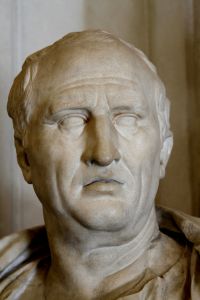
“ And, although we may speak of it with rather more indulgence than you are accustomed to accord it, I must certainly agree with you, that of all the three particular forms of government, none is less commendable than democracy. ”
vicomte de Eugène-Melchior Vogüé, The Russian novelists (1887)
“ Are not these tendencies affecting practical life as well, in the doctrines of equality of classes, division of property, universal suffrage, and all the other consequences of this principle, which are summed up in the word democracy, the watchword of our times? ”
 John Dewey,
Democracy and Education
(1916)
John Dewey,
Democracy and Education
(1916)
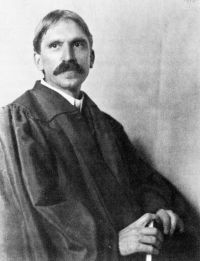
“ A democracy is more than a form of government; it is primarily a mode of associated living, of conjoint communicated experience. ”
 Lewis Henry Morgan,
Ancient Society
Lewis Henry Morgan,
Ancient Society
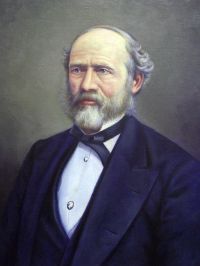
“ In the new political society they realized that complete democracy which already existed in every essential principle, but which required a change in the plan of government to give it a more ample field and a fuller expression. ”
John St. Loe Strachey, The Adventure of Living : a Subjective Autobiography
“ The pivot of my politics is a whole-hearted belief in the principles of Democracy. I mean by this, not devotion to certain abstract principles or views of communal life which have had placed upon them the label "Democratic," but a belief in the justice, the convenience, and the necessity of ascertaining and loyally abiding by the lawfully-expressed Will of the Majority of the People. ”
 Charlotte Perkins Gilman,
Moving the Mountain
Charlotte Perkins Gilman,
Moving the Mountain
“ Back in the 18th century, the world was wild about Democracy—Democracy was going to do all things for all men. Then, with prodigious struggles, they acquired some Democracy—set it going. It was a good thing. ”
“ These and other kindred characteristics are proper to democracy, which is a charming form of government, full of variety and disorder, and dispensing a sort of equality to equals and unequals alike. ”
Alexis de TocquevilleEdward Howard GriggsRichard RobertsHerbert CrolyAristotleHerbert David CrolyBaron John Emerich Edward Dalberg Acton Acton Frederick Jackson TurnerGeorge R. HahnM. P. FollettWilliam F. RussellLeslie M. ShawGerald Stanley Lee
 Charles Horton CooleyBenjamin Rush DavenportL. T. Hobhouse
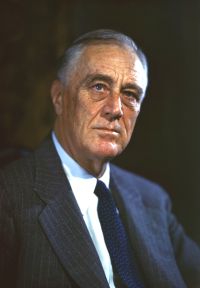 Franklin D. Roosevelt
 George Henry Payne
 William Ralph Inge
 William Graham Sumner
The global contest between democratic and autocratic systems has shifted from ideology to demonstrable outcomes. Success in critical areas like advancing public health mandates (e.g., curing cancer) and building future-ready infrastructure proves that popular control is compatible with effective governance.
The global debate over governance divides systems that protect the individual's right to dissent from those that merge the people's will with the state's will to achieve collective goals. An analysis of the procedural versus substantive approach to democracy.
George Washington rejected a crown, establishing an anti-autocratic executive that defines American leadership. But the specter of monarchy and executive overreach has haunted the presidency ever since, making his original choice a constant test for the republic.
Democracies must choose between individual liberty and mandatory defense when facing existential threats. Compulsory service, framed as an ultimate act of self-government, is often deemed necessary for survival, contrasting sharply with autocratic command used for conquest.
The long-standing debate over US strategy in the Middle East pits the 'freedom agenda' (transforming authoritarian states) against the realist view (prioritizing stable conflict resolution). This clash centers on whether internal political oppression or the unresolved Arab-Israeli conflict is the region's core pathology.
The Palestinian national project, as articulated in its foundational charters, translates the aspiration for liberation and self-determination into a framework based on popular sovereignty, democratic accountability, and the inviolable rule of law. This architecture attempts to reconcile individual rights with the demands of a collective national struggle.
Spain’s deep-seated historical divisions have fractured its political identity for centuries. From Franco’s calculated ambiguity to the Civil War’s contradictory alliances, the very language of power has been weaponized, preventing consensus and leaving the nation in a perpetual struggle for a shared future.
Concentrated economic power inevitably subverts political self-government, turning public institutions into tools of private interest. From the feudalism of early industrialism to modern media monopolies, the enduring conflict requires the democratization of industry to safeguard the commonwealth.
Examining the central paradox of political change: Can military force legitimately midwife freedom? Historical and philosophical evidence suggests violence risks corrupting the very democratic ideals it aims to establish, favoring nonviolent resistance as a more sustainable path to self-governance.
The internet promised radical empowerment but created unprecedented vulnerabilities. Sophisticated cyber operations and pervasive disinformation campaigns erode public trust. True resilience requires strengthening core democratic institutions—education, culture, and participation—not just technological fixes.

