AI-generated from sources
Washington's Republic, The Enduring Rejection of the Crown
In Brief
- George Washington's deliberate rejection of a crown and his insistence on relinquishing power established the anti-autocratic ethos of the American presidency.
- The early American republic, despite Washington's example, was deeply paranoid about executive overreach and feared a potential drift toward monarchy.
- Washington's legacy sets a moral and political benchmark, emphasizing constitutional legitimacy over personal power or dynastic ambition.
- Contemporary debates over election integrity and the peaceful transfer of power continue to invoke Washington's foundational resistance to executive usurpation.
Main authors
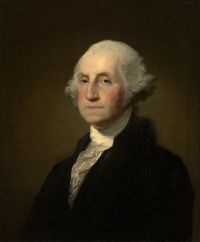
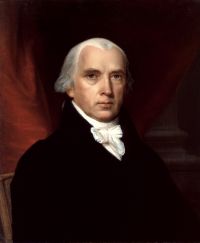

The American presidency was born from a deliberate and profound rejection of monarchy, an act of political self-denial that has defined the nation's executive character. At the center of this founding gesture stands George Washington, who was presented with the very real temptation of absolute power in the turbulent aftermath of revolution [1, 2]. Discontent within the Continental Army and broader anxieties about the viability of republican government created an environment where the prospect of a king was not merely theoretical . Yet, the new republic was explicitly conceived as a government without a throne, aristocracy, or inherited privilege, an attempt to build a social order on the novel foundations of a written constitution and pure representation [3]. Washington's role was not just to win a war, but to preside over the creation of an executive office that embodied this radical departure from the European tradition of hereditary rule.
The precedent set by Washington was not merely symbolic; it was a foundational act of political virtue that continues to resonate. His insistence on stepping down after two terms, for instance, established a powerful norm against lifetime rule, reinforcing the principle of a government accountable to the people [4]. His ambition, as observers like Knight noted, was tempered by a commitment to the nation's liberty, preventing him from seizing the supreme power that was arguably within his grasp [5]. This foundational anti-autocratic ethos, in which power is taken up and laid down willingly, became a benchmark for American leadership [10]. Consequently, Washington's legacy is not a static historical fact but a dynamic standard, invoked through generations to measure the character of leaders and the health of the republic itself [7, 30]. From the founding debates to contemporary political crises, his example serves as the primary reference point in the ongoing contest over the nature and limits of presidential authority [29].
Founding an Executive Without a Throne
The period following the American Revolution was fraught with instability, creating fertile ground for monarchical ideas to take root. Widespread discontent simmered among military officers and soldiers, who felt neglected by a weak and ineffective Congress unable to settle back pay or provide for their families . This disillusionment fueled a growing distrust in republican institutions, culminating in an organized movement to establish a constitutional monarchy and place Washington on the throne as its king . The sentiment was not confined to the military; the idea of monarchy as a solution to the Confederation's chaos appeared in the correspondence of prominent figures, and rumors even circulated that the Constitutional Convention of 1787 was secretly planning to offer a crown to an English prince . This context reveals that the republic's establishment was not a foregone conclusion, but a choice made against powerful countercurrents.
Against this backdrop of uncertainty and temptation, Washington's personal conduct proved decisive. When discontented officers formally proposed he become king, his response was a swift and indignant refusal . This was a conscious repudiation of the Cincinnatus-turned-Caesar archetype, choosing instead to steward the creation of a novel form of government based on a written constitution and representative principles . His actions demonstrated a character in which ambition was secondary to virtue, choosing to build a republic rather than establish a dynasty . By rejecting the path of a military strongman, Washington cemented the principle that American leadership should be derived from constitutional legitimacy, not personal power or popular acclaim.
The precedent established by this rejection had a profound and lasting impact. Washington warned against any change to constitutional powers through usurpation, arguing that such acts, even if for a temporary good, are the weapons by which free governments are ultimately destroyed [6]. His example became a moral and political benchmark, setting him apart from other revolutionary figures like Cromwell or Napoleon Bonaparte, who, as François-René de Chateaubriand observed, rose from republics only to betray them for personal power [8, 9]. While Napoleon crushed anarchy at the cost of liberty, Washington raised a nation to independence and retired as a private citizen . This legacy became deeply embedded in the American political consciousness, creating a powerful cultural barrier against any future general or leader aspiring to a dictatorship .
The Specter of Power in the Early Republic
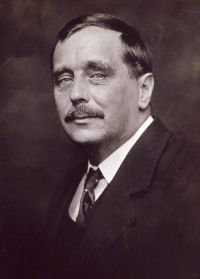
Despite Washington's personal rejection of a crown, the early republic was haunted by the fear of executive overreach and a potential drift toward monarchy. Even as the new government took shape under his leadership, monarchist ideas remained influential enough that, as H. G. Wells later noted, there was a serious proposal to import a Prussian prince to serve as a king, mirroring the British system [11]. During Washington's two terms, many of the most respected public figures harbored sincere fears that the Constitution had vested the president with dangerously autocratic powers, viewing the new executive office as a potential trap for an unsuspecting populace [12].
These anxieties manifested in intense scrutiny of the presidency's daily operations. William Maclay's journal reveals how even minor social customs and presidential etiquette were viewed by some as "anti-republican" affectations of royalty, creating a dilemma for republicans who feared being seen as disrespectful to Washington [13]. While Washington himself believed the greater threat to liberty came from governmental weakness and anarchy rather than executive strength, his administration was fiercely criticized [14]. Opponents accused him of poisoning republican principles and carrying his policies so far as to endanger the existence of public liberty itself [17]. This highlights a core tension: even the most virtuous leader could not escape suspicion in a system deeply paranoid about the concentration of power.
The debate over executive power was not merely about appearances but was rooted in fundamental constitutional and ideological disagreements. Figures like James Madison articulated a deep-seated fear that an accumulation of power in the executive branch could be exploited by a leader with monarchical ambitions, using patronage and corruption to undermine the republic while professing republican ideals [18]. The revolutionary generation was acutely aware that public enthusiasm for republicanism could wane over time, allowing for a gradual modification of the system toward monarchy [19]. Thomas Jefferson even identified a distinct pro-monarchy faction, particularly in the eastern states, that he believed was actively working to subvert the Union for this purpose [20]. Complicating matters further was the fact that the republic's very survival had at times required granting Washington near-dictatorial powers during the war, a paradox that underscored the inherent fragility of balancing liberty with the need for decisive authority [15, 16].
The Enduring Test of Republican Virtue
Washington’s anti-monarchical legacy endures as a primary benchmark for American presidential conduct, shaping expectations of public trust and ethical leadership [22]. The historical archetype of a leader who usurps power by claiming to defend the people against aristocracy—the path of Caesar—remains a potent warning in American political discourse [21]. Preserving what Franklin D. Roosevelt would later call the "sacred fire" of democracy, which he credited Washington with establishing, is often framed as the nation's highest purpose, justifying the defense of democratic institutions against any threat . This foundational ethos requires leaders to be worthy of public responsibility and to uphold, not undermine, the system they are elected to lead .
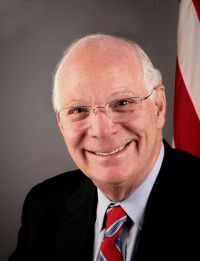
This historical framework is frequently applied to contemporary challenges to democratic norms. When a president is perceived as seeking to corrupt or interfere with free and fair elections, such actions are interpreted as a rejection of the nation's core principle of self-government [23]. Recent instances of executive pressure on election officials have been condemned by figures like Ben Cardin as dictatorial behavior that undermines the republic itself, a direct contradiction of the American ideal of democracy over autocracy [24]. Critics such as Elizabeth Warren argue that such efforts are not mere political tantrums but calculated attempts to subvert the foundational idea that voters—not incumbent leaders—decide who governs [25]. These debates demonstrate the continued relevance of the founding generation's fear of an executive who refuses to be bound by the will of the people.
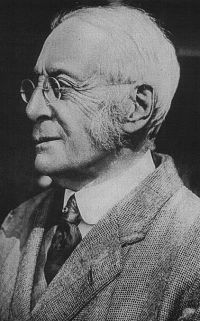
Beyond the actions of individual presidents, Washington's legacy informs broader critiques of the executive office itself. More than a century ago, commentators like Goldwin Smith argued that the elective presidency was a structural flaw, a source of perpetual turmoil and partisan fever that destabilized the commonwealth [26]. Others, like Mary Platt Parmele, offered a comparative perspective, suggesting that the popular will in a parliamentary system like England's can be more swift and imperious than in the American republic, implying the U.S. President may wield more actual power than a modern monarch [27]. This raises the enduring question, articulated in the early 20th century by William T. Brown, of whether the United States could evolve into an "empire in everything but the name" [28]. The constant invocation of Washington's example in these debates shows that his original rejection of the crown was not an end to the argument, but the beginning of an unending national conversation about the nature of power.
George Washington's refusal of monarchical authority was the cornerstone of a deliberate political project to create an executive accountable to the people and the law . By choosing to relinquish power, most notably after two terms, he established an anti-autocratic ethos that became inseparable from the identity of the American presidency . This founding ideal, however, did not resolve the inherent tension within a republic that requires a strong executive. From its inception, the nation grappled with anxieties that this power could become tyrannical, a fear voiced by prominent figures who saw the seeds of monarchy even in the Washington administration . This enduring conflict between the need for executive energy and the imperative to guard against its abuse has shaped American political history.
Today, Washington's legacy serves as a vital, if contested, standard for evaluating presidential conduct. Contemporary debates over election integrity, the peaceful transfer of power, and the limits of executive authority directly echo the founding generation's concerns . The historical fear of a Caesar who subverts democracy from within, or the emergence of an undeclared empire, remains a powerful undercurrent in modern political discourse . The republic Washington helped forge was never a guaranteed inheritance but an ongoing experiment. Its resilience depends on the continued adherence to the principles he embodied: that power is a temporary trust, not a permanent possession, and that its ultimate legitimacy flows from the consent of the governed, not the will of the ruler .