AI-generated from sources
The militia paradox: Liberty's defense or anarchy's precursor?
In Brief
- The concept of the militia embodies a fundamental paradox: it is idealized as the safest defense of a free state and feared as a source of indiscipline, lawlessness, and factional violence.
- Historical accounts, including those from George Washington, often depict militias as insubordinate, lax, and unfit for structured warfare, leading to civil disorder and outrages against citizens.
- The political debate centers on who controls armed force—central authority (for efficiency and standardization) or autonomous local groups (for checking tyranny and preserving liberty).
- The ultimate challenge is balancing effectiveness and discipline; an armed force must remain subordinate to civil power to prevent the slide into anarchy and licentiousness.
Main authors
The concept of the militia occupies a fraught and central position in the political theory of a free republic. It is simultaneously championed as the natural and safe defense of a free state, an embodiment of the people’s right to secure their own liberty, and decried as an undisciplined, inefficient, and often dangerous force prone to lawlessness and insurrection [1, 2, 3]. This fundamental tension raises a critical question: is an armed citizenry, organized as a militia, the ultimate guarantor of liberty or a precursor to anarchy? The historical and philosophical record reveals a deep conflict between the idealized citizen-soldier and the rogue auxiliary, reflecting a persistent struggle to balance decentralized power against the need for civil order [4].
On one hand, the militia is presented as a virtuous alternative to the perceived menace of standing armies, which are characterized as expensive instruments of state power and princely pomp [5, 6, 7]. In this view, the armed populace itself is the depository of the republic’s force, capable of defending its own lands and liberty without surrendering power to a professional military class [8]. On the other hand, practical experience often paints a starkly different picture. Militias have been documented as agents of social coercion, employing threats and violence against civilians, and acting as an instrument of factional interests rather than the common good [9, 10]. This duality suggests that the line between a force that preserves liberty and one that devolves into oppression and chaos is perilously thin, rooted in questions of discipline, control, and the very character of the citizen-soldier [11].
The Ideal of the Citizen-Soldier as the Foundation of Liberty
The philosophical cornerstone of the militia is its identification as the “natural support of a free government” . This perspective posits that a well-regulated body, comprising the people capable of bearing arms, is the most appropriate and safest means of defending a free state . The underlying principle is that entrusting the nation's defense to the citizenry itself prevents the concentration of military power in a standing army, which has historically been viewed as a danger to liberty . The power of the sword, in this framework, remains with the people, who are motivated to defend their own freedom and property, making them a potentially invincible force against external threats and internal tyranny [12, 13].
This ideal is deeply embedded in the formation of the American republic, where debates centered on the belief that the populace had a right to keep and bear arms specifically for the purpose of maintaining this defensive capability [14]. The militia was seen as sufficient to repel invasions and execute the laws of the union, provided it was properly organized, armed, and disciplined [15]. The concept envisioned in the Second Amendment was that of ordinary citizens bringing their own lawful weapons to militia duty, forming a collective defense force rooted in the community [16]. This reliance on the citizenry was not just a practical matter but a statement of political trust, positioning the militia as the ultimate repository of the republic's strength and a genuine source of public security .
The moral and civic virtue of the citizen-soldier is central to this idealized vision. Liberty, it is argued, is not a passive state but something that must be actively defended by those who value it [17]. This requires citizens to cultivate civic virtues and a sense of collective responsibility, making them worthy of the freedom they possess [18]. The act of serving as a citizen-soldier is thus seen as an expression of personal responsibility and a commitment to the collective good, which are constants in the national character [19]. In this context, the militia is more than a military body; it is a school for republican virtue, where the defense of liberty reinforces the character necessary to sustain it [20].
The Unruly Reality: Inefficiency, Lawlessness, and Oppression
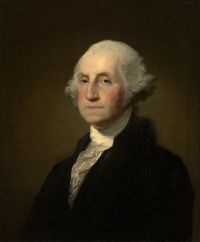
Contrastingly, the practical application of militia forces frequently fails to align with this noble ideal, revealing significant shortcomings in discipline, effectiveness, and moral conduct. Historical accounts, including those from George Washington, depict militias as lax, insubordinate, and unfit for the rigors of a structured army . Their refusal to subject themselves to the same rules and regulations as regular soldiers created jealousy, dissatisfaction, and disorder, undermining the coherence of the entire military effort . This lack of discipline stems from the fact that its members are not habituated to military exposures and rigorous training, which compromises their effectiveness on the battlefield and poses a threat to civil order [21].
Beyond mere inefficiency, the conduct of militia forces has often descended into outright lawlessness and the violation of civilian rights. In some instances, local militias have become instruments of coercion, using threats and violence to enforce their will on local populations, such as skilled workers . Soldiers have been accused of entering private homes, seizing property, and committing various outrages against citizens, blurring the line between defenders and predators [22]. Such actions transform the supposed guardians of liberty into a source of fear and instability, embodying the very militarism and lawlessness they were intended to prevent . In extreme cases, militias have served as the armed wing of oppressive social orders, enforcing factional agendas through violence and intimidation .
The military adequacy of militias has also been seriously questioned, particularly in the context of modern warfare. Experience from conflicts like the American Revolution and the English Civil War suggests that ill-disciplined militia are often unable to stand against professional, regular forces [23]. The evolution of military technology, from muskets to modern bombers and tanks, further erodes the viability of a traditional citizen militia as a primary defense force . This inadequacy is not only a strategic liability but also creates social inequality; if war is supported by personal service in the militia, the burden falls disproportionately on the poor, who serve alongside the rich without the same resources [24]. The consensus among some military and political leaders became that national defense required professionally organized and equipped forces, rather than relying on an obsolete and worthless militia system [25, 26].
The Political Nexus: Central Control versus State Autonomy
The debate over the militia is fundamentally a political one, revolving around the critical question of who controls armed force in a society. The formation of the United States Constitution saw intense conflict over whether the central government or individual states should have the power to organize, arm, and discipline the militia [27, 28, 29]. Proponents of state control feared that giving this power to a federal authority would place all the country's strength in the hands of a potentially aristocratic or despotic government, leaving the people and the states defenseless . The fear was that Congress could either neglect to arm the militia or, conversely, harass them with unnecessary duties to break their spirit, ultimately destroying the liberties of the people [30].
This struggle highlights the militia's role as a key check on centralized power. The power of states to maintain their own militias was seen as a bulwark against federal overreach, ensuring that military force was not monopolized by a national government . However, this decentralization creates its own set of problems. A lack of uniform standards for organization and armament across different state militias makes a cohesive national defense difficult . To be effective, forces need to be provided with standard arms and equipment, a task that logically falls to a central authority to ensure interoperability and efficiency in a national crisis [31, 32]. The call for a well-regulated militia establishment underscores the need for a system that could provide for the national defense by organizing these disparate forces into an effective whole .
Ultimately, the militia exists at the intersection of liberty, order, and anarchy. An uncontrolled, decentralized armed force risks becoming an instrument of faction, licentiousness, and turbulence, undermining the very society it is meant to protect [33, 34]. The war is not simply between a nation and its enemies, but between government and the forces of social decay . Yet, concentrating all coercive power in a central government risks creating a different kind of tyranny, where the state itself becomes the instrument of domination [35, 36]. The challenge, therefore, lies in establishing a balance where the military remains subordinate to civil power and serves the cause of liberty without succumbing to the indiscipline that leads to anarchy .
The militia as a concept is defined by its inherent contradictions. It represents both the highest ideal of republican self-defense—a citizenry entrusted with its own liberty—and the recurring historical reality of armed groups that challenge civil authority and degenerate into instruments of private will . The journey from citizen to soldier is a transformative one, requiring a submission to discipline and collective purpose that can either strengthen the fabric of society or, if misdirected, tear it apart [37, 38, 39]. The ideal of the citizen-soldier, embodying civic virtue and protecting a free state, stands in stark opposition to the unruly auxiliary that commits outrages and serves factional interests .
Navigating this tension remains a fundamental challenge for any society that values freedom. The historical debates over federal versus state control, and the practical failures of ill-disciplined forces, reveal that neither absolute centralization nor complete decentralization of military power offers a perfect solution . The ultimate task, as identified by thinkers and statesmen, is the establishment of a force that is both effective enough to defend the nation and sufficiently regulated to prevent it from becoming a threat to the liberty it is designed to protect . The discourse surrounding the militia serves as a timeless reminder that liberty requires not just the will to fight for it, but the wisdom to ensure that the instruments of its defense do not become the agents of its destruction [40].