“ Should government be, on the other hand, elected by universal suffrage, and so be the emanation, more or less sincere, of the wish of the majority? But if you consider these worthy electors as incapable of providing for their own interests, how can they ever be capable of themselves choosing directors to guide them wisely? How solve this problem of social alchemy: To elect a government of geniuses by the votes of a mass of fools? And what will be the lot of the minority, who are the most intelligent, most active and most advanced in society? ”
Summary
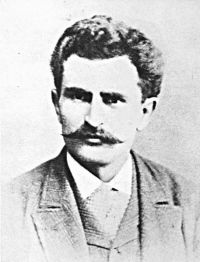
“Anarchy”, is a work by Errico Malatesta. It explores elements such as government, solidarity and strife.
Quotes from Anarchy (Errico Malatesta)
“ If these are ignorant, miserable, or enslaved, my existence is limited by their ignorance, misery, or slavery. I, though an intelligent and enlightened man, am made stupid by their stupidity; though brave, am enslaved by their slavery; though rich, tremble before their poverty; though privileged, grow pale at the thought of possible justice for them. I, who wish to be free, cannot be so, because around me are men who do not yet desire freedom, and, not desiring it, become, as opposed to me, the instruments of my oppression. ”
“ But what reason is there for the existence of government? Why abdicate one's own liberty, one's own initiative in favor of other individuals? Why give them the power to be the masters, with or contrary to the wish of each, to dispose of the forces of all in their own way? Are the governors such very exceptionally gifted men as to enable them, with some show of reason, to represent the masses, and act in the interest of all men better than all men would be able to do for themselves? ”
“ And those who have fought to conquer, that is, to secure to themselves better conditions than others can have, to conquer privilege and add dominion to power, and have attained the victory, will certainly not use it to defend the rights of the vanquished, and to place limits to their own power and to that of their friends and partizans. The government--or the State, if you will--as judge, moderator of social strife, impartial administrator of the public interests, is a lie. It is an illusion, a Utopia, never realized and never realizable. ”
“ We are no more prophets than other men; and should we pretend to give an official solution to all the problems that will arise in the life of the future society, we should have indeed a curious idea of the abolition of government. We should then be describing a government, dictating, like the clergy, a universal code for the present and all future time. Seeing that we have neither police nor prisons to enforce our doctrine, humanity might laugh with impunity at us and our pretensions. ”
“ The government, as a government, adds nothing save the tendency to monopolize for the advantage of certain parties or classes, and to repress all initiative from beyond its own circle. To abolish authority or government does not mean to destroy the individual or collective forces, which are at work in society, nor the influence men exert over one another. That would be to reduce humanity to an aggregate of inert and separate atoms; an impossibility which, if it could be performed, would be the destruction of any society, the death blow to mankind. ”
“ To whoever might pretend that action so organized would be an outrage on the liberty of the masses, or an attempt to create a new authoritative power, we would reply that he is a sophist and a fool. So much the worse for those who ignore the natural, social law of human solidarity, to the extent of imagining that an absolute mutual independence of individuals and of masses is a possible or even desirable thing. To desire it, would be to wish for the destruction of society; for all social life is nothing else than this mutual and incessant interdependence among individuals and masses. ”
“ When the strife between men, with the hatred and rancour it breeds, will be no longer a necessary condition of existence? Who can foresee the progress of science, the new sources of production, means of communication, etc.? The one essential is that a society be constituted in which the exploitation and domination of man by man are impossible. That the society, in other words, be such that the means of existence and development of labor be free and open to every one, and all be able to co-operate, according to their wishes and their knowledge, in the organization of social life. ”
“ Now, should the oppressed masses some day refuse to work for their oppressors, should they take possession of the soil and the instruments of labor, and apply them for their own use and advantage, and that of all who work, should they no longer submit to the domination, either of brute force or economic privilege; should the spirit of human fellowship and the sentiment of human solidarity, strengthened by common interests, grow among the people, and put an end to strife between nations; then what ground would there be for the existence of a government? ”
“ Great have been the evils which humanity has suffered by this intermingling of domination and exploitation with human association. But in spite of the atrocious oppression to which the masses submit, of the misery, vice, crime, and degradation which oppression and slavery produce, among the slaves and their masters, and in spite of the hatreds, the exterminating wars, and the antagonisms of artificially created interests, the social instinct has survived and even developed. ”
“ In the hands of the government everything becomes a means of exploitation, everything serves as a police measure, useful to hold the people in check. And it must be thus. If the life of mankind consists in strife between man and man, naturally there must be conquerors and conquered; and the government, which is the prize of the strife, or is a means of securing to the victors the results of their victory, and perpetuating those results, will certainly never fall to those who have lost, whether the battle be on the grounds of physical or intellectual strength, or in the field of economics. ”
“ What can government of itself add to the moral and material forces which exist in a society? Unless it be like the God of the Bible, who created the universe out of nothing? As nothing is created in the so-called material world, so in this more complicated form of the material world, which is the social world, nothing can be created. And therefore governors can dispose of no other force than that which is already in society. ”
“ And with what heart or what common sense can you trust to a revolution on the part of an ignorant, turbulent mass, weakened by misery, stupefied by priestcraft, who are today blindly sanguinary and tomorrow will let themselves be humbugged by any knave, who dares to call himself their master? Would it not be more prudent to advance gradually towards the Anarchistic ideal, passing through Republican, Democratic and Socialistic stages? Will not an educative government, composed of the best men, be necessary to prepare the advancing generations for their future destiny? ”
“ Thus the class of proprietors rose. And they, concentrating little by little the means of wealth in their own hands, all the means of production, the very fountains of life--agriculture, industry, and exchange--ended by becoming a power in themselves. This power, by the superiority of its means of action, and the great mass of interests it embraces, always ends by more or less openly subjugating the political power, that is, the government, which it makes its policeman. ”
“ But it is sufficient to notice how and why it fulfils these functions to prove our point. The fact is that everything the government undertakes it is always inspired with the spirit of domination, and ordained to defend, enlarge, and perpetuate the privileges of property, and those classes of which government is the representative and defender. A government cannot rule for any length of time without hiding its true nature behind the pretence of general utility. It cannot respect the lives of the privileged without assuming the air of wishing to respect the lives of all. ”
“ And we imagine that all that is done in society is done by virtue of the government, and that without the government there would be neither energy, intelligence, nor good will in society. So it happens (as we have already said) that the proprietor who has possessed himself of the soil, has it cultivated for his own particular profit, leaving the laborer the barest necessities of life for which he can and will continue to labor. While the enslaved laborer thinks that he could not live without his master, as though it were he who created the earth and the forces of nature. ”
“ But if, in consequence of a false education, received in the present society, or of physical disease, or whatever other cause, an individual should wish to injure others, you may be sure we should adopt all the means in our power to prevent him. As we know that a man's character is the consequence of his physical organism, and of the cosmic and social influences surrounding him, we certainly shall not confound the sacred right of self-defence, with the absurdly assumed right to punish. ”
“ It is the one great principle, capable of reconciling all present antagonisms in society, otherwise irreconcilable. It causes the liberty of each to find not its limits, but its complement, the necessary condition of its continual existence--in the liberty of all. "No man," says Michael Bakunin, "can recognize his own human worth, nor in consequence realize his full development, if he does not recognize the worth of his fellow men, and in co-operation with them, realize his own development through them. No man can emancipate himself, unless at the same time he emancipates those around him. ”
“ If in truth, the interests of men must always be contrary to one another; if indeed, the strife between mankind has made laws necessary to human society, and the liberty of the individual must be limited by the liberty of other individuals; then each one would always seek to make his interests triumph over those of others. Each would strive to enlarge his own liberty at the cost of the liberty of others, and there would be government. ”
“ We even admit that never, or hardly ever, has a government been able to exist in a country that was at all civilized without adding to its oppressing and exploiting functions others useful and indispensable to social life. But this fact makes it none the less true that government is in its nature oppressive and a means of exploitation, and that its origin and position doom it to be the defence and hot-bed of a dominant class, thus confirming and increasing the evils of domination. ”
“ With all this, the government does not change its nature. If it acts as regulator or guarantor of the rights and duties of each, it perverts the sentiment of justice. It justifies wrong and punishes every act which offends or menaces the privileges of the governors and proprietors. It declares just, legal, the most atrocious exploitation of the miserable, which means a slow and continuous material and moral murder, perpetrated by those who have on those who have not. ”
“ But even supposing that the rulers of countries not yet emancipated would wish and could attempt to reduce a free people to servitude, would these require a government to enable them to defend themselves? To make war, we need men who have the necessary geographical and technical knowledge, and, above all, people willing to fight. A government has no means of augmenting the ability of the former, or the willingness or courage of the latter. ”
“ The liberty we wish for, for ourselves and others, is not an absolute, abstract, metaphysical liberty, which in practice can only amount to the oppression of the weak. But we wish for a tangible liberty, the possible liberty, which is the conscious communion of interests, that is, voluntary solidarity. We proclaim the maxim: Do as you will; and in this our program is almost entirely contained, because, as may be easily understood, we hold that in a society without government or property, each one will wish that which he should. ”
“ So also with universal suffrage--we might say, especially with universal suffrage--the government has remained the servant and police of the bourgeois class. How could it be otherwise? If the government should reach the point of becoming hostile, if the hope of democracy should ever be more than a delusion deceiving the people, the proprietory class, menaced in its interests, would at once rebel, and would use all the force and influence which come from the possession of wealth, to reduce the government to the simple function of acting as policeman. ”
“ While it will destroy every class interested in keeping the masses degraded, it will act in such a way that every one will be free to work and make his influence felt, in proportion to his own capacity, and in conformity with his sentiments and interests. And it is only thus that the elevation of the masses is possible; for it is only with liberty that one can learn to be free, as it is only by working that one can learn to work. ”
“ We shall not seek to revenge ourselves, but rather to rescue the unfortunate one by every means that science suggests. In theory, Anarchists may go astray like others, losing sight of the reality under a semblance of logic; but it is quite certain that the emancipated people will not let their dearly bought liberty and welfare be attacked with impunity. If the necessity arose, they would provide for their own defence against the anti-social tendencies of certain amongst them. But how do those whose business it now is to make the laws, protect society? ”
“ It is a fact that each fights daily against every one else, and competition presses upon all, workmen and masters, causing every man to become a wolf towards every other man. How can these men, educated in a society based upon antagonism between individuals as well as classes, be transformed in a moment and become capable of living in a society in which each shall do as he likes, and as he should, without external coercion, caring for the good of others, simply by the impulse of their own nature? ”
“ To wish to escape this influence in the name of a transcendental liberty, divine, absolutely egoistic and sufficient to itself, is the tendency to annihilation. To refrain from influencing others, would mean to refrain from all social action, indeed to abstain from all expression of one's thoughts and sentiments, and simply to become non-existent. This independence, so much extolled by idealists and metaphysicians, individual liberty conceived in this sense would amount to self-annihilation. ”
“ Whatever happens, we shall have some influence on events, by our numbers, our energy, our intelligence and our steadfastness. Also, even if we are now conquered, our work will not have been in vain; for the more decided we shall have been in aiming at the realization of all our demands, the less there will be of government and of private property in the new society. And we shall have done a great work; for human progress is measured by the degree in which government and private property are administered. If today we fall without lowering our colors, our cause is certain of victory tomorrow. ”
“ Whenever governors originate anything of themselves, it is as men and not as governors, that they do so. And of that amount of force, both material and moral, which does remain at the disposition of the government, only an infinitesimally small part achieves an end really useful to society. The remainder is either consumed in actively repressing rebellious opposition, or is otherwise diverted from the aim of general utility, and turned to the profit of the few, and to the injury of the majority of men. ”
“ A society without a government, which would act by free, voluntary co-operation, trusting entirely to the spontaneous action of those interested, and founded altogether on solidarity and sympathy, is certainly, they say, a very beautiful ideal, but, like all ideals, it is a castle in the air. We find ourselves placed in a human society, which has always been divided into oppressors and oppressed ”
“ A government, that is, a number of persons deputed to make the laws, and entitled to use the collective forces of society to make every individual to respect these laws, already constitutes a class privileged and separated from the rest of the community. Such a class, like every elected body, will seek instinctively to. enlarge its powers; to place itself above the control of the people; to impose its tendencies, and to make its own interests predominate. Placed in a privileged position, the government always finds itself in antagonism to the masses, of whose force it disposes. ”
“ In the present, the immense development of production, the growth of human needs which cannot be satisfied except by the united efforts of a large number of men in all countries, the extended means of communication, habits of travel, science, literature, commerce, even war itself--all these have drawn and are still drawing humanity into a compact body, every section of which, closely knit together, can find its satisfaction and liberty only in the development and health of all other sections composing the whole. ”
Common terms
Similar works
Anarchist Communism (Peter Kropotkin…The American Journal of Sociology…The Individual, Society and the State…Anarchism: Its Philosophy and Ideal…The Place of Anarchism in Socialistic Evolution…The Ultimate Triumph of Just Principles…A Short History of English Liberalism…The place of anarchism in socialistic evolution…A Sermon, Delivered Before His Excellency Edward Everett…The Nature, Character, and History of the Anti-slavery Movement…
