George Orwell,
Animal Farm
(1945)
George Orwell,
Animal Farm
(1945)
“ 'Four legs good, two legs bad'. This, he said, contained the essential principle of Animalism. ”
George Orwell,
Animal Farm
(1945)
“ 'Four legs good, two legs bad'. This, he said, contained the essential principle of Animalism. ”
“ "The animalism of the brute nature in man is disgusting," thought he, "but as long as it remains in its naked form we observe it from the height of our spiritual life and despise it; and--whether one has fallen or resisted--one remains what one was before. But when that same animalism hides under a cloak of poetry and aesthetic feeling and demands our worship--then we are swallowed up by it completely, and worship animalism, no longer distinguishing good from evil. ”
 Walter Pater,
Marius the Epicurean — Volume 1
Walter Pater,
Marius the Epicurean — Volume 1
“ The younger, certainly, possessed in full measure that charm of a constitutional freshness of aspect which may defy for a long time extravagant or erring habits of life; a physiognomy, healthy-looking, cleanly, and firm, which seemed unassociable with any form of self-torment, and made one think of the muzzle of some young hound or roe, such as human beings invariably like to stroke—a physiognomy, in effect, with all the goodliness of animalism of the finer sort, though still wholly animal. The charm was that of the blond head, the unshrinking gaze, the warm tints: ”
Edwin Tenney Brewster, Natural Wonders
“ Any of you who keep pets could, I have no doubt, tell me many wonderful tales of the extraordinary intelligence of these horses, dogs, cats, pigeons, cavies, mice, parrots, rabbits, squirrels, and what not, which, according to their nature, share our hearth rugs or our back yards. You who do not, have only to ask the man next door who keeps a horse or a dog, or the woman on the other side who has a cat or a parrot, to learn that animals are only just a little short of human, and if they could only talk, would soon prove, as we say, to “know more than most men.” ”
Petronius Arbiter, The Satyricon of Petronius Arbiter (1922)
“ Consider the animals, which cannot corrupt by innate viciousness, how they observe the law of Nature in all its purity. He-lions do not lust after he-lions, but, in due season, passion excites them towards the females of their species: the bull that rules the herd mounts cows, and the ram fills the whole flock of ewes with the seed of generation. Again, boars mate with sows, he-wolves with she-wolves, neither the birds that fly through the air, nor the fish that inhabit the deep, or any living creatures upon earth desire male intercourse, but amongst them the laws of Nature remain unbroken. ”
John W. Judd, The Coming of Evolution: The Story of a Great Revolution in Science
“ When dogs and horses became the servants and companions of men, and when various beasts and birds came to be kept as pets, the mental and even the moral processes characterising the intelligence of these animals must have been seen by their masters to be identical in kind with those of their own minds. Do we not even at the present day compare human characteristics with those of animals, the courage of the lion, the cunning of the fox, the fidelity of the dog, and the parental affection of the bird? ”
 William Lucas Distant,
The Zoologist
(1898)
William Lucas Distant,
The Zoologist
(1898)
“ How far have we at present accounted for the varied animal colouration which we see around us? the glory of our cabinetdrawers, the mysterious wonder in the galleries of our museums, the charm of travellers abroad, and appreciative lovers of nature at home. Very much, when the difficulty of the problem is considered, and especially where the utility of animal disguises and mimicking appearances has been unravelled by the magic wand of "natural selection," or "the survival of the fittest." ”
 J. Howard Moore,
The Universal Kinship
J. Howard Moore,
The Universal Kinship
“ The restlessness of cage-birds and domestic fowls at migrating time, the mimic dipping and sporting of ducks when confined to a terrestrial habitat, the grave marshalling of geese by the chief gander of the band, the ferocity of cows, ewes, and the females of other domestic animals during the first few days of motherhood, the hunting instinct of dogs kept as shepherds and pets, the squatting of young pigs when suddenly alarmed—all of these are vestigial instincts, functional in the wild state, but now useless and absurd. ”
“ For I have no special knowledge, like some who will speak to you, of the training of performing animals; I have only a certain knowledge of human and animal natures, and a common sense which tells me that wild animals are more happy in freedom than in captivity—domestic animals more happy as companions than as clowns. And, quite apart from the definite question of inhumanity, it is perfectly clear to me that these animal shows are among the many surviving evidences, the lingering symptoms, of a creed that—thank Heaven!—is beginning to pass, and must pass, from us. ”
 Johann David Wyss,
The Swiss Family Robinson: A Translation from the Original German
Johann David Wyss,
The Swiss Family Robinson: A Translation from the Original German
“ That animals should prey upon one another is a means of preserving a due balance in the world of nature, and in many ways these beasts of prey are also useful to man. What beautiful and warm furs are procured by hunters just in those countries where no other covering would defend the inhabitants from the wintery cold!—as, for instance, the skins of bears, wolverines, and arctic foxes, wild cats, and many others." "The skin of the seal, or sea dog, is also valuable," said Ernest. ”
Donald G. French, Highways of Canadian Literature
“ He brought to his writings of animal life a new point of view—namely, that human beings and wild animals are kin; that animals are motivated with passions and desires and, to some extent, ideas, just as human beings are. Thus he wrote with sympathy and with creative imagination and revealed the new life and being of wild animals, and he hoped to achieve the practical result of quickening the sympathies of man toward animals and stopping the thoughtless extermination of many of our harmless wild creatures. ”
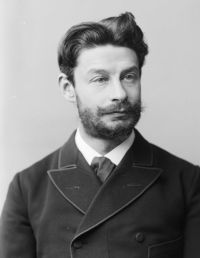 Georg Brandes,
Eminent Authors of the Nineteenth Century…
Georg Brandes,
Eminent Authors of the Nineteenth Century…
“ It is, finally, an interesting phenomenon with reference to the use he makes of the animals, for domestic animals are no longer the pure product of nature; they remind us, through ideal association, of much that is human; and, moreover, through long intercourse with humanity and long education they have acquired something human, which in a high degree supports and furthers the effort to personify them. These cats and hens, these ducks and turkeys, these storks and swans, these mice and that unmentionable insect "with maiden's blood in its body," offer many props to the nursery story. ”
 William J. Long,
How animals talk
(1919)
William J. Long,
How animals talk
(1919)
“ The very attitude or visible expression of birds or beasts when you meet them in their native woods, feeding, playing, resting, seeking their mates, or roving freely with their little ones (all pleasurable matters, constituting nine-tenths or more of animal existence) , is enough in itself to refute the absurd notion of a general reign of terror in nature. If you are wise, therefore, you will get rid of that prejudice, or at least hold it in abeyance till the animals themselves teach you how senseless it is. ”
“ For if everything that moves and lives was made for food, and prepared for the stomach, let my opponents tell me why elephants, lions, leopards, and wolves were created; why vipers, scorpions, bugs, lice, and fleas; why the vulture, the eagle, the crow, the hawk; why whales, dolphins, seals, and small snails were created. Which of us ever eats the flesh of a lion, a viper, a vulture, a stork, a kite, or the worms that crawl upon our shores? As then these have their proper uses, so may we say that other beasts, fishes, birds, were created not for eating, but for medicine. ”
William James, The Principles of Psychology, Volume 2…
“ The whole story of our dealings with the lower wild animals is the history of our taking advantage of the way in which they judge of everything by its mere label, as it were, so as to ensnare or kill them. Nature, in them, has left matters in this rough way, and made them act always in the manner which would be oftenest right. ”
 Frederick Marryat,
Olla Podrida
Frederick Marryat,
Olla Podrida
“ To us, all wild animals of the same species appear to be much alike in disposition, because we have not an opportunity of examining and watching them carefully, but I should rather imagine, that as we can perceive such a manifest difference in temper between individual horses and dogs and other animals who are domesticated, that the same difference must exist in the wild species, and that, in fact, there may be shades of virtue and vice in lions, tigers, bears, and other animals ”
 C. Lloyd Morgan,
Animal Behaviour
C. Lloyd Morgan,
Animal Behaviour
“ In that interaction between instinct and intelligence which, when further detailed work has sifted and purified our knowledge of the psychology of animal communities, may prove sufficient to account for the well-established facts, animal tradition will probably have to be recognized as of no little importance. When a newly emerging ant or bee, or a young bird or mammal is born into a community where certain modes of behaviour are already in full swing, an imitative tendency of the follow-my-leader type may lead it to fall in line with the traditional habits. ”
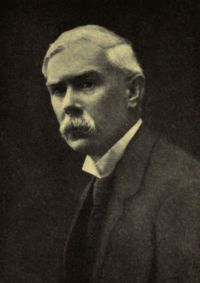 John Arthur Thomson,
The Outline of Science — Part VII
John Arthur Thomson,
The Outline of Science — Part VII
“ When we watch a collie at a sheep-driving competition, or an elephant helping the forester, or a horse shunting waggons at a railway siding, we are apt to be too generous to the mammal mind. For in the cases we have just mentioned, part of man's mind has, so to speak, got into the animal's. On the other hand, when we study rabbits and guinea-pigs, we are apt to be too stingy, for these rodents are under the average of mammals, and those that live in domestication illustrate the stupefying effect of a too sheltered life. ”
 Thomas Henry Huxley,
On the Relations of Man to the Lower Animals
Thomas Henry Huxley,
On the Relations of Man to the Lower Animals
“ Does he originate in a totally different way from Dog, Bird, Frog, and Fish, thus justifying those who assert him to have no place in nature and no real affinity with the lower world of animal life? Or does he originate in a similar germ, pass through the same slow and gradually progressive modifications,—depend on the same contrivances for protection and nutrition, and finally enter the world by the help of the same mechanism? ”
Sir Charles G. D. Roberts, The Kindred of the Wild: A Book of Animal Life
“ Their care is to catch the varying, elusive personalities which dwell back of the luminous brain windows of the dog, the horse, the deer, or wrap themselves in reserve behind the inscrutable eyes of all the cats, or sit aloof in the gaze of the hawk and the eagle. The animal story at its highest point of development is a psychological romance constructed on a framework of natural science. ”
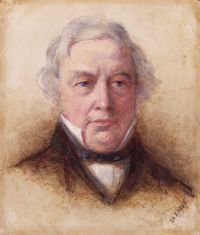 Thomas Love Peacock,
Headlong Hall
Thomas Love Peacock,
Headlong Hall
“ Physiologists have been much puzzled to account for the varieties of moral character in men, as well as for the remarkable similarity of habit and disposition in all the individual animals of every other respective species. A few brief sentences, perspicuously worded, and scientifically arranged, will enumerate all the characteristics of a lion, or a tiger, or a wolf, or a bear, or a squirrel, or a goat, or a horse, or an ass, or a rat, or a cat, or a hog, or a dog ”
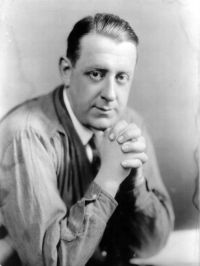 Hendrik Willem Van Loon,
The Story of Mankind
(1921)
Hendrik Willem Van Loon,
The Story of Mankind
(1921)
“ But of these mammals I need not tell you much for you know them well. They surround you on all sides. They are your daily companions in the streets and in your home, and you can see your less familiar cousins behind the bars of the zoological garden. And now we come to the parting of the ways when man suddenly leaves the endless procession of dumbly living and dying creatures and begins to use his reason to shape the destiny of his race. ”
William J. Long,
How animals talk
(1919)
“ Thus far the record is clear and straight, but there is one important matter which my friend overlooked, as scientific men commonly do when they deal with nature, their mistake being to regard animals as featureless members of a class or species rather than as individuals. The dog’s master always came or went in a wagon drawn by a quiet old horse, and upon inquiry I found that between Watch and the horse was a bond of comradeship, such as often exists between two domestic animals of different species. ”
 William Walker Atkinson,
A Series of Lessons in Gnani Yoga…
William Walker Atkinson,
A Series of Lessons in Gnani Yoga…
“ The next highest form among the mammals are known as the placentals, or those which bring forth mature young. In this class are found the ant-eaters, sloth, manatee, the whale and porpoise, the horse, cow, sheep, and other hoofed animals; the elephant, seal, the dog, wolf, lion, tiger, and all flesh eating animals; the hares, rats, mice, and ail other gnawing animals; the bats, moles, and other insect-feeders; then come the great family of apes, from the small monkeys up to the orang-outang, chimpanzee, and other forms nearly approaching man. ”
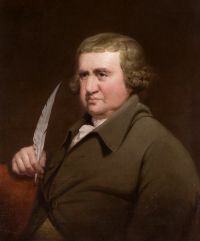 Erasmus Darwin,
Zoonomia, or, the Laws of Organic Life…
(1796)
Erasmus Darwin,
Zoonomia, or, the Laws of Organic Life…
(1796)
“ Instances of the sagacity and knowledge of animals are very numerous to every observer, and their docility in learning various arts from mankind, evinces that they may learn similar arts from their own species, and thus be possessed of much acquired and traditional knowledge.A dog whose natural prey is sheep, is taught by mankind, not only to leave them unmolested, but to guard them; and to hunt, to set, or to destroy other kinds of animals, as birds, or vermin; and in some countries to catch fish, in others to find truffles, and to practise a great variety of tricks ”
J. Howard Moore,
The Universal Kinship
“ They go naked, mate by chance, and climb trees like monkeys. Some of these races know nothing of fire, religion, or a moral world, chatter to each other like apes, and live on such natural products as roots, fruits, serpents, mice, ants, and honey. One of these creatures, we are told, will lie flat on his front for an hour by the runway of a field-mouse, waiting for a chance to snatch up the little creature when it comes along and eat it. ”
Phil Robinson, Sinners and Saints
“ Lest the migration of creatures should cease to be a thing of wonder to us, Nature organizes once in a way a monster excursion, sometimes of rats, sometimes of deer, but most frequently of birds, to remind man of the marvellous instinct that draws the animal world from place to place or from zone to zone. ”
William J. Long,
How animals talk
(1919)
“ From such experiences I judge that the feeling of unsensed danger, or the more subtle feel of a living thing, is as variable in the animals as are their instincts or their social habits. It may be dull in one creature and keen in another of the same species, or alternately awake and asleep in the same creature; but there is no longer any doubt in my mind that it is a widespread gift among birds and beasts. ”
James F. Muirhead, The Land of Contrasts: A Briton's View of His American Kin
“ Nowhere, perhaps, will you see a bigger and handsomer, healthier, better-groomed, more efficient set of human animals; but their straight-ahead, phlegmatic, expressionless gaze, the want of animated talk, the absence of any show of intelligence, emphasises our feeling that they are animals. ”
Edwin John Dingle, Across China on Foot
“ Waking from my dozing at the hour when judgment sits upon the hearts of men, I sat in ponderous judgment upon all to whom the bungling of the previous day was due. There were the rats and mice, and cats and owls, and creaks and cracks—no quiet about the place from night to morning. Then came the barking of dogs, the noises of the cocks and kine, of horses and foals, of pigs and geese—the general wail of the zoological kingdom—cows bellowing, duck diplomacy, and much else. ”
 ʻAbdu'l-Bahá,
Selections from the writings of ‘Abdu'l-Bahá
ʻAbdu'l-Bahá,
Selections from the writings of ‘Abdu'l-Bahá
“ Such are the birds that are satisfied with and grateful for a few grains; they live in complete gladness, and break into rich and melodious song while soaring over meadows, plains, hills and mountains. Similarly those animals which graze, like the sheep, the antelope and the gazelle, consort in the greatest amity, intimacy and unity while living in their plains and prairies in a condition of complete contentment. But dogs, wolves, tigers, hyenas and those other beasts of prey, are alienated from each other as they hunt and roam about alone. ”
 David Hume,
A Treatise of Human Nature
(1738)
David Hume,
A Treatise of Human Nature
(1738)
“ Here we must make a distinction betwixt those actions of animals, which are of a vulgar nature, and seem to be on a level with their common capacities, and those more extraordinary instances of sagacity, which they sometimes discover for their own preservation, and the propagation of their species. A dog, that avoids fire and precipices, that shuns strangers, and caresses his master, affords us an instance of the first kind. ”