“ Kryltzoff listened attentively, gazing at Nekhludoff with glistening eyes."Yes," said Kryltzoff suddenly, "I often think that here we are going side by side with them, and who are they? The same for whose sake we are going, and yet we not only do not know them, but do not even wish to know them. And they, even worse than that, they hate us and look upon us as enemies. This is terrible.""There is nothing terrible about it," broke in Novodvoroff. "The masses always worship power only. The government is in power, and they worship it and hate us. ”
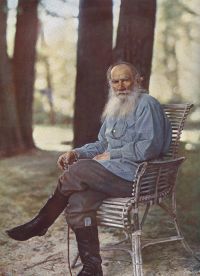
Leo Tolstoy
Summary

Leo Tolstoy’s Resurrection (1899), his final major novel, exposes the moral decline of late 19th-century Russian society through the redemption journey of Dmitri Nekhlyudov, a nobleman tormented by his past abandonment of Katusha Maslova, a woman he seduced and discarded, which led to her poverty and descent into prostitution.
The narrative critiques entrenched injustice, religious insincerity, and economic exploitation, incorporating Tolstoy’s support for Georgist economic principles. Its stark depiction of prison life and systemic brutality led to his excommunication by the Russian Orthodox Church, solidifying its place as a landmark work of social commentary and spiritual exploration.
Quotes from Resurrection (Leo Tolstoy)
“ Nekhludoff listened, and at the same time kept looking around him--at the low bedstead with its straw mattress, the window and the dirty, damp wall, and the piteous face and form of this unfortunate, disfigured peasant in his prison cloak and shoes, and he felt sadder and sadder, and would have liked not to believe what this good-natured fellow was saying. It seemed too dreadful to think that men could do such a thing as to take a man, dress him in convict clothes, and put him in this horrible place without any reason only because he himself had been injured. ”
“ Katusha stopped, threw back her head, and catching hold of it with both hands sobbed aloud. "Gone!" she screamed."He is sitting in a velvet arm-chair and joking and drinking, in a brightly lit carriage, and I, out here in the mud, in the darkness, in the wind and the rain, am standing and weeping," she thought to herself; and sat down on the ground, sobbing so loud that the little girl got frightened, and put her arms round her, wet as she was."Come home, dear," she said."When a train passes--then under a carriage, and there will be an end," Katusha was thinking, without heeding the girl. ”
