 Emma Goldman,
Living My Life
(1931)
Emma Goldman,
Living My Life
(1931)
“ In modern capitalism economic exploitation rather than political oppression is the real enemy of the people. ”
Emma Goldman,
Living My Life
(1931)
“ In modern capitalism economic exploitation rather than political oppression is the real enemy of the people. ”
 Scott Nearing,
The Next Step: A Plan for Economic World Federation
Scott Nearing,
The Next Step: A Plan for Economic World Federation
“ Theoretically the coffee grower of Brazil and the agricultural machine manufacturer of Illinois produce and exchange those things that they can turn out most advantageously. Practically the resources of the world are monopolized by powerful financial interests each striving to destroy its rivals, each seeking its own enrichment, and each busy reinvesting the surplus wealth which piles up as the result of exploitation at home and abroad. ”
 Pierre-Joseph Proudhon,
What is Property?
(1876)
Pierre-Joseph Proudhon,
What is Property?
(1876)
“ Now, this reproductive leaven—this eternal germ of life, this preparation of the land and manufacture of implements for production—constitutes the debt of the capitalist to the producer, which he never pays; and it is this fraudulent denial which causes the poverty of the laborer, the luxury of idleness, and the inequality of conditions. This it is, above all other things, which has been so fitly named the exploitation of man by man. ”
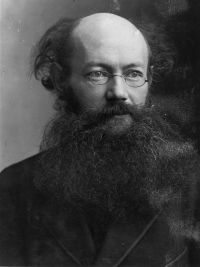 Peter Alexeivitch Kropotkin,
Expropriation
([189-])
Peter Alexeivitch Kropotkin,
Expropriation
([189-])
“ The artificial protection of industry, the industrial exploitation of foreign countries, the prevalence of stock-jobbing, the difficulty of improving the soil and the machinery of production—all these are causes which work together against agriculture, which indeed is burdened not only by rent, but by the whole complexity of conditions developed in a society based on exploitation. ”
 Rosa Luxemburg,
The Accumulation of Capital
Rosa Luxemburg,
The Accumulation of Capital
“ This question may be answered by saying that the capitalist’s greed for surplus value, enhanced by competition, and the automatic effects of capitalist exploitation, lead to the production of every kind of commodity, including means of production, and also that a growing class of proletarianised workers becomes generally available for the purposes of capital. ”
 William Montgomery Brown,
Communism and Christianism
William Montgomery Brown,
Communism and Christianism
“ His entire product belongs to the capitalist, and out of this resource he pays the wages [Pg 166] for the commodity labor, also for other commodities such as raw materials, and appropriates all of the balance and converts it into capital with which he not only continues but increases the exploitation of his workers. ”
 Bill Clinton,
Proclamation 6891
Bill Clinton,
Proclamation 6891
“ In the early 1900s, millions of Americans left their farms to begin new lives as factory workers. Sadly, many of these citizens found neither secure employment nor higher wages at their new jobs, and the industrial economy brought them exploitation, continued poverty, and the risk of injury and death. ”
 Henry Pratt Fairchild,
Immigration
(1913)
Henry Pratt Fairchild,
Immigration
(1913)
“ Rather is this idea another of those traditional survivals from the early life of the country, when conditions were such that the exploitation of resources was really essential to growth in per capita, as well as total, wealth, and prosperity. Our country has, in point of fact, developed so rapidly that the public mind has not adjusted itself to new conditions, and the idea of the value of a rapid exploitation lingers on as an anachronism. ”
Clement Wood, Mountain: A Novel
“ Rent, interest, profit—labor, human labor, produced them. It was not the land, or money, or factories; it was the toilers, sweating at their tasks, who made all of these, and who received for their toil a miserly fragment. Land, left idle, produced nothing; even natural products were worthless until man's fathering work gave them value. Money—gold calved no golden offspring, bills spawned no further bills as interest. Factories and machines produced nothing, until man's sweat and blood were poured out over them. Labor was the producer of everything; in justice, all should belong to labor. ”
Scott Nearing,
Civilization and Beyond: Learning from History
“ As their primary task businessmen devoted themselves to the exploitation of labor power and the storage and merchandising of the products turned out by herdsmen, farmers, craftsmen. Part of their profits went into more elaborate standards of feeding, clothing and housing themselves and their dependents. ”
Rosa Luxemburg,
The Accumulation of Capital
“ The conditions of direct exploitation and those of the realisation of surplus-value are not identical. They are separated logically as well as by time and space. The first are only limited by the productive power of society, the last by the proportional relations of the various lines of production and by the consuming power of society. ”
 Karl Marx,
Das Kapital
(1906)
Karl Marx,
Das Kapital
(1906)
“ This exploitation is more shameless in the so-called domestic industry than in manufactures, and that because the power of resistance in the labourers decreases with their dissemination; because a whole series of plundering parasites insinuate themselves between the employer and the workman; because a domestic industry has always to compete, either with the factory system, or with manufacturing in the same branch of production; because poverty robs the workman of the conditions most essential to his labour, of space, light and ventilation; because employment becomes more and more irregular ”
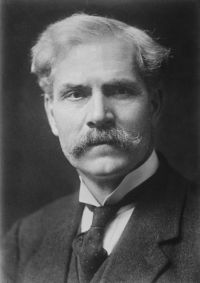 James Ramsay MacDonald,
The Socialist Movement
(1911)
James Ramsay MacDonald,
The Socialist Movement
(1911)
“ In the first place, its chief function to-day, from my present point of view, is that of exploitation. In the form of capital it is required by labour, and with the increase in the amount of capital required to carry on modern industry labour finds it increasingly difficult to be more than the agent of capital and to avoid being the slave of capital. Ledger balances, not moral or human considerations, assign a place to labour in the industrial system. ”
Pierre-Joseph Proudhon,
What is Property?
(1876)
“ But the more they work to-day, the more idle will they be hereafter; the more they laugh, the more they shall weep. Under the rule of property, the flowers of industry are woven into none but funeral wreaths. The laborer digs his own grave. If the factory stops running, the manufacturer has to pay interest on his capital the same as before. He naturally tries, then, to continue production by lessening expenses. Then comes the lowering of wages; the introduction of machinery; the employment of women and children to do the work of men; bad workmen, and wretched work. ”
Fabian Essays in Socialism (1908)
“ Such concurrent private exploitation, however unrestricted, could not in any case bring back the old evils of capitalism; for any change in the habits of the people or in the methods of industry which made associated production of any commodity on a large scale convenient and profitable, would result at once in the taking over of that industry by the State exactly as the same conditions now in America result at once in the formation of a ring. ”
 Willem Adriaan Bonger,
Criminality and economic conditions
(1916)
Willem Adriaan Bonger,
Criminality and economic conditions
(1916)
“ Those who do not succeed in selling their labor are then equally abandoned to their own resources. From what causes in the capitalistic method of production does it happen that the supply of labor is in excess of the demand? Are these causes to be found in too great an increase in the population, or in the method of production itself? ”
 Friedrich Engels,
The Communist Manifesto
Friedrich Engels,
The Communist Manifesto
“ No sooner is the exploitation of the labourer by the manufacturer, so far at an end, that he receives his wages in cash, than he is set upon by the other portions of the bourgeoisie, the landlord, the shopkeeper, the pawnbroker, etc. ”
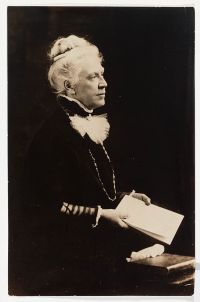 Alice Henry,
The Trade Union Woman
Alice Henry,
The Trade Union Woman
“ The proud edifice of modern industry itself, on whose account homes are turned into workshops, children into slaves, and mothers into slave-drivers, is undermined and degraded by this illegitimate competition, the most powerful of all factors in lowering wages, and preventing organization among regular factory hands. ”
William O. Blake, The History of Slavery and the Slave Trade (1861)
“ Involuntary labor, requiring the investment of large capital, can only be profitable when employed in the production of a few favored articles confined by nature to special districts, and paying larger returns than the usual agricultural products spread over more considerable portions of the earth. ”
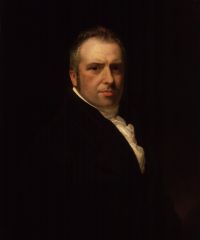 William Hone,
The Every-day Book and Table Book…
William Hone,
The Every-day Book and Table Book…
“ Economy without industry will barely appear in a whole coat; industry without economy will appear in rags. The first is detrimental to the community, by preventing the circulation of property; the last is detrimental to itself. It is a singular remark, that even industry is sometimes the way to poverty. ”
Various, Blackwood's Edinburgh Magazine…
“ And, in the mean time, what is to become of our people, whom free trade is reducing to pauperism? The political economist, whose heart is as hard as the machinery he drives, will scarcely pause for a moment to answer so trivial a question. His ultimatum is, the factory, the workhouse, or emigration. ”
James Ramsay MacDonald,
The Socialist Movement
(1911)
“ Old work-places are closed, production is regulated and organised, profits are guaranteed when works are idle, economies in management are effected, processes of manufacture are specialised and differentiated. The waste involved in competitive industry is enormous, and the sheer force of circumstances is tending to eliminate it. 4. Waste of Labour. One further consideration must be noted. We have seen that the private ownership of land and capital is a serious drain upon national wealth and a heavy burden upon national production. ”
Pierre-Joseph Proudhon,
What is Property?
(1876)
“ The monopoly of land and capital is followed by economical processes which also result in throwing laborers out of employment. Interest being a constant burden upon the shoulders of the farmer and the manufacturer, they exclaim, each speaking for himself, “I should have the means wherewith to pay my rent and interest, had I not to pay so many hands.” Then those admirable inventions, intended to assure the easy and speedy performance of labor, become so many infernal machines which kill laborers by thousands. ”
 Lysander Spooner,
A Letter to Grover Cleveland
Lysander Spooner,
A Letter to Grover Cleveland
“ In nearly or quite all the other countries of the world, labor is not only robbed and enslaved, but to a great extent paralyzed, by the monopoly of land, and by what may properly be called the utter absence of money. There is, consequently, in these latter countries, almost literally, no diversity of industry, no science, no skill, no invention, no machinery, no manufactures, no production, and no wealth; but everywhere miserable poverty, ignorance, servitude, and wretchedness. ”
 John Stuart Mill,
Principles of Political Economy
(1871)
John Stuart Mill,
Principles of Political Economy
(1871)
“ But if employed as capital, it is all consumed; though not by the capitalist. Part is exchanged for tools or machinery, which are worn out by use; part for seed or materials, which are destroyed as such by being sown or wrought up, and destroyed altogether by the consumption of the ultimate product. The remainder is paid in wages to productive labourers, who consume it for their daily wants ”
Abner E. Woodruff, The Advancing Proletariat: A Study of The Movement of The Working Class From Wage Slavery to Freedom (1917)
“ Realization of PROFITS was the sole consideration for continuing production. When profits ceased, industry ceased, or the scale of wages went down until there was a sufficient margin of surplus value to induce the proprietor to again open the factory doors. ”
D. C. Cloud, Monopolies and the People
“ The farmer has abundant harvests, but their value is absorbed in oppressive charges for transportation to market, and he is bound down with onerous and unequal taxes until his labor has ceased to [Pg 323] be remunerative. While this is true of most industrial pursuits, the manufacturer, protected by the government, the moneyed men of Wall street, who operate in gold and stocks, and the railroad men, who are protected by the decisions of the courts of the country, all amass princely fortunes—the result of special privileges bestowed upon them. ”
 Timothy Thomas Fortune,
Black and White: Land, Labor, and Politics in the South
(1884)
Timothy Thomas Fortune,
Black and White: Land, Labor, and Politics in the South
(1884)
“ The markets of the world are actually glutted with articles produced by machine labor, but there are no purchasers with the means to buy, to consume the additional production caused by machinery and the consequent cheapening of processes of producing the articles of consumption, ornamentation, etc. When men have work they have money; and when men have money they spend it. Hence, when the toilers of a land have steady employment trade is brisk; when business stagnation forces them into idleness vice and crime afflict the country. ”
W. Lyon Blease, A Short History of English Liberalism
“ Of what use was it to tell a workman that his uncontrolled competition with his fellows was a spur to his ingenuity and industry, when it meant that a crowd of men, under pressure of starvation, undersold each other for a bare subsistence? Of what use was it to put capitalists and workmen into a comparison as traders, when for the one holding out of the market meant merely a temporary loss of income, and for the other it meant destitution? ”
 William Jennings Bryan,
The Old World and Its Ways
William Jennings Bryan,
The Old World and Its Ways
“ It starts from the point of view that economic development, the substitution of machinery for hand implements, and the supplanting of small factories by gigantic industrial combinations, deprive the worker in an ever increasing degree of the essential means of production, thereby converting him into a possessionless proletarian, and that the means of production are becoming the exclusive possession of a comparatively small number of capitalists, who constantly monopolize all the advantages which the gigantic increase in the productive capacity of human effort has brought about. ”
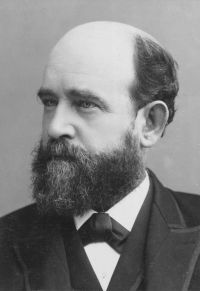 Henry George,
Progress and Poverty, Volumes I and II
Henry George,
Progress and Poverty, Volumes I and II
“ If land in large bodies can be cultivated more cheaply than land in small bodies, to restrict ownership to small bodies will reduce the aggregate production of wealth, and, in so far as such restrictions are imposed and take effect, will they tend to diminish the general productiveness of labor and capital. ”
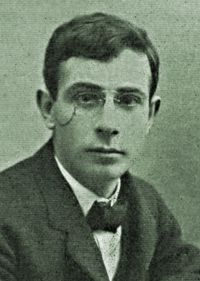 Gustavus Myers,
Great Fortunes from Railroads
Gustavus Myers,
Great Fortunes from Railroads
“ The mass of the workers were in a state of dependence and poverty. The land, industrial and financial system, operating in the three-fold form of rent, interest and profit, tore away from the producer nearly the whole of what he produced. Even those factory-owning capitalists exercising a personal and direct supervision over their plants, were often at the mercy of the clique of bankers who controlled the money marts. ”
Walter Renton Ingalls, Current Economic Affairs (1918)
“ While there may be temporarily some advantage in this to certain groups of workers at the expense of the owners of capital and of other groups of workers, it is certain that the workers themselves as a whole will in the long run suffer the most injury from restricted production and maldivision of it. ”
Henry George,
Progress and Poverty, Volumes I and II
“ In countries the most widely differing—under conditions the most diverse as to government, as to industries, as to tariffs, as to currency—you will find distress among the working classes; but everywhere that you thus find distress and destitution in the midst of wealth you will find that the land is monopolized; that instead of being treated as the common property of the whole people, it is treated as the private property of individuals; that, for its use by labor, large revenues are extorted from the earnings of labor. ”
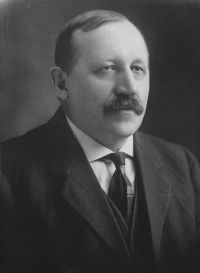 James Hudson Maurer,
The Far East
(1912)
James Hudson Maurer,
The Far East
(1912)
“ Capitalism will harness these hundreds of millions of cheap toilers to the most modern tools of production, and this cheap labor, surrounded with seemingly inexhaustible natural resources, will come in direct competition with the workers of the Western world. ”
kniaz Petr Alekseevich Kropotkin, The Conquest of Bread
“ The same holds true of industry. Take the converse case: instead of turning the agricultural labourers into peasant-proprietors, make over the factories to those who work in them. Abolish the master-manufacturers, but leave the landlord his land, the banker his money, the merchant his Exchange; maintain the swarm of idlers who live on the toil of the workmen, the thousand and one middlemen, the State with its numberless officials,—and industry would come to a standstill. Finding no purchasers in the mass of peasants who would remain poor ”
 Samuel Peter Orth,
Socialism and Democracy in Europe
Samuel Peter Orth,
Socialism and Democracy in Europe
“ Private ownership of the means of production, which was formerly the means of securing to the producer the ownership of his product, has to-day become the means of expropriating peasants, manual workers, and small traders, and enabling the non-workers—capitalists and large landowners—to own the product of the workers. ”
Henry George,
Progress and Poverty, Volumes I and II
“ This check to production, beginning at the basis of interlaced industry, propagates itself from exchange point to exchange point, cessation of supply becoming failure of demand, until, so to speak, the whole machine is thrown out of gear, and the spectacle is everywhere presented of labor going to waste while laborers suffer from want. This strange and unnatural spectacle of large numbers of willing men who cannot find employment is enough to suggest the true cause to whomsoever can think consecutively. ”
Scott Nearing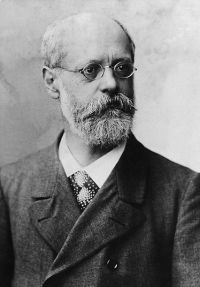 Karl KautskyKarl MarxRosa LuxemburgFriedrich EngelsPierre-Joseph ProudhonPeter Alexeivitch KropotkinBill ClintonHenry Pratt Fairchildkniaz Petr Alekseevich KropotkinEmma GoldmanJames Ramsay MacDonaldWilliam Montgomery Brown
 Eugene V. DebsWilliam Jennings Bryan
 John Maynard KeynesGuy Debord
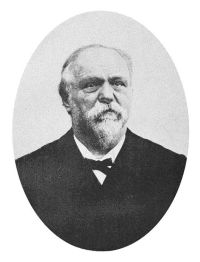 Georges Sorel
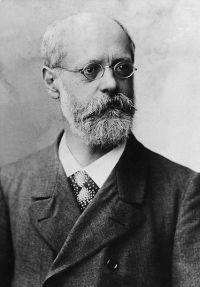 Karl Johann Kautsky