Emma Goldman,
Living My Life
(1931)
Emma Goldman,
Living My Life
(1931)
“ In modern capitalism economic exploitation rather than political oppression is the real enemy of the people. ”
Capitalism, an economic system based on private control of the means of production and market-driven profit motives, has influenced modern societies through its historical development and varied forms. From its mercantilist beginnings to the eras of industrialization and globalization, it has fueled progress while generating discussions about inequality and oversight.
Scholars such as Henri Pirenne explored its medieval foundations, whereas Georges Sorel advocated for state involvement to challenge it. John Spargo examined its focus on commodities, and Edward Bellamy compared private and public ownership structures. Emma Goldman viewed it as a mechanism of economic oppression, emphasizing its persistent conflicts. These viewpoints illustrate capitalism’s intricate legacy, intertwined with class relations, innovation, and competing ideas.
Emma Goldman,
Living My Life
(1931)
“ In modern capitalism economic exploitation rather than political oppression is the real enemy of the people. ”
Fabian Essays in Socialism (1908)
“ Such concurrent private exploitation, however unrestricted, could not in any case bring back the old evils of capitalism; for any change in the habits of the people or in the methods of industry which made associated production of any commodity on a large scale convenient and profitable, would result at once in the taking over of that industry by the State exactly as the same conditions now in America result at once in the formation of a ring. ”
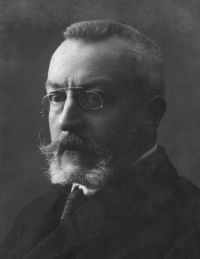 Henri Pirenne,
The Stages in the Social History of Capitalism
Henri Pirenne,
The Stages in the Social History of Capitalism
“ It is capital which rules in inter-local commerce, which determines the forms of credit, and which, fastening itself on all the industries which produce not for the city market but for exportation, hinders them from being controlled, as the others are, by the minute regulations which in innumerable ways cramp the activity of the craftsmen. [8] Let us recognize, then, that capitalism is much older than we have ordinarily thought it. No doubt its operation in modern times has been much more engrossing than in the Middle Ages. ”
Silicon Valley's billionaires, with their disruptive technologies and overnight fortunes, echo the “robber barons” of old. The public's anxieties about immense wealth and its moral costs are not new—but today's tech could either liberate culture or create new forms of commodification.
The current Sino-Russian strategic alignment against US-led unipolarity is a geopolitical paradox. It supplants centuries of Russian imperial ambitions in Asia with a constructed narrative of shared anti-colonial victimhood, utilizing a common enemy to solidify a pragmatic alliance forged in the crucible of post-Cold War power dynamics.