AI-generated from sources
The Individual Against the System, Meritocracy in the Age of Capital
In Brief
- The prevailing narrative of individual success, driven by ambition and self-promotion, often disregards the profound impact of inherited capital and systemic inequalities.
- Modern capitalism frequently operates on a zero-sum competitive framework, where initial access to wealth and morally ambiguous tactics can determine success more than merit.
- Mass advertising acts as a powerful strategic weapon, creating market dominance for those with capital, shaping consumer desires, and often serving as a socially unproductive force.
- The immense power of capital and advertising fundamentally questions the integrity of meritocracy, suggesting influence is often bought rather than earned.
Main authors

The prevailing narrative of modern success hinges on a deeply ingrained belief in individual agency. In this view, fortune is not a matter of chance but a direct consequence of personal will, ambition, and the crucial skill of self-promotion [1, 2]. Opportunity is framed as a universal and constant resource, an ever-present companion available to anyone with the drive to recognize and seize it . Success, therefore, becomes a function of mastering a particular kind of 'sales skill'—the ability to market one's own capabilities effectively and transform latent potential into recognized, and rewarded, accomplishment [4]. This perspective places the responsibility for achievement squarely on the individual, suggesting that failure is not a result of circumstance but a deficiency in personal willpower or the art of self-salesmanship [3].
This idealized vision of boundless, merit-based opportunity, however, is profoundly challenged by the structural realities of the economic system in which it operates. The starting line in the race for success is rarely the same for everyone, as access to initial capital, the zero-sum dynamics of relentless competition, and the pervasive influence of mass advertising create a landscape where merit alone is often insufficient [6, 14, 18]. The path to wealth is frequently determined less by virtuous effort and more by inherited advantages, systemic inequalities, and even morally ambiguous tactics that have little to do with societal contribution [8, 12, 17]. A fundamental tension thus emerges between the celebrated agency of the individual and the powerful, often invisible, constraints imposed by the architecture of modern capitalism.
The Gospel of Self-Salesmanship
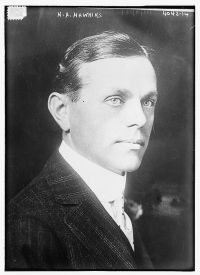
At the core of the individualist success narrative is the conviction that personal capabilities are worthless until they are effectively sold . Proponents of this view, such as Norval A. Hawkins, argue that 'sales skill' is the essential catalyst that converts potential into reality, making the practice of 'selling himself' a fundamental habit for any ambitious person . This framework reframes the pursuit of success as an exercise in personal branding and marketing. Opportunity is not seen as a scarce commodity to be discovered but as an abundant, internal wellspring of potential wealth accessible to all normal people . Consequently, failure to achieve is interpreted not as a systemic issue but as a personal inability to capitalize on ever-present chances .
This philosophy elevates ambition from a simple desire to a primal, all-consuming force. Thinkers like Delmer Eugene Croft contend that success is guaranteed only when one's ambition becomes a 'burning consuming thirst,' comparable to a starving person's hunger for food . This places the entire burden of achievement on an individual's psychological fortitude and the power of their will, which is expected to drive both ambition and desire . In this model, one does not wait for opportunities but actively creates and controls them, effectively manufacturing one's own good luck through sheer force of personality and the mastery of persuasive techniques .
In the competitive arena of the marketplace, this capacity for self-promotion becomes the ultimate differentiator. It is posited that a less qualified individual who is a better salesman of themselves can easily triumph over a more worthy but less visible rival, securing the most desirable positions . This logic is extrapolated to the level of entire communities, with commentators like James Jackson Kilpatrick suggesting that groups can achieve prosperity through their own initiative, developing skills that command respect and building their own enterprises through competition [5]. This perspective champions a direct and unmediated causal link between individual industry, skill, and its rightful reward in the open market.
The Unseen Architecture of Inequality
The meritocratic ideal of self-made success collides immediately with the foundational requirement of capital. The absence of even a single dollar can render any pretension to equal opportunity meaningless, making initial wealth a crucial, if often unacknowledged, determinant of one's trajectory . This financial advantage extends into the political realm, where, as Robert Clarkson Brooks observed in 1910, wealth grants candidates the leisure and freedom from material worries necessary to seek public office, giving them a tremendous head start irrespective of their character or intellect [7]. The concept of inherited wealth further complicates the narrative, creating a class of individuals who enjoy affluence and idleness simply through the 'accident' of their birth, a point raised by Bertrand Russell in his early 20th-century critique of capitalism .
Furthermore, the path to fortune is not always a straightforward testament to hard work or ingenuity. Success can arise from what appears to be 'pure chance' or 'coveted luck,' setting a perilous example that encourages others to abandon lawful effort in favor of gambling on fortune . The competitive struggle for wealth is also frequently intertwined with morally dubious tactics, including what one 19th-century source describes as the 'chicanery of knaves,' subterfuge, and other tricks used to outwit rivals . Orison Swett Marden noted that great financial success in his era often signified the failure and misery of many others, contrasting starkly with intellectual achievements that benefit society as a whole [10].
These individual disadvantages are symptomatic of a broader systemic issue rooted in the nature of competition itself. As analyst J. A. Hobson argued, modern capitalism is built on a competitive framework where individuals and groups begin from 'widely different lines of opportunity,' making systemic problems like poverty and unemployment impossible to solve through private self-interest alone . The profit motive, according to critics like Thomas Nelson Page, becomes the overriding goal of human endeavor, eclipsing the production of goods for use or service [15]. Competition, often lauded as an economic virtue, is reframed by others as a zero-sum game where one person's fortune is necessarily constructed upon the 'ruins of another's' [16]. This perspective challenges the very legitimacy of a system where a new business succeeds primarily by drawing customers away from an established one .
The relentless pursuit of money is also seen as a corrupting societal force. Centuries ago, the writer Ben Jonson lamented that as money gained prominence, 'true reputation' fell, leading to a world where happiness became mere 'painting and gilt' [11]. Despite this, the desire for money became a point of universal agreement among an otherwise divided multitude . The combination of intelligence and financial resources is ultimately identified as the true seat of power and influence, making them the intertwined objects of ambition [9]. This reality casts doubt on the popular myth that one must start with nothing to become rich, while those with a comfortable but modest income are ironically precluded from achieving massive fortunes [13].
Advertising, The Fabricator of Fortunes
In the competitive economic landscape, advertising functions as a powerful strategic weapon, capable of creating insurmountable market advantages. The first business in a sector to effectively leverage publicity gains a dominant position that forces competitors to spend significantly more, not only to match the investment but also to counteract the influence already established [20]. This dynamic shifts the basis of success away from the intrinsic quality of a product and toward the amount of capital available for its promotion [22]. Manufacturers who invest in advertising can forge a direct connection with consumers, securing their market share against the 'cut-throat competition' that erodes profits, while those who abstain remain in a precarious and dependent position [19].
Proponents of advertising, such as Herbert Kaufman, viewed it as a transformative economic force. They argued that money spent on publicity is not truly an expense but an investment that creates 'good will,' a tangible asset that can equal the cost of the campaign itself [21]. In this light, advertising is seen as the primary engine of growth, with businesses having greatness 'thrust upon them' by national campaigns rather than achieving it through their own efforts alone [26]. This power operates through psychological suggestion and manipulation, targeting a consumer base often described as 'confused and helpless' and highly susceptible to persuasion [24, 28]. The underlying theory is that repeated and imperative messaging can compel people to buy a product, regardless of their actual need or the item's utility [25].
From a critical perspective, however, much of this activity is socially unproductive. Upton Sinclair characterized most advertising as 'boasting and falsehood,' arguing that even when truthful, it merely serves to shift customers between rival merchants—an activity profitable for the business but 'utterly useless to society' [23]. More severe critics, like Mihai Nadin, identify the relentless barrage of commercial messaging as a 'corrosive element' that debases language, undermines critical thought, and contributes to a broader moral decay [29]. This influence is particularly potent in modern urban societies, described by Hilaire Belloc as a 'chaos of isolated minds' with diminishing shared traditions, making them vulnerable to mass suggestion . The very nature of some advertising, particularly posters, is described as a form of tyranny that 'deliberately violates the wayfarer’s mind' [30].
Ultimately, advertising reinforces the structural power of capital. Its high cost serves as a significant barrier to entry, solidifying the dominance of large corporations and trusts . In fact, within a monopolistic system where competition is absent, the need for advertising diminishes, revealing its primary function as a tool of competitive warfare [27]. This allows powerful financial interests to not only sell products but to actively assert what the public wants, often in direct opposition to the consumer's genuine interests, effectively rigging the market in their favor . The system can also be exploited for outright deception, with one investigation finding that the press—including daily and religious papers—served as a primary vehicle for fraudulent enterprises dependent on advertising for their perceived legitimacy [31].
The journey from personal ambition to material success is far more fraught and complex than the simple, heroic narrative of self-salesmanship suggests. While the ability to promote oneself and one's abilities is undeniably a factor in a competitive world, it is an action performed upon a stage whose architecture is largely predetermined by external forces . The foundational requirement of capital, the inherent inequalities of a system where competitors begin from vastly different positions, and the arbitrary interventions of luck and inheritance create a landscape where opportunity is far from universal . The profit-driven logic of the system can even reward behavior that is socially detrimental or morally ambiguous, severing the idealized link between wealth and virtuous contribution .
Looming over this entire dynamic is the immense power of mass advertising, a force capable of manufacturing reputation, anointing market giants, and shaping the very desires of the public . It acts as a formidable amplifier for capital, allowing those with sufficient resources to dictate the terms of market competition and define what society deems valuable, often with little regard for genuine merit or utility . This reality raises profound questions about the autonomy of the individual and the fairness of the market. If success is increasingly determined not by what one can do, but by how loudly and effectively one can proclaim it through purchased media, then the foundational ideal of meritocracy is called into question, suggesting a system where influence is not simply earned, but bought.