“ Your twenty-four billions of wealth does not give you twenty-five cents’ worth of governmental power. It is an empty shell, and soon even the empty shell will be taken away from you. The Plutocracy has all power in its hands to-day. It to-day makes the laws, for it owns the Senate, Congress, the courts, and the state legislatures. And not only that. Behind law must be force to execute the law. To-day the Plutocracy makes the law, and to enforce the law it has at its beck and call the police, the army, the navy, and, lastly, the militia, which is you, and me, and all of us. ”
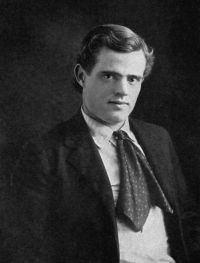
Jack London
Summary

Jack London’s The Iron Heel (1908) is a dystopian political novel merging science fiction with socialist critique, narrated through the footnotes of a future scholar analyzing a discovered manuscript. Set in a 20th-century America where a capitalist oligarchy suppresses socialist movements, the story follows Avis Everhard, a woman who transitions from bourgeois privilege to revolutionary zeal after witnessing the exploitation of labor.
London portrays the Oligarchy’s ascent through monopolies, state brutality, and manipulated unions, framing the narrative with the foreknowledge of the revolution’s eventual, centuries-delayed triumph. The novel cautions against the corrupting influence of power and the ongoing struggle of the working class against systemic oppression.
Quotes from The Iron Heel (Jack London)
Jack London,
The Iron Heel
(1917)
“ And in the dirt it shall remain so long as I and mine and those that come after us have the power. There is the word. It is the king of words—Power. Not God, not Mammon, but Power. Pour it over your tongue till it tingles with it. Power." "I am answered," Ernest said quietly. "It is the only answer that could be given. Power. It is what we of the working class preach. We know, and well we know by bitter experience, that no appeal for the right, for justice, for humanity, can ever touch you. Your hearts are hard as your heels with which you tread upon the faces of the poor. ”
“ Asmunsen remarked. “Calling us weak does not make you stronger in the face of the strength of the Plutocracy,” Ernest retorted. “And furthermore, I’m not done with you. There is a greater strength than wealth, and it is greater because it cannot be taken away. Our strength, the strength of the proletariat, is in our muscles, in our hands to cast ballots, in our fingers to pull triggers. This strength we cannot be stripped of. It is the primitive strength, it is the strength that is to life germane, it is the strength that is stronger than wealth, and that wealth cannot take away. ”
