Summary

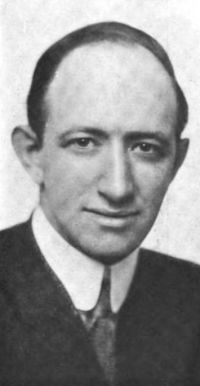
Portrait of Herbert Kaufman Herbert Kaufman The Clock that Had no Hands

Why should as many people deal at your store, as patronize a shop that makes an endeavor to get their trade and shows them that it is worth while to come to its doors?
Why should a newspaper send as many customers to you, in half the time it took to fill an establishment which advertised twice as long and paid twice as much for its publicity?
This is the day when the best man wins—after he proves that he is the best man—when the best store wins, when it has shown that it is the best store—when the best goods win, after they've been demonstrated to be the best goods.
Source: Gutenberg

Portrait of Herbert Kaufman Herbert Kaufman The Clock that Had no Hands

Business is no longer a man to man contact, in which the seller and the buyer establish a personal bond, any more than battle is a hand-to-hand grapple wherein bone and muscle and sinew decide the outcome. Trade as well as war has changed aspect—both are now fought at long range.
Just as a present day army of heroes would have no opportunity to display the individual valor of its members, just so a merchant who counts upon his direct acquaintanceship for success, is a relic of the past—a business dodo.
Source: Gutenberg

Portrait of Herbert Kaufman Herbert Kaufman The Clock that Had no Hands

By dividing the number of copies he prints into his line rate, a publisher may fallaciously demonstrate to you that his space is sold as low as that of his stronger competitors, but if half his circulation is too far away to bring buyers, his real rate is double what it seems. He is like the butcher who weighs in all the bone and sinew and fat and charges you as much for the waste as he does for the meat.
Source: Gutenberg

Get perspective with Kwize: daily news enlightened by great literature