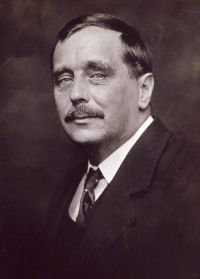
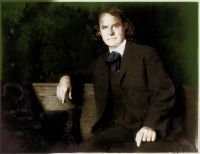
 Elbert Hubbard,
Little Journeys to the Homes of the Great - Volume 11
Elbert Hubbard,
Little Journeys to the Homes of the Great - Volume 11
“ The Businessman is one who supplies something great and good to the world, and collects from the world for the goods. ”
The concept of a businessman includes individuals who drive economic activity through enterprise, innovation, and leadership. From Elbert Hubbard’s view of the businessman as a provider of value to society, to Chester Arthur Phillips’ focus on the entrepreneur as the leader of industry, the theme reveals diverse roles. H.G.
Wells contrasts businessmen with productive workers, emphasizing their organizational and financial influence, while Peary Chand Mitra highlights the desire to hold commercial power. These viewpoints together portray the businessman as both a force for progress and a figure involved in the complexities of profit, labor, and societal expectations.
Elbert Hubbard,
Little Journeys to the Homes of the Great - Volume 11
“ The Businessman is one who supplies something great and good to the world, and collects from the world for the goods. ”
Chester Arthur Phillips, Readings in Money and Banking
“ But the business man, or entrepreneur, in our day is the director and initiator of industry. He employs labor, borrows capital, sets the wheels of industry in motion; it is his expectations and fears and hopes which determine primarily whether the investment of capital shall take place in large or small amount, and whether the machinery of production shall move smoothly and effectively, or slowly, hesitatingly, inefficiently. ”
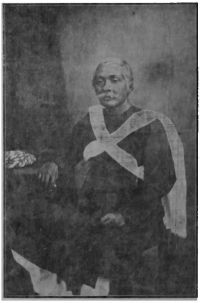 Peary Chand Mitra,
The Spoilt Child
(1893)
Peary Chand Mitra,
The Spoilt Child
(1893)
“ Matilall.-- Ah, a brilliant notion! I am daily in need of money. Does commerce flourish in the bazar, or does it grow in an office? Is it merely the buying and selling that goes on in a sweetmeat-maker's shop? My business will lack all importance unless I am to be the chief agent of some English merchant. ”
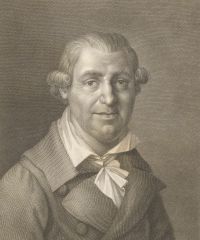 Johann Karl August Musäus,
Popular Tales of the Germans
(1791)
Johann Karl August Musäus,
Popular Tales of the Germans
(1791)
“ I soon became expert at the business, and, in obedience to my father’s injunctions, drove it on with spirit while I was at it. The making of money I found far more profitable than the making of purses. ”
 Young Ewing Allison,
On the Vice of Novel Reading
Young Ewing Allison,
On the Vice of Novel Reading
“ Every one of you doubtless has in mind the amiable man of business—maybe your tailor, your broker, your banker, your lawyer, your grocer—who cultivates your good opinion, and for the sake of the customer in you tolerates lightly the doubtfulness of your employment. ”
Henry K. Rowe, Society: Its Origin and Development
“ All these items are present in varying degree, whatever the size of the business, except where a merchant has capital enough of his own to carry on a small business and can attend to the wants of his customers alone or with the help of his family. The temptation of the merchant is strong to use every possible means to make a success of his business, paying wages as low as possible, in order to cut down expenses, and offering all kinds of inducements to customers in order to sell his goods. ”
“ Opposed in many of their most essential conditions to the capable men who are of primary importance in the social body, is the great and growing [Pg 98] variety of non-productive but active men who are engaged in more or less necessary operations of organization, promotion, advertisement, and trade. There are the business managers, public and private, the political organizers, brokers, commission agents, the varying grades of financier down to the mere greedy camp followers of finance, the gamblers pure and simple, and the great body of their dependent clerks, typewriters, and assistants. ”
 John Bates Clark,
Essentials of Economic Theory
John Bates Clark,
Essentials of Economic Theory
“ The entrepreneur, as we shall use the term, is neither the manager nor the capitalist, and when we have occasion to speak of either of these functionaries, we shall call him by his own distinctive name; though we know perfectly well that, in actual business, it is desirable [Pg 120] and often quite essential that the same one who acts as an entrepreneur should also put into the business some labor as well as some capital. ”
Frederick Joseph Bramwell, Popular Science Monthly (1873)
“ I agree that in numerous instances this would he wrong; but the fact is that, in many cases—I think I may say in most cases—the head of the establishment, the moneyed man, the man who, by his commercial ability (that most necessary element in all establishments) , keeps the concern going by finding lucrative orders, is not intimately acquainted with the practice of the business carried on by his firm; he relies upon some manager or foreman, who, too commonly, is not the real, but the so-called practical man. ”
William Ingraham Russell, The Romance and Tragedy of a Widely Known Business Man of New York
“ At all events, we mailed a few letters to customers explaining the matter, and a business on this basis was commenced and quickly grew to large proportions.This fact made it dangerous, for the larger the business the greater the risk. We had to continually have an interest in the market either on one side or the other, and if the business was large our interest must be in proportion.For some time the business was most satisfactory. My judgment of the market was correct, our customers were well pleased, and we made good profits. ”
 Ralph Waldo Emerson,
Essays: First Series — Circles
(1841)
Ralph Waldo Emerson,
Essays: First Series — Circles
(1841)
“ For you, O broker! there is no other principle but arithmetic. For me, commerce is of trivial import; love, faith, truth of character, the aspiration of man, these are sacred; nor can I detach one duty, like you, from all other duties, and concentrate my forces mechanically on the payment of moneys. ”
“ And the business men are not only in the most strategic and competent position to find out what the people who buy want, but to find out too, what the people who sell want. They are in the best position to know, and to know intimately, what the salesmen and saleswomen want and what they want to be and what they want to do or not do.They are in a close and watchful position, too, with regard to the conditions in the factories from which their goods come and with regard to what the employers, stockholders, foremen and workmen in those factories want. ”
L. B. Buchheimer, Faith and Duty: Sermons on Free Texts…
“ The business man who at this time looks over his stock and ledger and strikes a balance of profit and loss, so as to make prudent arrangement for the business of the incoming year, the man of family who gazes upon the members seated about his table, and, considering demands and expenditures, weighs his income and ability to make ends meet, or whatever situation you may be in, or relation you may sustain, an intelligent, provident, weighing, considering, looking into the future is legitimate, wise, proper. ”
William Crosbie Hunter, Dollars and Sense
“ They know he will do what he promises, and finally this man is the one who builds up a good trade and at fifty years of age he has a place of his own, sends salesmen on the road, and his house does a good business because his policy permeates the institution, and the customers have confidence in the house because he is at the head of it, and they are familiar with his methods and practice. ”
 Walter Alexander Raleigh,
Six Essays on Johnson
(1910)
Walter Alexander Raleigh,
Six Essays on Johnson
(1910)
“ If there are qualities in literature which are above price, these are also to be found in the world of manufacture and finance in that huge pyramid of loyalty which is modern industry, and that vast network of fidelity which is modern commerce. ”
 Thorstein Veblen,
The Theory of Business Enterprise
(1904)
Thorstein Veblen,
The Theory of Business Enterprise
(1904)
“ In current economic theory the business man is spoken of under the name of "entrepreneur" or "undertaker," and his function is held to be the coordinating of industrial processes with a view to economics of production and heightened serviceability. ”
 Arthur Stanwood Pier,
David Ives
(1921)
Arthur Stanwood Pier,
David Ives
(1921)
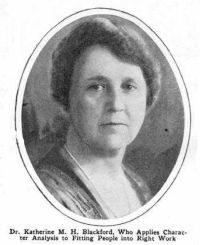
“ I mean to get into the promotion of big things—big corporation business. A fellow that finances street railways and industrial plants, controls banks and makes towns grow—a builder; that’s what I mean to be. ”
 Katherine M. H. Blackford,
Analyzing Character
Katherine M. H. Blackford,
Analyzing Character
“ Our great captains of industry, our multi-millionaires, have, most of them, made their fortunes in commerce. This is an age, perhaps—especially in the United States—which rather makes a hero of the business man. ”
Gerald Stanley Lee, The Ghost in the White House
“ I know personally and through my books and articles hundreds of employers who look upon themselves and are looked on by their employees as gentlemen and sports—men who are in business as masters of a craft, artists or professional men, who are only making money as a means of expressing themselves, making their business a self-expression and putting themselves and their temperaments and their desires toward others into their business as they like. ”
Jr. Horatio Alger, Struggling Upward, or Luke Larkin's Luck
“ I am always successful, if I do say it myself, and the firm know it, and pay me accordingly. They know that several other firms are after me, and would get me away if they didn't pay me my price." "I suppose you know all about investments, being a business man?" ”
 Washington Irving,
Astoria; Or, Anecdotes of an Enterprise Beyond the Rocky Mountains
Washington Irving,
Astoria; Or, Anecdotes of an Enterprise Beyond the Rocky Mountains
“ What government failed to effect, however, with all its patronage and all its agents, was at length brought about by the enterprise and perseverance of a single merchant, one of its adopted citizens; and this brings us to speak of the individual whose enterprise is the especial subject of the following pages; a man whose name and character are worthy of being enrolled in the history of commerce, as illustrating its noblest aims and soundest maxims. ”
 Robert Benchley,
Of All Things
Robert Benchley,
Of All Things
“ In the first place let me say that what we have done in our business any firm can do in theirs. It is not that we have any extraordinary talents along organization lines. We simply have taken the lessons learned in everyday trading, have tabulated and filed them in triplicate. ”
 Anthony Trollope,
The Last Chronicle of Barset
(1867)
Anthony Trollope,
The Last Chronicle of Barset
(1867)
“ Can I go to a professional man, who keeps as it were his shop open for those who may think fit to come, and purchase of him, and take of his goods, and afterwards, when the goods have been used, tell him that I have not the price in my hand? ”
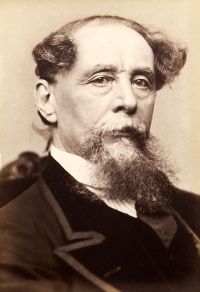 Charles Dickens,
Great Expectations
(1890)
Charles Dickens,
Great Expectations
(1890)
“ The upshot was, that we found a worthy young merchant or shipping-broker, not long established in business, who wanted intelligent help, and who wanted capital, and who in due course of time and receipt would want a partner. ”
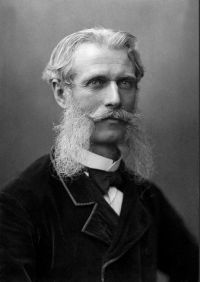 Karl Hilty,
The steps of life: further essays on happiness
(1907)
Karl Hilty,
The steps of life: further essays on happiness
(1907)
“ But, if necessary, you may even break away somewhat from business. That pays, and you will soon see what a difference there is, even as regards business success, between a cultured merchant and a merely clever manager. ”
Florence Finch Kelly, The Fate of Felix Brand
“ What I purpose doing is to carry out my business schemes by such methods as will enable those who work with me and for me to earn their own betterments in life, and then to enlighten and guide them in the spending and investment of their earnings. ”
Joseph Shield Nicholson, The Living Capital of the United Kingdom (1891)
“ The individual lawyer or carpenter perishes, but the profession or the trade survives, like a Platonic idea. In a stationary economic condition of a people, we might suppose that every trade and profession is an immortal, unchanging corporation. ”
Clive Day, A history of commerce (1922)
“ A person who had accumulated wealth, but who on account of advanced age, physical disability, or other circumstance could not himself employ it in commerce, would join with him a man who contributed to the enterprise the necessary business activity. ”
 Israel Zangwill,
Without Prejudice
Israel Zangwill,
Without Prejudice
“ My friend the business man tells me that for success in business one requires four things: a large capital, industry, insight, and caution—and then it's a toss-up. I am fain to believe this whole system of modern commerce was devised to please the amateurs of the aleatory. ”
Various, Punch, or the London Charivari…
“ The merchant who relieved the monotony of a large and profitable wholesale business by treating him as a son, impressed upon him at an early age the necessity of making the family history illustrious by soaring beyond commerce to professional distinction and a fixed income. ”
Anna Robertson Brown Lindsay, The Warriors
“ In a few years he is the foreman, or an inventor, or a partner, with independent capital of his own. Again, there is a blind way of doing skilled work, or of merely doing it without noticing where it is most needed, or how the market is going for this special kind of work. ”
John Bates Clark,
Essentials of Economic Theory
“ The Entrepreneur's Proper Function not Labor of Management.—In some theoretical discussions the management of a business figures as the principal function of the entrepreneur, and all or nearly all of the reward that comes to him is represented as coming in the shape of a reward for a responsible kind of labor that calls great abilities into requisition. ”
Aletta E. Marty, The Ontario High School Reader
“ In this great business community there was no better man of business, no man by whom the humdrum obligations—punctuality, method, preciseness, and economy of time and speech—were more keenly recognized or more severely practised. ”
Anonymous, The Daily Newspaper: The History of Its Production and Distibution
“ Some, with more enterprise or capital than others, buy by wholesale, and sell to others with less capital. A few, standing on the street corners, have regular customers who pay or not, as the case may be, each night; and as the business men pass, one after another, the papers are handed to them almost as rapidly as tickets at a crowded concert-room. ”
Paul Klapper, College Teaching
“ The modern business man, entrepreneur or manager, and all those assisting him in the discharge of his duties, perform functions in two directions: first, in the direction of the market in the establishment of price, in the selling of his goods, and in attending to all matters which flow therefrom, and secondly toward the production plant itself ”
Roy Lester James, Letters From an Old Time Salesman to His Son
“ That’s the most familiar form and it’s necessary and produces big, but there are other kinds. You know the majority of your trade never knew the founders of your company personally. When they think of your company they think of you. ”
Mervin James Curl, Expository Writing
“ Other men have an eye for contracts or whatnot, or are born captains of industry, in which cases they go into business on their own account, and make ten, twenty, or two hundred per cent where you or I would lose five. ”
 John Stuart Mill,
Principles of Political Economy
(1871)
John Stuart Mill,
Principles of Political Economy
(1871)
“ In this as in other branches of business, there is a class of middlemen or brokers, who bring buyers and sellers together, or stand between them, buying bills from those who have money to receive, and selling bills to those who have money to pay. ”
 Arthur Cheney Train,
The Confessions of Artemas Quibble
Arthur Cheney Train,
The Confessions of Artemas Quibble
“ Our fair client, like many another histrionic genius, had more charm than business ability and was persuaded by an unscrupulous manager to intrust to him a large sum of money for investment in his various enterprises. ”
Page Fox, One Thousand Ways to Make Money
“ The sharpest rivalry will meet you. Also, you must consider what incursions are likely to be made by out-of-town dealers, and what prospect there is of others{23} setting up business in the place. But you should have an ideal trade toward which you steadily work. Declare daily to yourself, “my gross earnings shall be $—per day,” or “—— (so many) persons shall be my patrons.” When you fall below the mark, bestir yourself in many ways.16. The Personal Equation.—Remember that you yourself in contact with your customers count for more than anything else. ”
 Walter Bagehot,
Lombard Street: A Description of the Money Market
(1917)
Walter Bagehot,
Lombard Street: A Description of the Money Market
(1917)
“ But the labour of such persons, I do not say their spare powers, but their principal energies, fetches a high price. Business is really a profession often requiring for its practice quite as much knowledge, and quite as much skill, as law and medicine ”
Geo. T. Fairchild, Rural Wealth and Welfare: Economic Principles Illustrated and Applied in Farm Life
“ A successful manager of a great enterprise can scarcely be said to have a market price for his services, but will estimate himself in large measure by the profits he might secure as an independent business man. ”
Thorstein Veblen,
The Theory of Business Enterprise
(1904)
“ As to the wages paid to the men engaged in the routine of competitive selling, as salesmen, buyers, accountants, and the like, - much the same holds true of them as of the income of the business men who carry on the business on their own initiative. ”
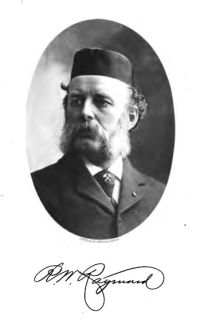 Rossiter W. Raymond,
Peter Cooper
Rossiter W. Raymond,
Peter Cooper
“ While I have always recognized that the object of business is to make money in an [106] honorable manner, I have endeavored to remember that the object of life is to do good. Hence I have been ready to engage in all new enterprises, and, without incurring debt, to risk in their promotion the means which I had acquired, provided they seemed to me calculated to advance the general good. ”
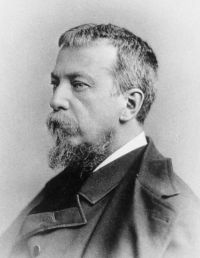 S. Weir Mitchell,
Wear and Tear; Or, Hints for the Overworked
S. Weir Mitchell,
Wear and Tear; Or, Hints for the Overworked
“ The business man's only limitation is need of money, and few young mercantile men will hesitate to enter trade on their own account if they can command capital. With the doctor, as with the lawyer, a long intellectual education, a slowly-increasing strain, and responsibilities of gradual growth tend, with his out-door life, to save him from the form of disease I have been alluding to. ”
 Wallace Delois Wattles,
The Science of Getting Rich
(1910)
Wallace Delois Wattles,
The Science of Getting Rich
(1910)
“ You can make your business do for your employees what this book is doing for you. You can so conduct your business that it will be a sort of ladder, by which every employee who will take the trouble may climb to riches himself ”
 Caroline Lee Hentz,
Helen and Arthur; or, Miss Thusa's Spinning Wheel
Caroline Lee Hentz,
Helen and Arthur; or, Miss Thusa's Spinning Wheel
“ Agents, Pedlars, Canvassers, Booksellers, News Agents, &c., throughout the country, who wish to make money on a small capital, would do well to address the undersigned, who will furnish a complete outfit for a comparatively small amount. ”
Roy Lester James, Letters From an Old Time Salesman to His Son
“ His success is their success, and without favorable results neither he, nor they, can prosper.Teach ’em, Red—show ’em their responsibility! Fire their minds and hearts with the fact that they’re not working for the company—bless your heart, Boy, they are the company to all intent and purpose on their territory, and either their lackadaisical or their aggressive, businesslike demeanor and actions will be interpreted by their trade exactly as they appear and the company will be so reflected. ”