Summary

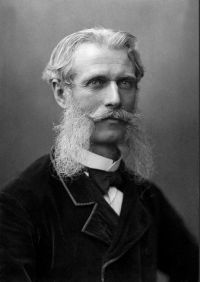
Portrait of Karl Hilty Karl Hilty The steps of life: further essays on happiness (1907)

That one may, nevertheless, find an artless enjoyment in the beauty of nature, in the serene succession of the days and the years, in one’s family and in true friendship, in uplifting art and science, in the life and welfare of his nation, even in the inoffensive animal and plant worlds, and, above all, in all the great and good activities that are going on in the whole realm of humanity—all this is to be taken entirely for granted.
Source: Gutenberg

Portrait of Karl Hilty Karl Hilty The steps of life: further essays on happiness (1907)

For when a man once abandons the belief that every single human soul has an infinite value and that it is worth any trouble taken to save it, then he finds himself upon an inclined plane on which he gradually slips back again into complete selfishness.
The final word as to the knowledge of men must be—love to all. Love alone enables us to know a man exactly as he is, and yet not to flee him. To know men, without love, has always been a misfortune and the cause of the profound melancholy of many wise men in all ages
Source: Gutenberg

Portrait of Karl Hilty Karl Hilty The steps of life: further essays on happiness (1907)

On the other hand, it is just as undoubted that individualism, the right of mastery over one’s own nature and over one’s free will so far as it is employed for good ends, is the most inalienable of all human rights, and one that no political democracy can or will ever set aside. To lower this individualism to a mere class or mass consciousness and to a common average of culture is barbarism; to develop it partially and selfishly only for oneself is criminal or insane.
Source: Gutenberg

Get perspective with Kwize: daily news enlightened by great literature