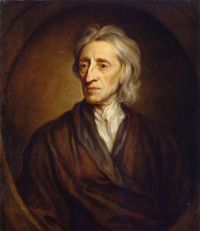
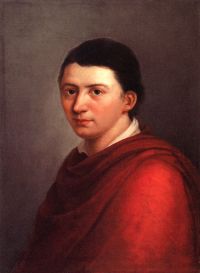
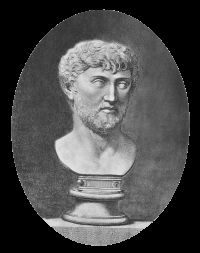
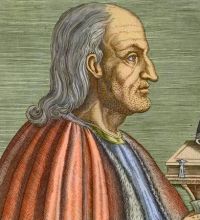
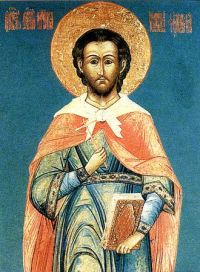
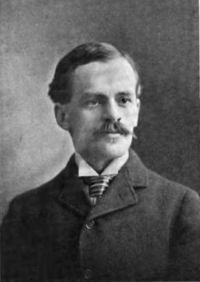
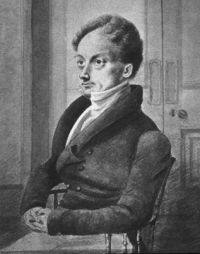
Certainty refers to the state of holding a belief without doubt, especially when that belief corresponds to objective truth. Philosophers and writers have long debated its nature: John Locke associated it with the clarity of ideas, while Blaise Pascal approached it through faith, asserting that confidence in divine matters goes beyond logical evidence. G. W. F.
Hegel differentiated certainty from truth, pointing out that widely accepted beliefs—such as the geocentric model—can be firm yet incorrect. John Stuart Mill emphasized the social aspects of certainty, criticizing the enforcement of such beliefs without regard for opposing views. These differing viewpoints highlight the conflict between intellectual precision and the contextual, often error-prone, character of human understanding.
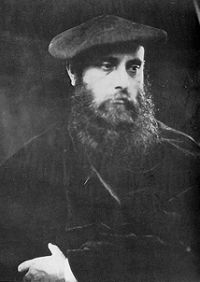 William Michael Rossetti,
The Atlantic Monthly
(1866)
William Michael Rossetti,
The Atlantic Monthly
(1866)