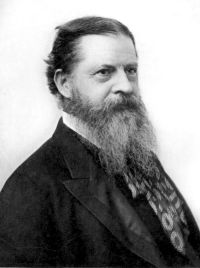
Pragmatism is a philosophical tradition that emphasizes practical outcomes over abstract principles, emerging in 19th-century American thought through the work of Charles Sanders Peirce, William James, and John Dewey. It interprets ideas in terms of their real-world consequences, as illustrated by Peirce’s pragmatic maxim: “Consider the practical effects of your conception.
” James reinterpreted it as a method connecting faith with empirical observation, while Dewey associated it with social action and democratic participation. By focusing on usefulness and lived experience, pragmatism questions fixed doctrines, regarding truth as something that emerges dynamically through practice. Its influence persists in contemporary philosophy, blending empirical precision with flexible, context-aware reasoning.
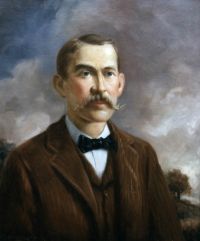 Thomas Mitchell Shackleford,
Popular Science Monthly
(1909)
Thomas Mitchell Shackleford,
Popular Science Monthly
(1909)