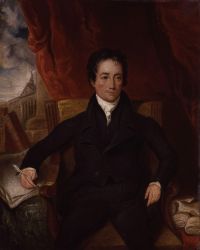
 Charles Lamb,
The Works of Charles and Mary Lamb…
Charles Lamb,
The Works of Charles and Mary Lamb…
“ You may derive thoughts from others; your way of thinking, the mould in which your thoughts are cast, must be your own. ”
Thinking, the mental process of reasoning, reflection, and idea generation, has long been a central topic in philosophical and literary discussions. Authors such as Josiah Royce explored its connection to external reality, emphasizing how cognition shapes our understanding of the "Other," while Bertrand Russell praised its inherent value as a "delightful occupation.
" David Masson highlighted the lasting importance of phrases like "mode of thinking," noting its variation in depth and quality, and John Locke associated thinking with perception, portraying it as a conscious activity similar to sensory experience. These viewpoints together illustrate thinking as both an individual capacity and an active engagement with the world, influenced by personal traits and collective human inquiry.
Charles Lamb,
The Works of Charles and Mary Lamb…
“ You may derive thoughts from others; your way of thinking, the mould in which your thoughts are cast, must be your own. ”
 Josiah Royce,
The World and the Individual, First Series
(1899)
Josiah Royce,
The World and the Individual, First Series
(1899)
“ Take your thinking merely as that which is to correspond to an external Other, and then, indeed, your universal judgments tell you only what this Other is not, and leave, as what it is, merely some of the possibilities still undestroyed. ”
 Bertrand Russell,
The Analysis of Mind
Bertrand Russell,
The Analysis of Mind
“ I will merely observe, in mitigation of our prospective labours, that thinking, however it is to be analysed, is in itself a delightful occupation, and that there is no enemy to thinking so deadly as a false simplicity. ”
David Masson, The Three Devils: Luther's, Milton's…
“ Soul, mind, spirit, these old and simple words are the strongest, the profoundest, the surest; age cannot antiquate them, nor science undo them; they last with the rocks, and still go beyond. But, having in view rather the operation than the cause, we find a use also in such alternative phrases as “mode of thinking,” “mode of feeling and thinking,” “habit of thought,” “moral and intellectual character or constitution,” and the like. ”
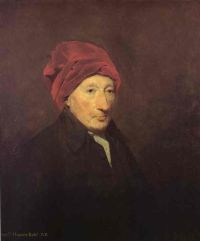 Thomas Reid,
An Inquiry into the Human Mind…
Thomas Reid,
An Inquiry into the Human Mind…
“ It appears then to be an undeniable fact, that from thought or sensation, all mankind, constantly and invariably, from the first dawning of reflection, do infer a power or faculty of thinking, and a permanent being or mind to which that faculty belongs ”
 Johann Gottlieb Fichte,
Characteristics of the Present Age
(1806)
Johann Gottlieb Fichte,
Characteristics of the Present Age
(1806)
“ And now to explain this principle somewhat further, so that I may at least make it historically clear to you, although I cannot prove it in this place:—it is the greatest error, and the true ground of all the other errors which make this Age their sport, that each individual imagines that he can exist, live, think, and act for himself, and believes that he himself is the thinking principle of his thoughts; ”
Oliver Wendell Holmes, Over the Teacups
“ All reflecting persons, even those whose minds have been half palsied by the deadly dogmas which have done all they could to disorganize their thinking powers,—all reflecting persons, I say, must recognize, in looking back over a long life, how largely their creeds, their course of life, their wisdom and unwisdom, their whole characters, were shaped by the conditions which surrounded them. ”
 Thomas Paine,
The Writings of Thomas Paine, Complete
Thomas Paine,
The Writings of Thomas Paine, Complete
“ Any person, who has made observations on the state and progress of the human mind, by observing his own, can not but have observed, that there are two distinct classes of what are called Thoughts; those that we produce in ourselves by reflection and the act of thinking, and those that bolt into the mind of their own accord. ”
 John Locke,
An Essay Concerning Humane Understanding…
John Locke,
An Essay Concerning Humane Understanding…
“ And such are perception, thinking, doubting, believing, reasoning, knowing, willing, and all the different actings of our own minds;—which we being conscious of, and observing in ourselves, do from these receive into our understandings as distinct ideas as we do from bodies affecting our senses. ”
William James, Psychology: Briefer Course
“ And why, some day, walking in the street with our attention miles away from that quest, does the answer saunter into our minds as carelessly as if it had never been called for—suggested, possibly, by the flowers on the bonnet of the lady in front of us, or possibly by nothing that we can discover?The truth must be admitted that thought works under strange conditions. Pure 'reason' is only one out of a{255} thousand possibilities in the thinking of each of us. ”
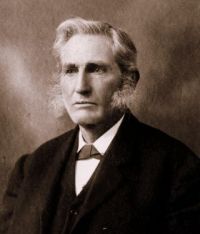 Lester Frank Ward,
The American Journal of Sociology
(1896)
Lester Frank Ward,
The American Journal of Sociology
(1896)
“ It is much confused in modern discussions, and the word "mind," which formerly always meant the operations of the intellect only, has come in recent times to be used in the sense of feeling only, the thinking process itself being described as a form of feeling. ”
 Albert Camus,
The Myth of Sisyphus
(1942)
Albert Camus,
The Myth of Sisyphus
(1942)
“ Thinking is learning all over again how to see, directing one’s consciousness, making of every image a privileged place. ”
 John Stuart Mill,
A System of Logic, Ratiocinative and Inductive
(1843)
John Stuart Mill,
A System of Logic, Ratiocinative and Inductive
(1843)
“ To what a degree this loose mode of classing and denominating objects has rendered the vocabulary of mental and moral philosophy unfit for the purposes of accurate thinking, is best known to whoever has most meditated on the present condition of those branches of knowledge. ”
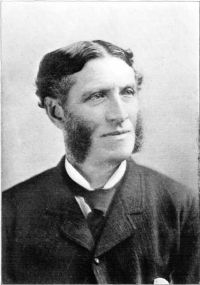 Matthew Arnold,
Culture and Anarchy
Matthew Arnold,
Culture and Anarchy
“ This fundamental ground is our preference of doing to thinking. Now this preference is a main element in our nature, and as we study it we find ourselves opening up a number of large questions on every side. ”
John Stuart Mill,
Considerations on Representative Government
(1861)
“ The test of real and vigorous thinking, the thinking which ascertains truths instead of dreaming dreams, is successful application to practice. ”
Albert Camus,
The Myth of Sisyphus
(1942)
“ The preceding merely defines a way of thinking. But the point is to live. ”
William James, Pragmatism: A New Name for Some Old Ways of Thinking
“ I know that you, ladies and gentlemen, have a philosophy, each and all of you, and that the most interesting and important thing about you is the way in which it determines the perspective in your several worlds. ”
Martha Evans Martin, The Ways of the Planets
“ What we wish to contemplate here are the plain facts, the knowledge of which enlivens and enriches one’s mind and nature. If the contemplation of them kindles one’s fancy or excites one’s emotions, these results at least will not be second-hand. ”
William James, Essays in Radical Empiricism
“ V THE PLACE OF AFFECTIONAL FACTS IN A WORLD OF PURE EXPERIENCE [75] Common sense and popular philosophy are as dualistic as it is possible to be. Thoughts, we all naturally think, are made of one kind of substance, and things of another. Consciousness, flowing inside of us in the forms of conception or judgment, or concentrating itself in the shape of passion or emotion, can be directly felt as the spiritual activity which it is, and known in contrast with the space-filling objective ‘content’ which it envelopes and accompanies. ”
Josiah Royce,
The Sources of Religious Insight
“ As a result we shall soon find that, just as our first statement of the insight of reason, if indeed it is a true statement, transforms our view of the sense in which the world is real, so a deeper study of the relations of insight to action transforms our first cruder notion of the reason itself, of its office in life, and of the truth that it reveals. ”
 Alexander Pope,
An Essay on Man
(1751)
Alexander Pope,
An Essay on Man
(1751)
“ At best more watchful this, but that more strong. The action of the stronger to suspend, Reason still use, to reason still attend. Attention, habit and experience gains; Each strengthens reason, and self-love restrains. ”
 Ralph Waldo Emerson,
Nature
(1836)
Ralph Waldo Emerson,
Nature
(1836)
“ So shall we come to look at the world with new eyes. It shall answer the endless inquiry of the intellect,—What is truth? and of the affections,—What is good? by yielding itself passive to the educated Will. ”
Josiah Royce,
The World and the Individual, First Series
(1899)
“ They are contents of thought as well as masses of feeling; and the peculiar way in which they are more than immediate is what makes them worthy to be called ideas. And as contents of thought, as ideas, they already present to us, however incompletely, that relative fulfilment of purpose, that partial embodiment of meaning, which sets them in contrast to those brute facts of the lower forms of immediacy, those meaningless accidents of sensation, which, in our case, always accompany them. ”
William James, The Philosophical Review (1892)
“ Now the sort of 'fact of experience' on which in my book I have proposed to compromise, is the so-called 'mental state,' in whose existence not only common men but philosophers have uniformly believed. ”
 Woodrow Wilson,
Mere literature, and other essays
Woodrow Wilson,
Mere literature, and other essays
“ There is a literature of reasoned thought; but by far the greater part of those writings which we reckon worthy of47 that great name is the product, not of reasoned thought, but of the imagination and of the spiritual vision of those who see,—writings winged, not with knowledge, but with sympathy, with sentiment, with heartiness. Even the literature of reasoned thought gets its life, not from its logic, but from the spirit, the insight, and the inspiration which are the vehicle of its logic. Thought presides, but sentiment has the executive powers; the motive functions belong to feeling. ”
 Ralph Waldo Trine,
What All The World's A-Seeking
Ralph Waldo Trine,
What All The World's A-Seeking
“ Thought is the force underlying all. And what do we mean by this? Simply this: Your every act—every conscious act—is preceded by a thought. Your dominating thoughts determine your dominating actions. The acts repeated crystallize themselves into the habit. The aggregate of your habits is your character. Whatever, then, you would have your acts, you must look well to the character of the thought you entertain. Whatever act you would not do,—habit you would not acquire,—you must look well to it that you do not entertain the type of thought that will give birth to this act, this habit. ”
William James, Psychology: Briefer Course
“ The Fundamental Fact.—The first and foremost concrete fact which every one will affirm to belong to his inner experience is the fact that consciousness of some sort goes on. 'States of mind' succeed each other in him. If we could say in English 'it thinks,' as we say 'it rains' or 'it blows,' we should be stating the fact most simply and with the minimum of assumption. As we cannot, we must simply say that thought goes on. ”
Ralph Waldo Emerson,
Miscellanies
(1855)
“ The preamble of thought, the transition through which it passes from the unconscious to the conscious, is action. Only so much do I know, as I have lived. Instantly we know whose words are loaded with life, and whose not. ”
Josiah Royce,
The Sources of Religious Insight
“ But the universal form in which any opinion comes to your consciousness, and gets its definition for your own mind, is this form of an appeal to an insight that is superior in grasp, in unity, in coherence, in reasonableness to your momentary insight. ”
Infanta of Spain Eulalia, The thread of life
“ By the side of the intellectual element, by which we estimate our thoughts and actions, there is feeling; that is, the sensibility which modifies the judgment and enlightens the deep thought determining our responsibility. ”
“ Ah, but what, we must ask ourselves, of the great brain that conceived the idea, the foresight which told the exact moment when to put it into action, the cool courage which seized the moment—what of the grasp of affairs, the knowledge of men? ”
Thomas Brown, Lectures on the Philosophy of the Human Mind…
“ It may be said to comprehend every thing which we perceive, and remember, and imagine, and compare, and admire, all those mysterious processes of thought, which, in the happy efforts of the philosopher and the poet, are concerned in the production of their noblest results, and which are not less deserving of our regard, as they are every moment exercised by all, in the humble intellectual functions of common life. ”
Josiah Royce,
The Spirit of Modern Philosophy
(1892)
“ Well, what I have called contemplative insight, that disposition and power of our minds whereby we study and enjoy truth, expresses itself early and late, as you know, in the form of a searching curiosity about our world and about life, a curiosity to which you in vain endeavor to set bounds. ”
Josiah Royce,
The World and the Individual, First Series
(1899)
“ Is it not indeed plain that, as we ourselves have often heretofore said, when we talk of Being, we are indeed seeking for what, if present, would satisfy or tend to satisfy our conscious needs and meanings? Let us take this very character as the sole basis of our definition of what it is to be. Let us first say that whenever we talk of Being we mean a definitely Possible Fact of experience, viewed just as something possible for us. ”
 Philip Gilbert Hamerton,
The Intellectual Life
Philip Gilbert Hamerton,
The Intellectual Life
“ They were meant to know, to act, and to feel—to know everything which the mind is able to contemplate, to name, and to classify; to do everything which the will, prompted by the passions and guided by the conscience, can undertake; and, subject to the same guidance, to feel in its utmost vigor every emotion which the contemplation of the various persons and objects which surround us can excite. ”
Lewis E. Gates, Three studies in literature (1899)
“ His description of the intellect delicately and swiftly feeling its way towards truth may well be quoted entire: “The mind ranges to and fro, and spreads out and advances forward with a quickness which has become a proverb, and a subtlety and versatility which baffle investigation. ”
 Jonathan Edwards,
Selected Sermons of Jonathan Edwards
Jonathan Edwards,
Selected Sermons of Jonathan Edwards
“ But if we take reason strictly, not for the faculty of mental perception in general, but for ratiocination, or a power of inferring by arguments; I say, if we take reason thus, the perceiving of spiritual beauty and excellency no more belongs to reason than it belongs to the sense of feeling to perceive colors, or to the power of seeing to perceive the sweetness of food. ”
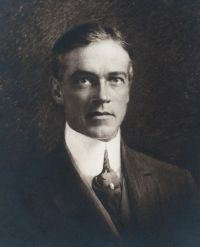 Victor Mapes,
Heart and Soul by Maveric Post
Victor Mapes,
Heart and Soul by Maveric Post
“ My purpose, in imagining these illustrations, was to render obvious and palpable the limitations of the intellect, when it attempts to translate feelings into terms of reason, or when it attempts to substitute scientific calculations for spontaneous emotions. The essence of one is [Pg 177] feeling; the essence of the other is logic ”
Christian D. Larson, The Pathway of Roses (1913)
“ It will tell you exactly how the mind works; how you can control and apply, as you may desire, the laws of the mind; how you can think what you want to think, and thus apply, according to plan and purpose, the full power of thought. ”
William Winter, Gray Days and Gold in England and Scotland
“ Whichever way you turn, and whatever object you behold, that consciousness is always present to your thought,—the consciousness of a race of beings intensely original, individual, passionate, authoritative, and magnificent. ”
Josiah Royce,
The World and the Individual, Second Series
(1901)
“ For then we learn that our present will demands for its full expression, not merely contents or facts that are yet to be discriminated, but other wills than this present conscious will of ours, other purposes than we as yet observe within the limits of this instant’s consciousness. ”
Johann Gottlieb Fichte,
Sun-Clear Statement — First Conversation
(1868)
“ To begin, you surely know how to distinguish the really actual, that which is the true fact of your present experience and life, or that which you actually live and experience, from the non-actual, the merely imagined. ”
 William J. Long,
How animals talk
(1919)
William J. Long,
How animals talk
(1919)
“ But when such observation is ended or at fault, and the man retreats, as it were, into his inner self, then in the quiet all the senses merge and harmonize into a single perfect instrument of perception. ”
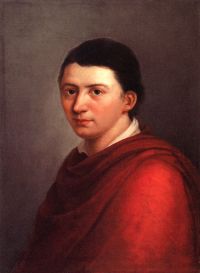 Friedrich von Schlegel,
The philosophy of life, and philosophy of language…
Friedrich von Schlegel,
The philosophy of life, and philosophy of language…
“ I called the understanding and the will, the reason and the fancy, the four principal branches of the human consciousness, of which all other mental powers or faculties of the soul, usually ascribed to man, are but so many offshoots. ”
 Edwin Abbott Abbott,
The Kernel and the Husk
(1886)
Edwin Abbott Abbott,
The Kernel and the Husk
(1886)
“ Reason (or, as some prefer to call it in this limited sense, Understanding) is the power by which we compare, and, from our comparisons, draw inferences or conclusions. By means of it we compare the suggestions of the Imagination with the suggestions of Experience, and accept or reject the former in accordance with the result of our comparison. xii. Hope Hope is desire, of which we imagine the fulfilment, while recognizing the presence of doubt. ”
William James, The Principles of Psychology, Volume 2…
“ We should propose to ourselves nobler views, namely, to recreate and exalt the mind with a prospect of the beauty, order, extent, and variety of natural things: hence, by proper inferences, to enlarge our notions of the grandeur, wisdom, and beneficence of the Creator," etc., etc., etc. ”
 Herbert Spencer,
Illustrations of Universal Progress…
Herbert Spencer,
Illustrations of Universal Progress…
“ Leaving out of view the Will, which is a simple homogeneous mental state, forming the link between feeling and action, and not admitting of subdivisions; our states of consciousness fall into two great classes—Cognitions and Feelings. ”
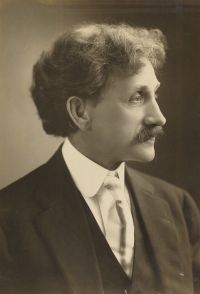 J. Howard Moore,
The Universal Kinship
J. Howard Moore,
The Universal Kinship
“ Judgment, forethought, common-sense, inference, ingenuity, genius, reason, and abstract thought, are all exercises of the cognitive or perceptive power of mind, and consist, all of them, in nothing more nor less than the discerning of relations among stimuli. ”
Josiah Royce,
The World and the Individual, First Series
(1899)
“ We are to assert that just what the internal meaning already imperfectly but consciously is, namely, purpose relatively fulfilled, just that, and nothing else, the apparently external meaning when truly comprehended also proves to be, namely, the entire expression of the very Will that is fragmentarily embodied in the life of the flying conscious idea, — the fulfilment of the very aim that is hinted in the instant. ”
Political power requires the fundamental reconstruction of reality. Doublethink, a disciplined mental process, enables rulers to simultaneously believe deliberate lies and deny objective fact, thus seizing absolute control over the past, present, and future.
The fundamental tension between internal experience and external reality creates a critical vulnerability in human cognition. Philosophical thinkers and historical figures reveal how charismatic leaders exploit the certainty of feeling to construct insular realities and demand absolute obedience, making independent thought heresy.

