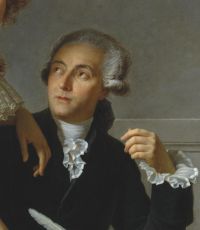
“ But how do we human beings get at what we call natural truth? By observation—so men say—and by experience. But by whose experience? By the united, by the synthesized, by the revised, corrected, rationally criticized, above all by the common, experience of many individuals. ”
Observation
Definition and stakes
Observation, defined as the active acquisition of information from a primary source, serves as a foundational element in both scientific inquiry and philosophical reflection. In science, it involves systematic perception—qualitative or quantitative—often enhanced by instruments to improve precision. Philosophers like David Hume highlighted its role in connecting sensory experience to causal understanding, while G. E.
Moore examined how personal observations might shape beliefs about others’ perceptions. Johann Wolfgang von Goethe emphasized observation as a disciplined engagement with the world, combining empirical rigor with introspective insight. These diverse perspectives underscore observation’s dual function: as a methodological foundation in hypothesis testing and as a framework through which humans interpret the relationship between sensory input and conceptual understanding.
Quotes about “observation”
William J. Long,
How animals talk
(1919)
“ But when such observation is ended or at fault, and the man retreats, as it were, into his inner self, then in the quiet all the senses merge and harmonize into a single perfect instrument of perception. ”
G. E. Moore,
Philosophical Studies
“ What, then, that we observe, can give us any reason for believing that anyone else has certain particular perceptions, thoughts or feelings? It has, I think, been very commonly assumed that the observation of my own perceptions, thoughts, and feelings, can, by itself, give me such a reason. ”
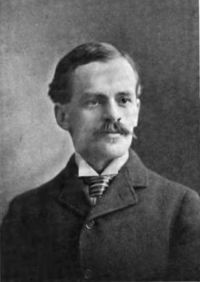
Johann Wolfgang von Goethe,
Letters from Switzerland and Travels in Italy
“ In fact, I am again taking interest in the world, I am testing my faculty of observation, and am trying how far I can go with my science and my acquirements, how far my eye is clear and sharp, how much I can take in at a hasty glance, and whether those wrinkles, that are imprinted upon my heart, are ever again to be obliterated. ”
George Stuart Fullerton,
An Introduction to Philosophy
“ Our observation, employed either about external sensible objects, or about the internal operations of our minds, perceived and reflected on by ourselves, is that which supplies our understandings with all the materials of thinking. These two are the fountains of knowledge, from whence all the ideas we have, or can naturally have, do spring. ”
Jr. Josiah P. Cooke, Scientific Culture, and Other Essays
“ By power of observation is not meant simply the ability to see, to hear, to taste, or to smell with delicacy, but the power of so concentrating the attention on what we observe as to form a definite and lasting impression on the mind. ”
John Stuart Mill,
A System of Logic, Ratiocinative and Inductive
(1843)
“ Observation extends only to the sensations by which we recognize objects; but the propositions which we make use of, either in science or in common life, relate mostly to the objects themselves. In every act of what is called observation, there is at least one inference—from the sensations to the presence of the object ”
Andrew P. Peabody, A Manual of Moral Philosophy
“ Except so far as there may have been direct communications from the Supreme Being, all man's knowledge of persons, objects, and relations is derived, in the last resort, from observation. Experience is merely remembered self-observation. ”
David Hume,
An Enquiry Concerning Human Understanding
(1748)
“ In vain, therefore, should we pretend to determine any single event, or infer any cause or effect, without the assistance of observation and experience. ”
B. F. Cocker, Christianity and Greek Philosophy
“ No one ever asserted it was perceptible to human observation. We say that this connection is perceptible to human reason, and is revealed in every attempt to think about, and seek an explanation of, the phenomenal world. ”
George Jacob Holyoake,
A Logic of Facts; Or, Every-day Reasoning
“ The beginning of all knowledge is observation. It has been shown by Mr. Mill that 'axioms,' which lie at the foundation of all reasoning and all science, 'are experimental truths—generalisations from observation. ”
Sir P. Chalmers Mitchell, Thomas Henry Huxley; A Sketch Of His Life And Work
“ And we learn, or at least have the opportunity of learning, in the whole habit of our lives as naturalists, to distinguish carefully between knowledge of which personal observation is an essential part, and opinion or belief which may or may not be based upon authority, but which in any case is devoid of the corroboration of personal observation. ”
Thomas Brown, Lectures on the Philosophy of the Human Mind…
“ We are hence eager to supply, by a little guess-work of fancy, the parts unobserved, and suppose deficiencies in our observation where there may truly have been none; till at length, by this habitual process, every phenomenon becomes, to our imagination, the sign of something intermediate as its cause, the discovery of which is to be an explanation of the phenomenon. ”
Thomas Hardy,
Tess of the d'Urbervilles
(1891)
“ Perhaps, as with many men, their opportunities of observation were not so good as their opportunities of expression. ”
Friedrich Wilhelm Nietzsche,
Human, All Too Human: A Book for Free Spirits
“ Objection.—Or is there a counter-proposition to the dictum that psychological observation is one of the means of consoling, lightening, charming existence? Have enough of the unpleasant effects of this art been experienced to justify the person striving for culture in turning his regard away from it? ”
Don Carlos Janes, A Trip Abroad
“ If like from like is not established, then nothing can be established by observation and experience. What other theory do we believe which contradicts all that we know to be true in regard to the subject to which it refers? ”
Victor Mapes,
Heart and Soul by Maveric Post
“ To judge from observation and various information, which is only too available, this tendency is steadily increasing; while, to judge it by the light of the underlying causes which we have attempted to trace and make plain, there is logical reason to expect that it will keep on increasing. ”
Frank Thomas Bullen, The Men of the Merchant Service
“ And, like all other mental or physical faculties, this faculty of observation will improve continually by being exercised, and add to the stature of the inner man, making him more complete. Besides, how immensely it will add to his enjoyment of life. ”
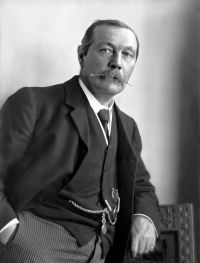
Arthur Conan Doyle,
The Adventures of Sherlock Holmes
“ Indeed, I have found that it is usually in unimportant matters that there is a field for the observation, and for the quick analysis of cause and effect which gives the charm to an investigation. ”
Thomas Reid,
An Inquiry into the Human Mind…
“ The last observation that I shall make upon the new system is, That although it professes to set out in the way of reflection, and not of analogy, it hath retained some of the old analogical notions concerning the operations of the mind; particularly, That things which do not now exist in the mind itself, can only be perceived, remembered, or imagined, by means of ideas or images of them in the mind, which are the immediate objects of perception, remembrance, and imagination. ”
Alfred H. Lloyd,
The will to doubt
“ But, further, it presumes upon the peculiar forms and conditions of its subjective, looking consciousness, the activities of the mind, being mediative or instrumental to the presentation of the external objective world, and it uses also the activities of life at large, both the bread-and-butter activities and the mechanical inventions, both the political and the industrial organizations, as supplementary aids to its observations; for just science, the looking consciousness, is the end, and this end is presumed to justify every available means. ”
Alexander Pope,
An Essay on Man
(1734)
“ To observations which ourselves we make, We grow more partial for the observer's sake; To written wisdom, as another's, less: Maxims are drawn from notions, those from guess. There's some peculiar in each leaf and grain, Some unmarked fibre, or some varying vein: Shall only man be taken in the gross? ”
Antoine Laurent Lavoisier,
Elements of Chemistry,
“ In this manner, from a series of sensations, observations, and analyses, a successive train of ideas arises, so linked together, that an attentive observer may trace back to a certain point the order and connection of the whole sum of human knowledge. ”
Thomas Paine,
The Writings of Thomas Paine, Complete
“ Any person, who has made observations on the state and progress of the human mind, by observing his own, can not but have observed, that there are two distinct classes of what are called Thoughts; those that we produce in ourselves by reflection and the act of thinking, and those that bolt into the mind of their own accord. ”
David Hume,
An Enquiry Concerning Human Understanding
(1748)
“ The general observations treasured up by a course of experience, give us the clue of human nature, and teach us to unravel all its intricacies. Pretexts and appearances no longer deceive us. ”
William Hazlitt, The collected works of William Hazlitt… (1902)
“ In the chapter on Perception, there are some observations on the manner in which our judgments alter the impressions of sensible objects, which are well worth notice, and show that the author was well acquainted with what may be called the practical processes of the human mind. ”
Francis Bacon,
Instauratio Magna — Plan
“ But the conduct of mankind has hitherto been such, that it is no wonder nature has not opened herself to them. For the information of the senses is treacherous and deceitful; observation careless, irregular, and accidental; tradition idle, rumorous, and vain; practice narrow and servile; experience blind, stupid, vague, and broken; and natural history extremely light and empty: wretched materials for the understanding to fashion into philosophy and the sciences! ”
William James, The Varieties of Religious Experience (1902)
“ It is as if there were in the human consciousness a sense of reality, a feeling of objective presence, a perception of what we may call 'something there,' more deep and more general than any of the special and particular 'senses' by which the current psychology supposes existent realities to be originally revealed. If this were so, we might suppose the senses to waken our attitudes and conduct as they so habitually do, by first exciting this sense of reality ”
G. W. F. Hegel, The Phenomenology of Mind — Introduction
“ This dialectic process which consciousness executes on itself—on its knowledge as well as on its object—in the sense that out of it the new and true object arises, is precisely what is termed Experience. ”
William James, Essays in Radical Empiricism
“ On the principles which I am defending, a ‘mind’ or ‘personal consciousness’ is the name for a series of experiences run together by certain definite transitions, and an objective reality is a series of similar experiences knit by different transitions. ”
Johann Gottlieb Fichte,
Sun-Clear Statement — First Conversation
(1868)
“ To begin, you surely know how to distinguish the really actual, that which is the true fact of your present experience and life, or that which you actually live and experience, from the non-actual, the merely imagined. ”
William James, The Will to Believe, and Other Essays in Popular Philosophy
“ I mean by this that the conceiving or theorizing faculty—the mind's middle department—functions exclusively for the sake of ends that do not exist at all in the world of impressions we receive by way of our senses, but are set by our emotional and practical subjectivity altogether. [2] It is a transformer of the world of our impressions into a totally different world,—the world of our conception; and the transformation is effected in the interests of our volitional nature, and for no other purpose whatsoever. ”
William James, Psychology: Briefer Course
“ The Fundamental Fact.—The first and foremost concrete fact which every one will affirm to belong to his inner experience is the fact that consciousness of some sort goes on. 'States of mind' succeed each other in him. If we could say in English 'it thinks,' as we say 'it rains' or 'it blows,' we should be stating the fact most simply and with the minimum of assumption. As we cannot, we must simply say that thought goes on. ”
William James, The Varieties of Religious Experience…
“ The world of our experience consists at all times of two parts, an objective and a subjective part, of which the former may be incalculably more extensive than the latter, and yet the latter can never be omitted or suppressed. The objective part is the sum total of whatsoever at any given time we may be thinking of, the [pg 499] subjective part is the inner “state” in which the thinking comes to pass. What we think of may be enormous,—the cosmic times and spaces, for example,—whereas the inner state may be the most fugitive and paltry activity of mind. ”
Jaime Luciano Balmes, Fundamental Philosophy, Vol. 1…
“ These principles, based on the data of experience,—that is, on sensations the existence of which we know from consciousness, assure us that the objectiveness of sensations, or the reality of the external world, is a truth. ”
Josiah Royce,
The Conception of God
(1897)
“ This generalised form of attention, which we attribute to the Absolute Experience, is now conceived by us as that aspect of this Absolute which, in the total movement of the world’s unity, determines the ideas to find this concrete realisation which they do find. ”
Georg Wilhelm Friedrich Hegel,
The Philosophy of Fine Art, volume 4…
“ In other words, looked at from one point of view, such a consciousness regards the wide expanse of reality according to that association of cause and effect, object and means, and all other categories of the mode of reflection which deals with finite conditions and the objective world generally, that is, the limited categories of science or the understanding. ”
Josiah Royce,
The World and the Individual, Second Series
(1901)
“ Every concrete act of knowledge, in our conscious life, includes, then, a more or less deliberate abstraction from the background of recognized reality which we conceive as the world, for the sake of a clearer attention to certain special objects of our present acknowledgment. ”
Josiah Royce,
The World and the Individual, First Series
(1899)
“ If you ask what manner of partial Being, from the point of view of our Fourth Conception, such abstractly conceived but concretely excluded facts possess, I answer, precisely the fragmentary sort of Being which the consciousness of a specific purpose, that is the consciousness of a particular attentive selection, consciously assigns to them. ”
The Tibetan Book of the Dead (1927)
“ What he has thought and what he has done become objective: thought-forms, having been consciously visualized and allowed to take root and grow and blossom and produce, now pass in a solemn and mighty panorama, as the consciousness-content of his personality. ”
Infanta of Spain Eulalia, The thread of life
“ By the side of the intellectual element, by which we estimate our thoughts and actions, there is feeling; that is, the sensibility which modifies the judgment and enlightens the deep thought determining our responsibility. ”
Morton Prince,
The unconscious
(1921)
“ An idea of a particular individual, for example, has one meaning for one person and another meaning for another according to the associated mental experiences of each. These experiences form the setting or context which determines the meaning, point of view, and attitude of mind towards any given object or situation presented to consciousness. ”
Josiah Royce,
The Sources of Religious Insight
“ As a result we shall soon find that, just as our first statement of the insight of reason, if indeed it is a true statement, transforms our view of the sense in which the world is real, so a deeper study of the relations of insight to action transforms our first cruder notion of the reason itself, of its office in life, and of the truth that it reveals. ”
George Edward Moore,
Principia Ethica — Chapter VI
(1903)
“ By the cognitive element, which is equally necessary with emotions to the existence of a valuable appreciation, I mean merely the actual cognition or consciousness of any or all of an object’s beautiful qualities—that is to say, any or all of those elements in the object which possess any positive beauty. ”
William James, Essays in Radical Empiricism
“ On the subjective side we have a fairly definite picture—sensation, association, interest, hypothesis, these account in a general way for the growth into a cosmos of the relative chaos with which the mind began. ”
David Masson, The Three Devils: Luther's, Milton's…
“ Mind, mode of thinking, mode of thinking and feeling, moral and intellectual constitution, that mystic transparency full of pulses and motions, this thinking apparatus,—whichever phrase or image we adopt, there are certain appertaining considerations which we have to take along with us. (1.) There is the consideration of differences of degree, quality, and worth. Mind may be great or small, noble or mean, strong or weak; the mode of thinking of one person or one time may be higher, finer, grander than that of another ”
Martha Evans Martin, The Ways of the Planets
“ What we wish to contemplate here are the plain facts, the knowledge of which enlivens and enriches one’s mind and nature. If the contemplation of them kindles one’s fancy or excites one’s emotions, these results at least will not be second-hand. ”
Related terms
Authors who wrote about “observation”
Related articles
The essential conflict: Observation, imagination, and the nature of scientific truth
From Oscar Wilde's radical defense of artifice and 'lying' as civilizing forces to Lavoisier's warning against self-deception, the war between fantasy and fact has long defined human knowledge. Science depends on creative leaps, but only rigorous observation can prevent hypothesis from degenerating into extravagance.
From sensory cues to universal laws: The great schism in the history of weather prediction
Before the scientific pursuit of universal causality, weather prediction was a practice rooted in local, embodied observation. The introduction of the barometer challenged this paradigm, favoring abstract data over sensory cues and leading to an enduring tension between the objective measurement and the specific reality of the sky.