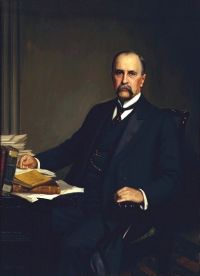
Thomas Henry Huxley,
Popular Science Monthly
(1878)
Thomas Henry Huxley,
Popular Science Monthly
(1878)
“ And, when we have acquired all that knowledge which we may enumerate under the heads of anatomy, physiology, and distribution, there remains still the problem of problems to the zoölogist, which is the study of the causes of those phenomena, in order that we may know how those things came about. All these different forms of knowledge and inquiry are legitimate subjects for science, there being no subject which is an illegitimate subject for scientific inquiry, except such as involves a contradiction in terms, or is itself absurd. ”