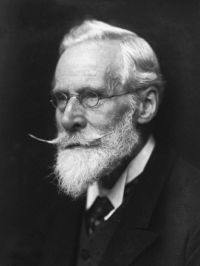
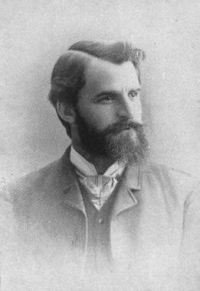
William Crookes (1832–1919), a British chemist and physicist, pioneered vacuum tube technology with his invention of the Crookes tube, foundational to modern physics and chemistry. He discovered thallium via spectroscopy and investigated cathode rays, identifying them as a possible fourth state of matter. Beyond science, Crookes engaged with spiritualism, conducting experiments on mediums such as Daniel Dunglas Home and Florence Cook.
Authors such as Michael Sage noted his controversial yet sincere pursuit of psychical phenomena, while Nikola Tesla referenced his radiometer invention. Henry Ridgely Evans emphasized Crookes’ rigorous examination of Home’s abilities, and Gaius Glenn Atkins acknowledged the impact of his work on psychical research. Though his scientific legacy endures in discoveries like thallium and cathode rays, his exploration into spiritualism reveals a mind unbounded by disciplinary constraints, merging empirical inquiry with a fascination for the unknown.