Thallium

Definition and stakes

Portrait of William Odling William Odling,  Popular Science Monthly (1872)

“ In one respect, the discovery of thallium presented even a greater degree of interest than attached to the discovery of cæsium and rubidium. For whereas these two elements were at once recognized as analogues of the well-known metal potassium, thallium can hardly be said, even at the present time, to be definitely and generally recognized by chemists as the analogue of any particular metal, or as a member of any particular family of elements. ”
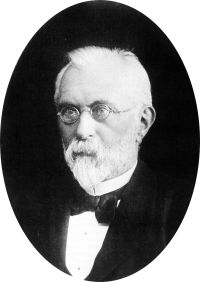
Source: Wikisource

William Dittmar,  Encyclopædia Britannica, Ninth Edition (1888)

“ As an elementary substance, it is very similar in its mechanical and physical properties to lead; like lead it forms an almost insoluble chloride and an insoluble iodide. But the hydroxide of thallium, in most of its properties, comes very close to those of the alkali metals; it is strongly basilous, forms an insoluble chloroplatinate, and an alum strikingly similar to the corresponding potassium compounds. Yet, unlike potassium or lead, it forms a feebly basic sesquioxide similar to manganic oxide, Mn2O3.
Traces of thallium exist in many kinds of pyrites, as used for vitriol-making.
”
Source: Wikisource

1911 Encyclopædia Britannica (1911)

“ Thallic oxide, Tl2O3, is obtained as a dark reddish powder, insoluble in water and alkalis, by plunging molten thallium into oxygen, or by electrolysing water, using a thallium anode. Thallic hydroxide, Tl (OH) 3, is obtained as a brown precipitate by adding a hot solution of thallous chloride in sodium carbonate to a solution of sodium hypochlorite. On drying it has the composition TlO (OH) . Hydrochloric acid gives thallous chloride and chlorine; sulphuric acid gives off oxygen ”
Source: Wikisource

Get perspective with Kwize: daily news enlightened by great literature