Chloride

Definition and stakes

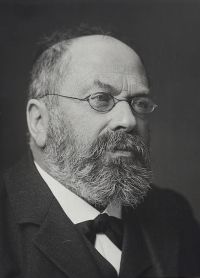
Portrait of Henry Paul Talbot Henry Paul Talbot,  An Introductory Course of Quantitative Chemical Analysis

“ The small amount of silver reduced from the chloride adhering to the filter paper after separating the bulk of the precipitate, and igniting the paper as prescribed, can be dissolved in nitric acid, and completely reconverted to chloride by hydrochloric acid. The subsequent addition of the two acids to the main portion of the precipitate restores the chlorine to any chloride which may have been partially reduced by the sunlight. The excess of the acids is volatilized by heating. ”
Source: Gutenberg

Alexander Wynter Blyth,  Poisons, Their Effects and Detection

“ It is best to add a tube, bent at right angles and going to the bottom of the flask, to draw air continuously through the apparatus. During the whole process, the tube containing the lime is kept at a red heat. The chloroform is decomposed, and the chlorine combines with the lime. The resulting calcic chloride, mixed with much unchanged lime, is, at the end of the operation, cooled, dissolved in dilute nitric acid, and precipitated with silver nitrate. Any silver chloride is collected and weighed and calculated into chloroform. ”
Source: Gutenberg

Joseph Race,  Chlorination of Water

“ Chlorine, although one of the most widely distributed elements known to chemists, is never found in the free condition in nature; it exists in enormous quantities in combination with sodium, potassium, calcium, magnesium, etc. As sodium chloride, common salt, it occurs in practically inexhaustible quantities in sea water together with smaller quantities of other chlorides. ”
Source: Gutenberg

Get perspective with Kwize: daily news enlightened by great literature