“ There's a flag that waves o'er every sea, No matter when or where; And to treat that flag as aught but the free Is more than the strongest dare. For the lion spirits that tread the deck Have carried the palm of the brave; And that flag may sink with a shot-torn wreck, But never float o'er a slave; Its honour is stainless—deny it who can— And this is the flag of the Englishman. There's a heart that beats with burning glow, The wrong'd and the weak to defend; And strikes as soon for a trampled foe As it does for a soul-bound friend. ”
Flag
Definition and stakes
The literary concept of the "flag" embodies symbolic representations of freedom, national identity, and collective valor. Across diverse authors, it emerges as a multifaceted emblem: Edgar Albert Guest celebrates it as a testament to Englishmen's honor, while Homer Randall portrays it as an unyielding guardian of American liberty.
Helen Gray Cone elevates it to a universal "Flag of Man," weaving themes of unity and sacrifice. These varied perspectives converge in the flag’s role as a unifying force, reflecting both patriotic fervor and the enduring human quest for justice, as seen in the reverence for its colors and the sacrifices it signifies.
Quotes about “flag”
J. Hamp SeCheverell, Journal History of the Twenty-Ninth Ohio Veteran Volunteers…
“ It was that flag which, under God, enabled our forefathers to gain our glorious independence, and here, in this beautiful land of lakes and rivers, rear a temple of liberty which stands first among the nations of the earth, the envy and admiration of all. It is the flag which we have learned to love and to defend, and which we cherish in our hearts as the guardian angel of our country. ”
Homer Randall, Army Boys marching into Germany (1919)
“ Above everything else he was an American through and through. He was proud of his country, of its traditions, of its history, of its glorious flag. For that flag he had risked his life again and again. He loved it with a consuming passion. Old Glory! The tears came to his eyes as he thought of it. The flag that had always stood for human freedom and human rights, the flag that had never covered an ignoble cause, the flag that had never been sullied by stain, had never been smirched by defeat, had never been dragged in the dust. ”







Related terms
Authors who wrote about “flag”
Frederick Edward HulmeBarlow CumberlandAddie Guthrie WeaverAndrew MacgeorgeEva March TappanWilliam Dunseath EatonThe VigilantesMrs. Emma Look Scott William A. Spicer
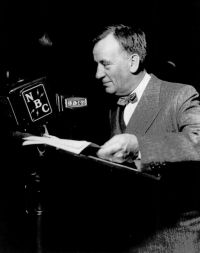 Edgar Albert GuestHomer GreeneHelen Gray Cone
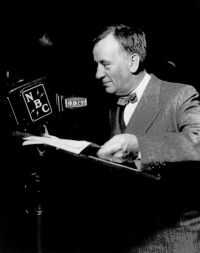 Edgar A. Guest
 Sharlot Mabridth HallBenjamin Harrison
 Agnes Baden-PowellJohn Alexander MartinB. J. Griswold
 Sir William Howard RussellZephaniah Walter Pease
William A. SpicerEdgar Albert GuestHomer GreeneHelen Gray ConeEdgar A. GuestSharlot Mabridth HallBenjamin HarrisonAgnes Baden-PowellJohn Alexander MartinB. J. GriswoldSir William Howard RussellZephaniah Walter PeaseRelated articles
The national flag: A sacred symbol or an instrument of division?
Conceived as a sublime emblem of liberty, the national flag faces perpetual threats, transforming into a partisan banner used to enforce ideological conformity. We examine historical instances where allegiance to the standard became a stressful test of belonging.
The contested cloth: When the national flag becomes the emblem of a tyrannical regime
During periods of political upheaval, the flag transforms from a beacon of liberty into a contested banner, embodying the conflict between the people and the state. Historical and philosophical texts reveal why regimes are symbolically overthrown by the rejection of their national emblem.
