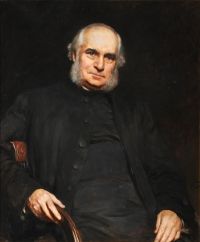
National identity, encompassing a sense of belonging to a nation through shared culture, history, and values, is a dynamic construct shaped by political, social, and historical forces. Authors like George William Russell emphasized its preservation through unifying ideals, while Arthur Greenwood framed it as a sentimental measure of collective agreement.
The Constitutional Court of Korea associated it with historical and cultural continuity, and Chitta Ranjan Das viewed nationalism as an interactive process of self-expression. These perspectives highlight national identity as a multifaceted phenomenon, grounded in both collective memory and evolving social contexts.
 George William Russell,
The National Being: Some Thoughts on an Irish Polity
George William Russell,
The National Being: Some Thoughts on an Irish Polity