Wilhelm Wundt

Definition and stakes

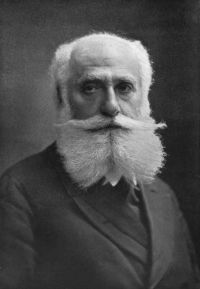
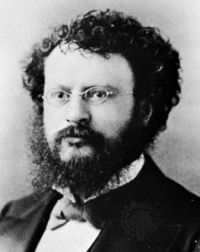
Portrait of Ernst Haeckel Ernst Haeckel The Riddle of the Universe at the close of the nineteenth century

In Germany, Wilhelm Wundt, of Leipzig, is considered to be the ablest living psychologist; he has the inestimable advantage over most other philosophers of a thorough zoological, anatomical, and physiological education. Formerly assistant and pupil of Helmholtz, Wundt had early accustomed himself to follow the application of the laws of physics and chemistry through the whole field of physiology, and, consequently, in the sense of Johannes Müller, in psychology, as a subsection of the latter.
Source: Gutenberg

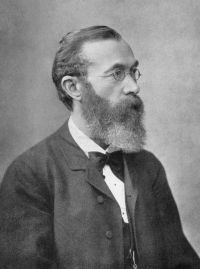
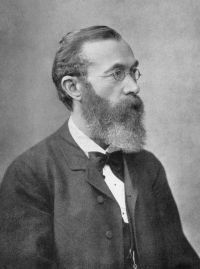
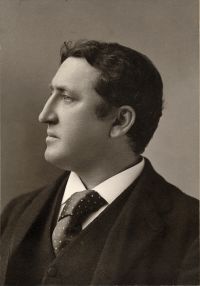
Portrait of Wilhelm Max Wundt Wilhelm Max Wundt Elements of Folk Psychology

It was primarily by means of an abstract opposition of culture to nature that philosophy, and even anthropology, constructed natural man. The endeavour was not to find or to observe, but to invent him. It was simply by antithesis to cultural man that the image of natural man took shape; the latter is one who lacks all the attainments of culture. This is the negative criterion by means of which the philosophy of the Enlightenment, with its conceited estimate of cultural achievements, formed its idea of primitive man.
Source: Gutenberg

1911 Encyclopædia Britannica (1911)

WUNDT, WILHELM MAX (1832-⁠) , German physiologist and philosopher, was born on the 16th of August 1832 at Neckarau, in Baden. He studied medicine at Tübingen, Heidelberg and Berlin, and in 1857 began to lecture at Heidelberg. In 1864 he became assistant professor there, and in 1866 was chosen to represent Heidelberg in the Baden Chamber, but soon resigned.
Source: Wikisource

Get perspective with Kwize: daily news enlightened by great literature