“ Just think, Alfred, how happy little Johnny would have been, running with his bare feet through the fields, looking at the golden and speckled butterflies, filling his cap with wild-flowers, and listening to the song of the birds, and the busy hum of the honey-bee! ”
Alfred
Definition and stakes
Alfred, a masculine given name of Anglo-Saxon origin, derives from the elements "elf" and "counsel," symbolizing a blend of mythic and practical connotations. In literature, the name embodies a range of characters: from the gentle, nature-loving Alfred in L. A. Holdich’s Little Alfred to the weary, gold-obsessed figure in Svatopluk Čech’s The International.
Earl of Lytton’s Lucile portrays Alfred as a troubled nobleman, while Charles Reade’s Hard Cash reveals his ability to experience deep emotional complexity. These varied portrayals highlight Alfred’s versatility as a literary figure, reflecting both human vulnerability and the lasting significance of names linked to historical and ethical legacies.
Quotes about “Alfred”
Svatopluk Čech, The International (1896)
“ To be sure her icy heart melted in the warm glow of ducats, but Alfred's had frozen. No longer is he interested in that beautiful picture framed in smoke. His love is now framed in solid gold. He does not love his wife, nor she him, yet what matters that? Before the world they are all that they should be, and privately—foolish is he who lets old-fashioned ideas interfere with his pleasures! That Alfred has no character, is an open secret, every one knows it, and can read it on his brow. ”
Earl of Edward Robert Bulwer Lytton Lytton, Lucile
“ Lord Alfred stood still, Rooted, stunn'd, to the spot. He felt weary and ill, Out of heart with his own heart, and sick to the soul With a dull, stifling anguish he could not control. Does he hear in a dream, through the buzz of the crowd, The Duke's blithe associates, babbling aloud Some comment upon his gay humor that day? He never was gayer: what makes him so gay? 'Tis, no doubt, say the flatterers, flattering in tune, Some vestal whose virtue no tongue dare impugn Has at last found a Mars—who, of course, shall be nameless, That vestal that yields to Mars ONLY is blameless! ”
 B. L. Farjeon,
London's Heart: A Novel
B. L. Farjeon,
London's Heart: A Novel
“ With what zest and animation did Alfred read the words of these inspiring writers! How attentively he studied their elegant English, and read their prophecies again and again! They all spoke well of Kingcraft, but none gave the horse as the absolute winner. Well, but was not Alfred as good a judge as any of them? Had not the secret been revealed to him, as it was to Daniel, in a night-vision? But the course of reading such worshippers as he goes through is of an intensely distracting nature, and Alfred could not be blind to the fact that there were other horses that might have a chance. ”
Charles Wells, Stories after Nature (1891)
“ The giant, mad at the blow, seized upon the sword and attacked Alfred desperately; but he being determined on having the life of the duke, defended himself suddenly. When they had fought some time, Alfred struck him on the head; he reeled against a tree, and fell. And seeing Alfred standing over him, he said, "Pause." Alfred replied, "Sir, you did not pause when your dear lady's life could have been saved through it. You have felt only for yourself, and have sacrificed her. When her pale look and aching eye have begged a merciful hour at your hand, you cared not for her pain. ”
 T. S. Arthur,
Words of Cheer for the Tempted…
T. S. Arthur,
Words of Cheer for the Tempted…
“ Alfred turned his eyes upon his aged friend; he caught the look of kindness upon that honoured face, and it fell warmly, upon his soul. "It is right to think deeply," said the revered adviser, "but one must think rightly, also. You must not look out upon the world, from the darkened corners of your soul, or the hue is transferred to all things which your glance falls upon. Take the torch of truth and heavenly charity to chase away the dimness within you, then powerful changes will be wrought in your vision. You will begin to regard your fellow man with new feelings of interest. ”
B. L. Farjeon,
London's Heart: A Novel
“ Turning, Alfred saw the man who had taken the bet, a tall, thin, languid swell, who drawled his words out as if speaking were a labour. A thick moustache covered his lips, or something might have been seen in the expression on them that would have given the lie to his apparently unconcerned and drawling manner. "There's thirty pounds clean thrown away," thought Alfred, with a look of contempt at the languid swell; "a nice fly chap he is to back such a horse as the Cunning One. It's only fit for a scavenger's cart." ”

“ Then Alfred began, not in his old imperative voice, but scarce above a whisper; and oh the words such as none but himself in the wide world would have spoken—I love him better than ever; I pity him; I adore him; he is a scholar; he is a chevalier; he is the soul of honour; he is the most unfortunate and proudest gentleman beneath the sun ”
H. W. Mabie, Heroes Every Child Should Know… (1908)
“ But, putting aside fables, there is quite enough to show that there have been very few Kings, and very few men of any sort, so great and good as King Alfred. Perhaps the only equally good King we read of is Saint Louis of France; and though he was quite as good, we cannot set him down as being so great and wise as Alfred. Certainly no King ever gave himself up more thoroughly than Alfred did fully to do the duties of his office. His whole life seems to have been spent in doing all that he could for the good of his people in every way. ”
“ Alfred, it was you asking to come over on the—the first—the very first night after your wife left. A girl will do a lot of headstrong things when her pity and admiration are worked up for a man she loves, but now and then, if she's sensible, some powerful small thing will make her think. Alfred, I saw the brink we was standing on, as plain as if we was on a high cliff and there was nothing between us and the bottom, and all sorts of forces was blinding us and pulling and shoving us over. ”
Charles Plummer, The Life and Times of Alfred the Great
“ Alfred’s aspiration has indeed been abundantly fulfilled: ‘My will was [203] to live worthily as long as I lived; and after my life to leave to them that should come after my memory in good works [947] .’ If I have done something in these lectures to place so great a memory in a clearer light, and to sweep away some of the false traditions by which it has been obscured, I shall regard myself as having done a real, if humble, service, not only to historical truth, but also to the national life. ”
 Alfred, Lord Tennyson,
The Hundred Best Poems
(1904)
Alfred, Lord Tennyson,
The Hundred Best Poems
(1904)
“ With rugged maxims hewn from life; Who never spoke against a foe; Whose eighty winters freeze with one rebuke All great self-seekers trampling on the right: Truth-teller was our England's Alfred named ”
Lucy Foster Madison, A Maid at King Alfred's Court: A Story for Girls
“ Alfred laid down his book in surprise. “Child, I could not send thee.”“Thou canst trust me. Thou wottest that life itself should be given ere I would bewray thee,” spoke the girl earnestly. “Prithee let me be thy bode, my king.”“Child, thou art leal and true. I will send thee as thou wishest. Take this jewel; among Saxons it will pass thee without question from any if they be true to the king.”He gave her a jewel of gold as he spake. It was elaborately carved, and bore the inscription on one side, “Alfred had me made.” Egwina took it reverently, and placed it in the folds of her tunic. ”
 Jacob Abbott,
King Alfred of England
Jacob Abbott,
King Alfred of England
“ The manner in which Alfred acted in the emergency, rescuing his country from her perils, and laying the foundations, as he did, of all the greatness and glory which has since accrued to her, has caused his memory to be held in the highest estimation among all nations, and has immortalized his name. ”
Jacob Abbott,
King Alfred of England
“ As no other race of men but Anglo-Saxons could have produced an Alfred, so, probably, no other race could have carried out such plans as Alfred formed. It is a race which has always been distinguished, like Alfred their great prototype and model, for a certain cool and intrepid energy in war, combined with and surpassed by the industry, the system, the efficiency, and the perseverance with which they pursue and perfect all the arts of peace. They systematize every thing. They arrange—they organize. Every thing in their hands takes form, and advances to continual improvement. ”
Various, The Atlantic Monthly (1858)
“ She rose up from his bosom, and, looking him lovingly in the face, replied,— "Never say that, dear Alfred! Never have such a thought again! You have been the best and kindest friend that woman ever had. If I forgot that I was a slave, is it strange that you should forget it? But, Alfred, I will never be the slave of any other man,— never! I will never be put on the auction-stand. I will die first." "Nay, dearest, you must make no rash resolutions," he replied. "I have friends who promise to save you, and restore us to each other. The form of sale is unavoidable. ”
Jacob Abbott,
King Alfred of England
“ Alfred, though he had thus the thoughtful and reflective habits of a student, was also active, and graceful, and strong in his bodily development. He excelled in all the athletic recreations of the time, and was especially famous for his skill, and courage, and power as a hunter. He gave every indication, in a word, at this early age, of possessing that uncommon combination of mental and personal qualities which fits those who possess it to secure and maintain a great ascendency among mankind. ”
Lucy Foster Madison, A Maid at King Alfred's Court: A Story for Girls
“ The skald! Where is the skald?” demanded an hundred voices at once. Alfred advanced into the centre of the hall.“Who calls the skald?” he asked. “Wish ye more of harp and song that ye cannot let a man and his daughter pass?”“Come hither, minstrel,” commanded Guthrum as the tumult ceased suddenly at the sound of the voice of the harper. “And thou, Gyda! Come thou also, and make thine accusal.”Alfred looked fixedly at the woman. She quailed under his glance.“My lord,” he said to the Dane boldly, “if I seem not to be what I am, ’tis not the fault of the minstrel. ”
J. N. Larned, History for ready reference, Volume 2…
“ Mirror of princes! Indigent renown Might range the starry ether for a crown Equal to his deserts, who, like the year, Pours forth his bounty, like the day doth cheer, And awes like night, with mercy-tempered frown. Ease from this noble miser of his time No moment steals; pain narrows not his cares-- Though small his kingdom as a spark or gem, Of Alfred boasts remote Jerusalem, And Christian India, through her widespread clime, In sacred converse gifts with Alfred shares.'" Thomas Hughes, Alfred the Great, chapter 24. ”
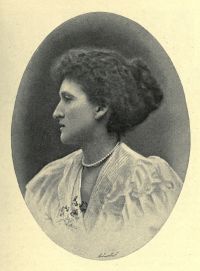 Margot Asquith,
 an Autobiography - Two Volumes in One
Margot Asquith,
Margot Asquith, an Autobiography - Two Volumes in One
“ I want, first of all, to tell Alfred that all I have in the world and all I am and ever shall be, belongs to him, and to him more than any one, so that if I leave away from him anything that speaks to him of a joy unknown to me, or that he holds dear for any reason wise or unwise, it is his, and my dear friends will forgive him and me. ”
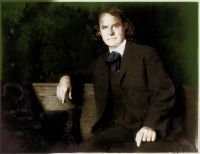 Elbert Hubbard,
Little Journeys to the Homes of the Great - Volume 10
Elbert Hubbard,
Little Journeys to the Homes of the Great - Volume 10
“ And so he lived and died an Englishman; and after him no ruler, these nine hundred years, has ever sat on the throne of the Engles by right of conquest.Both Canute and William recognized and prized the worth of Alfred's rule. The virtues of Alfred are the virtues that have made it possible for the Teutonic tribes to girdle the globe. It was Alfred who taught the nobility of industry, service, education, patience, loyalty, persistence, and the faith and hope that abide. By pen, tongue, and best of all by his life, Alfred taught the truths which we yet hold dear. ”
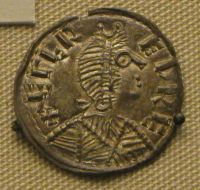 Alfred the Great,
King Alfred's Old English Version of St…
(1902)
Alfred the Great,
King Alfred's Old English Version of St…
(1902)
“ He who strives not only to visualize the outward life, but also to retrace the thoughts and experience the emotions of King Alfred, must by that very effort rise to a higher and better life. To enter into the conscious life of Alfred's age is to reconstruct for one's delectation and edification one of the most fruitful periods of the much underrated and slighted Middle Ages. ”
W. K. Tweedie, A Lamp to the Path
“ Her wise and loving heart struck upon a plan which proved the turning-point in Alfred’s history. It gave or it confirmed that bent of his mind which made him what he was—which led to the enacting of some of the laws which still signalize England among the nations, as well as prompted this memorable address to his son and successor Edward, on Alfred’s dying bed: “We must now part,” the sinking monarch said; “I go to another world, and thou shalt be left alone in all my wealth. I pray thee (for thou art my dear child) strive to be a father and a lord to thy people. ”
Lucy Foster Madison, A Maid at King Alfred's Court: A Story for Girls
“ Take the charm, minstrel, and bring it me should it fall out as thou hast said.”She extended the charm which Alfred took. Again the king and the maiden sang, and yet again. Guthrum rose from his seat and with his own hands bestowed gifts upon them.“Wondrous is thy skill, and that of the maiden also,” he said to Alfred. “Yet methinks that thou art not as are other skalds.”“Eager and willing am I to accept thy princely favors, O King, even as other skalds are,” returned the minstrel. “Kingly are thy gifts, Guthrum, as doth become thee. Why sayest thou that I am not as the others?” ”
B. L. Farjeon,
London's Heart: A Novel
“ Alfred and he walked half-a-dozen steps from the cab, and then he turned upon Alfred, and asked what was the meaning of Lizzie's behaviour."I don't know," replied Alfred; "I never saw her in such a humour before. I hope you don't think I am to blame for what has occurred.""I haven't stopped to think. When a man's made mad as I've been to-night, he doesn't think of much else but the cause. Look here, Alfred, I don't want to pry into your secrets, my boy, and I don't want to spoil your love-making. ”
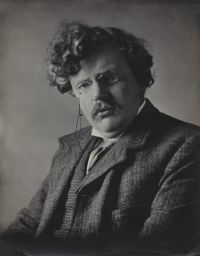 Gilbert Keith Chesterton,
Varied Types
(1908)
Gilbert Keith Chesterton,
Varied Types
(1908)
“ Lord Rosebery called up before our imaginations the picture of what Alfred would have thought of the vast modern developments of his nation, its immense fleet, its widespread Empire, its enormous contribution to the mechanical civilisation of the world. It cannot be anything but profitable to conceive Alfred as full of astonishment and admiration at these things; it cannot be anything but good for us that we should realise that to the childlike eyes of a great man of old time our inventions and appliances have not the vulgarity and ugliness that we see in them. ”
Lucy Foster Madison, A Maid at King Alfred's Court: A Story for Girls
“ Then, too, Edward gave me part of his.”“’Twas naught,” said the youth hastily. “Thou wouldst retain nothing for thyself if thou were not watched. Besides, I am a man, and stronger than thou.”“A man?” teased his sister. “A man, yet thou hast not yet naught but down upon thy chin; nor art thou of age to wear buckler.”“Yet in truth a man,” said Alfred, laying his hand kindly upon his son’s head. “A man such as I wish to see, my son. Tender to the weak, and gentle to the helpless.” ”
Lucy Foster Madison, A Maid at King Alfred's Court: A Story for Girls
“ Should he, like the phœnix, rise above the funeral pyre of the dead hopes of his people, and again rule the land as king? A quaver crept into her voice, and then, as she recalled his words, “The earth, when conquered, give us the stars,” hope swelled her bosom. No matter the difficulties, the dangers that beset his path, Alfred would reign again. God’s chosen king was he, anointed by the holy pope himself. Her voice burst into the triumphant refrain as the assurance came home to her.1“Lo, from the airy web,Blooming and brightsome, Young and exulting, thePhoenix breaks forth. ”
 Charles James Lever,
Diary And Notes Of Horace Templeton…
Charles James Lever,
Diary And Notes Of Horace Templeton…
“ If Alfred was at first shocked by hearing assertions so opposed to all the precepts of his venerated tutor, he was soon ashamed of offering opposition to one so far more capable than himself of forming a just judgment on the question, while he felt, inwardly, the inequality of the cause for which he would do battle against—that glorious and triumphant one of which the young officer assumed the championship. ”
Charles Plummer, The Life and Times of Alfred the Great
“ In the same way, the manner in which Alfred deals with the works which he translated reveals as much of his mind as an original work could do. And this is not merely the case with works like the Orosius, the Boethius, and the Soliloquies of St. Augustine, in which he allowed himself a large freedom in the way of adaptation and addition. Even in the Cura Pastoralis, in which he keeps extremely close to his original, there are little touches which seem to give us glimpses into the king’s inmost soul [22] . ”
“ But in the middle of this amiable occupation, and indeed in the middle of a sentence, he stopped short, and his heart throbbed, and he thrilled from head to foot; for two ladies glided in at the door, and passed up the room with the unpretending composure of well-bred people. They were equally remarkable; but Alfred saw only the radiant young creature in flowing muslin, with the narrowest sash in the room, and no ornament but a necklace of large pearls and her own vivid beauty. ”
