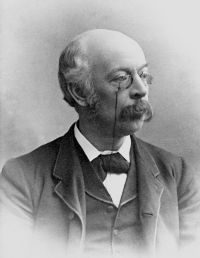
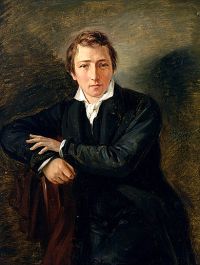
 Heinrich Heine,
The Prose Writings of Heinrich Heine
Heinrich Heine,
The Prose Writings of Heinrich Heine
“ The life-history of Immanuel Kant is difficult to write, for he had neither a life nor a history. ”
Immanuel Kant (1724–1804), a central figure of the Enlightenment, transformed Western philosophy through his doctrines of transcendental idealism and moral independence. His Critique of Pure Reason reshaped epistemology by arguing that space and time are structures of human perception, restricting knowledge to appearances while leaving the realm of things-in-themselves unknowable. Beyond metaphysics, Kant’s ethics, based on the categorical imperative, and his aesthetics, grounded in impartial judgment, influenced modern thought.
Authors like Heinrich Heine remarked on Kant’s uneventful life, while Herbert Cushman stressed his strict daily habits, contrasting with Albert Schwegler’s emphasis on his early philosophical education. Gordon Clark humorously acknowledged Kant’s self-control, and J. M. Wheeler underscored his groundbreaking influence on metaphysics. These viewpoints converge on a common theme: Kant’s methodical discipline, both in life and in his thinking, established a framework that continues to underpin philosophical exploration.
Heinrich Heine,
The Prose Writings of Heinrich Heine
“ The life-history of Immanuel Kant is difficult to write, for he had neither a life nor a history. ”
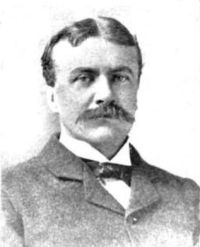 Herbert Ernest Cushman,
A Beginner's History of Philosophy…
Herbert Ernest Cushman,
A Beginner's History of Philosophy…
“ The external changes in the life of Immanuel Kant were the fewest possible. He was born at Königsberg in 1724; he went to the school of that city and then to its university, and then acted in the capacity of tutor in families in the province of Königsberg. He became privat-docent in the university at the age of thirty-one, and professor of logic and metaphysics at the age of forty-four. He was called to the University of Halle in 1778, but he refused to leave Königsberg. In fact, Kant never went outside the province, and but little outside the city. ”
Gordon Clark, The Church of St. Bunco
“ This extraordinary little German professor, Immanuel Kant, was the most regular and [Pg 77] temperate of human beings; but he had a touch of asthma, for which, before all the medicinal properties of mind-cure were known, he took daily about a thimble-full of rum. Kant has been frightfully dealt with by his "critics," the most of whose heads he completely pulverized in connection with their activity in his behalf. But suppose Herr Professor Kant could have imagined that any "critic" on earth would ever accuse him of instigating the philosophy of Mary Baker G. Eddy! ”