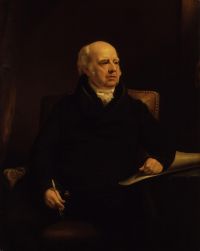
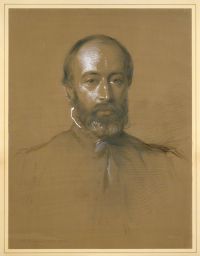
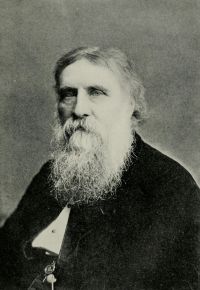
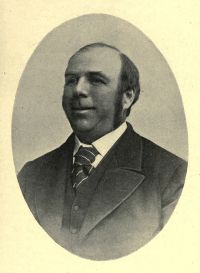
Time, a dimension that orders events from past to future, is both a measurable quantity and a profound philosophical concept, intertwining physics, perception, and existence. Authors have long grappled with its essence: Longfellow saw it as the "life of the soul," transcending mere clocks and calendars, while Brown described it as a progressive sequence of experiences, similar to a journey’s spatial continuity.
Schaff questioned its perceived length, and Frank Belknap Long contrasted its abstract measurement with existential uncertainty. Meanwhile, Eliot measured life’s fragility through mundane acts like coffee spoons. These perspectives reveal time as both a scientific framework and a fluid, subjective reality, bridging the tangible and the metaphysical.
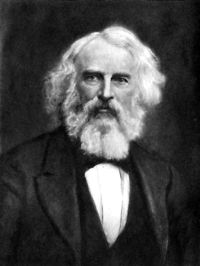 Henry Wadsworth Longfellow,
Hyperion
(1839)
Henry Wadsworth Longfellow,
Hyperion
(1839)