AI-generated from sources
The conflict of timescales: Why civilization’s haste confronts the geological clock
In Brief
- Modern human society operates on accelerated, short-term timescales (political cycles, economic quarters), which fundamentally clash with the vast, slow cadences of geological time and evolutionary adaptation.
- Biological life adapts gradually over thousands of generations; climate change driven by rapid human industry outpaces natural adaptation, resulting in extermination rather than evolution for many species.
- The governance dilemma stems from political structures designed for short-term gains struggling to enact strategies requiring immediate sacrifices for benefits realized centuries in the future.
- Addressing the climate crisis requires humanity to radically expand its temporal perspective, moving beyond short-term political and economic thinking to respect the profound slowness of the biological world.
Main authors

Modern human society operates on compressed timescales, driven by the immediacy of political cycles, economic quarters, and the relentless pace of technological change [1, 2]. This experience of time, characterized by haste and complexity, stands in stark contrast to the rhythms of the natural world. Biological life, including the human species itself, is calibrated to the vast, slow cadences of geological time and evolutionary adaptation, processes that unfold over millennia rather than moments [3, 4, 5]. This fundamental dissonance between the tempo of civilization and the planet's deep chronology creates a profound and urgent challenge.
Nowhere is this temporal mismatch more apparent than in the context of anthropogenic climate change. The rapid accumulation of greenhouse gases, a product of accelerated human industry, demands swift and decisive intervention to mitigate potentially severe consequences [6, 7]. Yet, the biological and ecological systems threatened by this change are governed by mechanisms of gradual adaptation that span thousands of generations [8, 9]. This gap between the speed of the problem and the pace of natural solutions poses a formidable challenge to governance, pitting short-term human anxieties and political imperatives against the long-term, unhurried processes that underpin life on Earth [10].
The Geological Clock and the Evolutionary Pace
The modern scientific worldview is founded upon an appreciation of "deep time," a concept that replaced earlier theories of sudden, catastrophic change with an understanding of immense and gradual geological transformation [11]. This vast chronology is not merely a historical backdrop but an essential condition for the slow, incremental processes of natural selection and species development . Life adapts not through rapid, directed transformations in an individual's lifetime but through subtle advantages and modifications passed across innumerable generations, a process coeval with the slow deposition of geological strata .
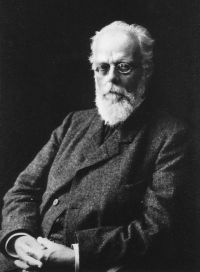
Climate has historically been a primary driver of this leisurely evolutionary pace. Natural climatic shifts typically occur with such slowness that species have adequate time to either migrate to more suitable environments or adapt physically to the new conditions . The work of August Weismann clarifies that such adaptations are not immediate chemical-like reactions to temperature but are deeply ingrained in a species' physical constitution over many succeeding generations [12]. A species might evolve to become white to survive an encroaching arctic climate, but this transformation requires a span of several thousand generations. Any change occurring on a shorter timescale would likely result in extinction, as hasty intervention is alien to these natural adaptive processes .
This principle of slow adaptation extends to humanity's own origins. The human species is a product of these very long-term adjustments to shifting environments, enforced migrations, and transformative geological epochs [13, 14]. Our existence is predicated on a deep history of gradual adaptation to climatic and geographical pressures over an immense period of antiquity [15, 16]. This long, slow dance between our ancestors and their environment has shaped our fundamental biology, a legacy that persists even as the pace of our civilization has dramatically accelerated [17].
The Accelerated Timescale of Human Civilization
In stark contrast to the geological clock, human chronology is measured in comparatively fleeting and indefinite units such as generations or dynasties, which are all but meaningless on a planetary timescale [18]. The rise of civilization, and particularly modern industrial society, has unleashed a dramatic and unprecedented acceleration of change, creating a complex, multifarious world that bears little resemblance to the one in which our species evolved . This has fostered a high-pressure cultural environment defined by constant distraction and anxiety, a state fundamentally at odds with the rhythms of the natural world [19].
A critical consequence of this acceleration is the decoupling of our cultural evolution from our biological evolution. While eons were available for humanity to adapt biologically to a life of hunting and gathering, the mere millennia since the dawn of civilization have been insufficient for a corresponding biological adjustment to its demands [20]. We exist, therefore, as beings with an ancient biological inheritance navigating a hyper-modern, self-created environment [21]. This mismatch is evident in the pressures of modern life, which interfere with the acquirement of full organic vigor that requires adequate time and leisure .
This accelerated pace manifests in large-scale environmental crises. The rapid emission of greenhouse gases exemplifies a human system that has far outstripped the planet's natural capacities for absorption and regulation . The resulting climatic changes threaten to cause severe disruptions to agriculture, natural ecosystems, and global weather patterns . This forces a direct confrontation between our fast-paced, high-impact activities and the planet's slow-reacting homeostatic systems. In this context, the inherent slowness of evolution can be understood as a natural brake on dangerously rapid change—a crucial safeguard that our civilization appears to have bypassed [22].
The Governance Dilemma: Bridging the Temporal Divide
This clash of timescales creates a central political dilemma. Governments and societies are structured to make decisions within short political and economic cycles, yet they are confronted with problems like climate change that unfold over centuries and millennia . The challenge is to formulate and enact long-term strategies that may require immediate sacrifices for benefits that will only be fully realized by future generations [23, 24]. The urgency of the threat, which could include unexpected and abrupt shifts in climate, conflicts profoundly with the slow, deliberate nature of both natural adaptation and, often, political consensus-building .
One school of thought posits that future generations, benefiting from continued economic growth and technological improvement, will be better positioned to adapt to climate effects and gradually impose stricter emissions controls . This perspective relies on a belief in ongoing human progress and adaptive capacity, suggesting a management strategy that balances present costs against future capabilities . Central to this approach is investment in research and the development of new technologies to reduce or eliminate greenhouse gas emissions, effectively seeking a technological solution to the temporal mismatch .
However, this gradualist approach carries significant risks. Delaying decisive action in the hope of future solutions may allow unchecked emissions to cause extensive, and potentially irreversible, physical and economic damage . Natural adaptation is not a viable fallback on human timescales; if environmental change is too rapid, the inevitable outcome for many species is not evolution but extermination . The geological record confirms that rapid climatic shifts, sometimes correlated with human activity, have contributed to mass extinctions in the past [25]. This implies that human intervention must compensate for the profound lack of time available for natural processes, demanding a level of foresight and collective responsibility that transcends the immediate concerns of politics and economics [26].
Humanity now stands at a unique and perilous juncture. We are a species born of slow, geological processes, yet we now function as a geological force in our own right, operating at a speed that is orders of magnitude faster than the natural world . The defining conflict of our era is this tension between the deep, evolutionary past encoded in our biology and the accelerated, complex present of our own creation . Our civilization, in its relentless progress, simultaneously creates new capacities and new race-destroying forces, forcing an evolutionary reckoning on a civilizational timescale that nature cannot match .
The resolution to this dilemma lies not in a futile attempt to halt progress, but in a radical expansion of our temporal perspective. It requires learning to govern and act with a profound awareness of both the deep past and the distant future, bridging the chasm between the frantic pace of the human hour and the patient rhythm of the evolutionary epoch . This necessitates moving beyond the tyranny of short-term thinking to embrace strategies that respect the profound slowness of the biological world we are altering. Failure to do so, allowing our own haste to dictate terms to a planet that operates on a different clock, risks inflicting irreparable loss on the very systems that sustain us .