Summary

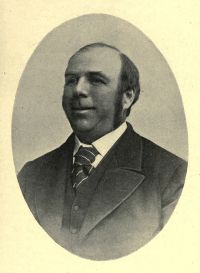
Portrait of Robert S. Ball Robert S. Ball Time and Tide: A Romance of the Moon

Thus the tides would act as a controlling agent of the utmost stringency to hurry the moon round when it was not turning fast enough, and to arrest the motion when going too fast. Peace there would be none for the moon until it yielded absolute compliance to the tyranny of the tides, and adjusted its period of rotation with exact identity to its period of revolution.
Source: Gutenberg

Portrait of Robert S. Ball Robert S. Ball Time and Tide: A Romance of the Moon

I have frequently used illustrations derived from machinery, but I want now to emphasize the profound distinction that exists between the rotation of the earth and the rotation of a fly-wheel in a machine shop. They are both, no doubt, energy-holders, but it must be borne in mind, that as the fly-wheel doles out its energy to supply the wants of the machines with which it is connected, a restitution of its store is continually going on by the action of the engine, so that on the whole the speed of the fly-wheel does not slacken.
Source: Gutenberg

Portrait of Robert S. Ball Robert S. Ball Time and Tide: A Romance of the Moon

I represent the whole moment of momentum of our system by £1,000,000,000, the bulk of which is composed of the revolutional moments of momentum of the great planets, and the rotational moment of momentum of the sun. On this scale the rotational share which has fallen to our earth and moon does not even rise to the dignity of a single pound, it can only be represented by the very modest figure of 19s.
Source: Gutenberg

Get perspective with Kwize: daily news enlightened by great literature