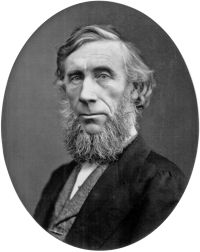
William Thomson

Definition and stakes

J. Stephen Jeans,  Western Worthies

“ At twenty-two he was a Professor of Natural Philosophy at the University of Glasgow. When little more than out of his teens, Sir William Thomson became editor of the Cambridge and Dublin Mathematical Journal, through which a great impetus was given to the study of pure and applied mechanics; and before the era of the Atlantic Cable he contributed many papers on telegraphy to the Royal Society, in connection with which he made the acquaintance and enjoyed the esteem of such men as Faraday and Brewster. ”
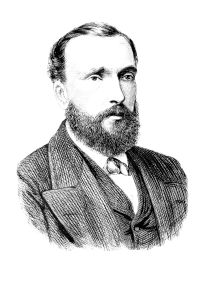
Source: Gutenberg

Portrait of Henry Charlton Bastian Henry Charlton Bastian,  Popular Science Monthly (1874)

“ Sir William Thomson's hypothesis seems strangely improbable in itself, though it has, in comparison with the views of others, the somewhat rare merit of being not inconsistent with his notions concerning the experiments of to-day. He does not reject the supernatural in the past, while resorting to it for the present—he resorts to it in the present and in the past alike, and curiously evades the problem of origin altogether. ”
Source: Wikisource

J. Stephen Jeans,  Western Worthies

“ The world-wide reputation, as a mathematician and physicist, which Sir William Thomson has acquired, is a sufficient plea for giving him the foremost place in our sketches of University professors. Born in Belfast in June, 1824, Sir William has entered upon the forty-eighth year of his age. His father, Dr. James Thomson, was the author of several mathematical text-books, and occupied for some time the position of lecturer on mathematics at the Royal Academical Institute in Belfast, from whence he was transferred to the mathematical professorship of Glasgow University. ”
Source: Gutenberg

Get perspective with Kwize: daily news enlightened by great literature